Pav Bhaji Recipe
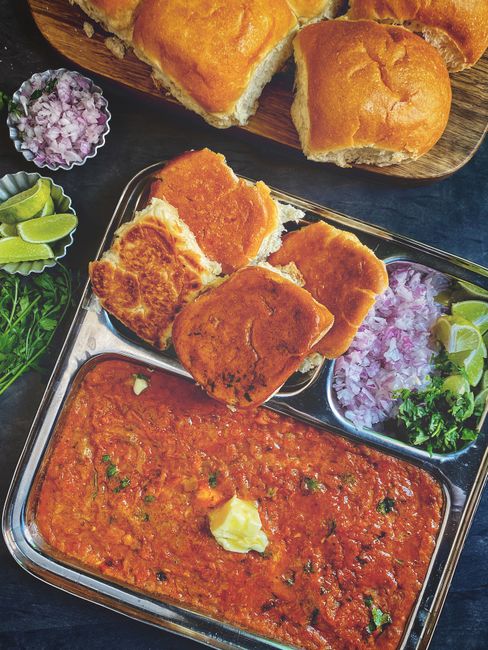
Boiling the vegetables until fully soft, then mashing them directly in the same pan the masala was cooked in, lets every bit of the potato and cauliflower pick up the ginger-garlic, tomato, and pav bhaji masala flavor instead of just sitting on the surface. A generous hand with butter, both in the bhaji and on the toasted pav, is what makes this taste like the roadside cart version instead of a thinned-out vegetable stew.
- Prep
- 20 min
- Cook
- 35 min
- Total
- 55 min
- Servings
- 4
Ingredients
- 3 medium potatoes, peeled and cubed
- 2 cups cauliflower florets
- 1 cup carrot, diced
- 1 cup green peas
- 1 cup bell pepper (capsicum), finely chopped
- 1 1/2 cups onion, finely chopped
- 2 cups tomatoes, finely chopped
- 1 tbsp ginger-garlic paste
- 3 tbsp pav bhaji masala
- 1 tsp kashmiri red chili powder
- 6 tbsp butter, divided
- 8 pieces pav buns (soft dinner rolls), split
- 2 tbsp lemon juice
- 1/4 cup cilantro, chopped
- 1 1/2 tsp salt
Nutrition per serving
- Calories
- 527
- Protein
- 13g
- Carbs
- 74g
- Fat
- 22g
Based on the recipe as written, one serving. Recalculates if you swap an ingredient above. An estimate only, exact values depend on the specific ingredients used.
Need different units or a different yield? Try our Conversion Calculator →
Instructions
- 1Put the cubed potatoes, cauliflower, and carrot in a pot with enough water to cover, add a pinch of salt, and boil for 15-18 minutes until a fork slides through the potato with no resistance.
- 2Drain, reserving about 1 cup of the cooking liquid, and mash the vegetables with a potato masher or fork until mostly smooth. Stir in the peas.
- 3Melt 3 tablespoons of the butter in a wide, heavy skillet or kadai over medium heat. Add the chopped onion and cook, stirring often, for 6-8 minutes until deep golden, not just translucent.
- 4Add the ginger-garlic paste and cook for 30 seconds until the raw smell cooks off.
- 5Stir in the bell pepper and cook for 2 minutes to soften slightly.
- 6Add the tomatoes, pav bhaji masala, chili powder, and salt. Cook for 8-10 minutes, mashing the tomatoes into the masala as they break down, until the mixture darkens and the butter starts to separate at the edges of the pan.
- 7Add the mashed vegetables and about half of the reserved cooking liquid. Simmer for 10-12 minutes, mashing continuously with the masher right in the pan, until the bhaji is thick, uniform, and no distinct vegetable pieces remain. Add more reserved liquid if it looks too dry to mash.
- 8Stir in half of the remaining butter and the lemon juice, then taste and adjust salt.
- 9Heat a griddle or flat skillet over medium heat. Butter the cut sides of the pav buns and toast for 1-2 minutes per side until golden and slightly crisp at the edges.
- 10Ladle the bhaji into bowls, top each with a pat of the remaining butter, chopped raw onion, and cilantro. Serve immediately with the toasted pav and lemon wedges.
Tips & variations
- No cauliflower on hand? Swap in an extra potato or a cup of chopped cabbage, both mash into the same texture without changing the flavor much.
- For extra color without extra heat, add a small chunk of boiled beet to the mash; it's a common street-cart trick for the deep red-orange shade.
- If pav bhaji masala isn't available, substitute 1.5 tablespoons garam masala plus 1 teaspoon amchur (dried mango powder) for a similar tang.
- Leftover bhaji makes a fast base for a grilled cheese-style toastie: spread it on bread with extra butter and grill until crisp.
Storage & reheating
Refrigerate cooled bhaji in an airtight container for up to 3 days. Reheat in a pan over low heat with a splash of water to loosen it back to a spreadable consistency; microwaving tends to dry out the edges. The bhaji freezes well on its own (without the pav) for up to 2 months; thaw overnight in the fridge before reheating.
Tips from the Tulo kitchen
- Letting the onions go past translucent to a real deep golden brown before adding anything else builds a lot of the underlying sweetness that makes this taste like the street-cart version.
- A flat, wide pan works better than a deep pot for the final mashing step; there's more surface area to press the masher against.
- If the bhaji tastes flat, it's almost always missing acid or salt, not more spice; add lemon juice a little at a time before reaching for more chili powder.
FAQ
What exactly is pav bhaji masala?
It's a pre-blended spice mix built around coriander, cumin, fennel, dried mango powder, and dried red chilies, sold specifically for this dish under brands like Everest or MDH. It has a tangier, more citrusy profile than a general garam masala, which is why a straight garam masala swap needs added amchur to taste right.
Can I make pav bhaji without butter?
Yes, though it won't taste quite as close to the street-food original. Neutral oil works for cooking the masala, and toasting the pav in a little extra oil or a vegan butter substitute still gives a decent crisp exterior.
What can I use instead of pav buns?
Soft dinner rolls or small burger buns are the closest substitute in texture. Toast them the same way, split and buttered on a hot griddle, for the right crisp-edged, soft-centered bite.
Why is my bhaji watery instead of thick?
This usually means the vegetables weren't mashed long enough, or too much cooking liquid was added at once. Keep mashing and simmering uncovered; the starch from the potatoes is what thickens it, and that only happens with enough time and agitation over heat.