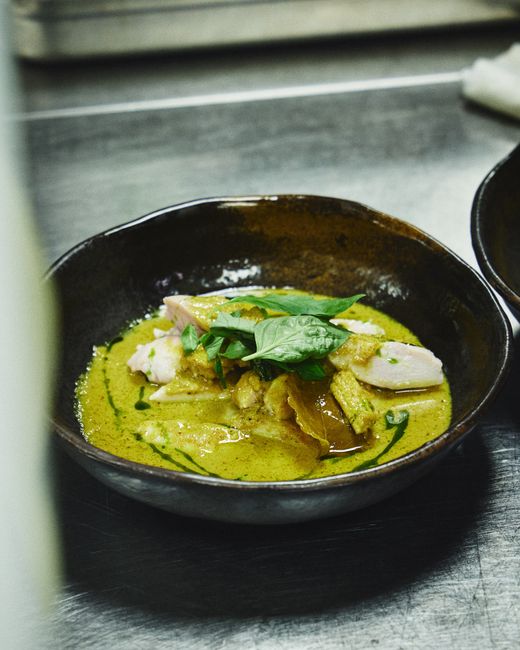
Thai Coconut Curry Chicken

Full fat coconut milk is what gives this curry its body, the high fat content keeps the sauce from separating or turning watery as it simmers, and it carries the heat of the curry paste without curdling the way lower-fat versions do.
- Prep
- 15 min
- Cook
- 25 min
- Total
- 40 min
- Servings
- 4
Ingredients
- 2 cans (13.5 oz each) full fat coconut milk (canned)
- 1 1/2 lbs boneless, skinless chicken thighs, cut into bite-sized pieces
- 1 tbsp vegetable oil
- 3 tbsp red curry paste
- 1 medium yellow onion, sliced
- 3 cloves garlic, minced
- 1 tbsp fresh ginger, grated
- 1 medium red bell pepper, sliced
- 2 tbsp fish sauce
- 1 tbsp brown sugar
- 2 tbsp lime juice, fresh
- 1/2 cup fresh Thai basil leaves
Nutrition per serving
- Calories
- 646
- Protein
- 28g
- Carbs
- 16g
- Fat
- 53g
Based on the recipe as written, one serving. Recalculates if you swap an ingredient above. An estimate only, exact values depend on the specific ingredients used.
Need different units or a different yield? Try our Conversion Calculator →
Instructions
- 1Heat the vegetable oil in a large, deep skillet or Dutch oven over medium-high heat. Add the chicken pieces in a single layer and sear for 3-4 minutes per side, until lightly browned but not fully cooked through. Transfer to a plate.
- 2Lower the heat to medium and add the onion. Cook for 3-4 minutes until softened, then stir in the garlic and ginger and cook for 30 seconds, until fragrant.
- 3Add the red curry paste and stir into the onions, cooking for 1-2 minutes to toast the spices and deepen the color.
- 4Pour in the full fat coconut milk, scraping up any browned bits from the pan. Stir until the curry paste is fully dissolved into the liquid.
- 5Return the chicken and any accumulated juices to the pan. Bring the curry to a gentle simmer, not a hard boil, and cook uncovered for 12-15 minutes, until the chicken is cooked through and the sauce has thickened slightly.
- 6Add the bell pepper and simmer for another 3-4 minutes, until just tender but still with some bite.
- 7Stir in the fish sauce, brown sugar, and lime juice. Taste and adjust, adding more fish sauce for saltiness, sugar for sweetness, or lime for brightness.
- 8Remove from the heat and stir in half the Thai basil leaves. Serve hot over steamed rice, garnished with the remaining basil.
Tips & variations
- Do not shake the can before opening if a recipe calls for scooping just the thick cream off the top; full fat coconut milk separates in the can when it sits, with solid cream rising above the thinner liquid.
- Swap the chicken for firm tofu or shrimp; add shrimp during the last 3-4 minutes of simmering so it doesn't overcook.
- For a milder curry, use 2 tablespoons of curry paste instead of 3, or add a pinch of sugar to soften the heat.
- Add a handful of snap peas or baby corn along with the bell pepper for more vegetables without extra cooking time.
Storage & reheating
Refrigerate leftovers in an airtight container for up to 4 days. Reheat gently over low heat on the stove, stirring often, since the coconut milk can separate if reheated too quickly or at too high a temperature. This curry also freezes well for up to 2 months; thaw overnight in the fridge before reheating.
Tips from the Tulo kitchen
- Chilling the can of coconut milk overnight makes it easier to spoon off just the thick cream for an extra-rich sauce, leaving the watery portion out.
- Toasting the curry paste in the pan before adding the coconut milk makes a noticeable difference in depth of flavor compared to just stirring it into the liquid raw.
FAQ
Can I use light coconut milk instead of full fat?
Light coconut milk has roughly half the fat of full fat and produces a thinner, less rich sauce that is more prone to separating when simmered; if substituting, expect a noticeably lighter-bodied curry and consider reducing the liquid slightly.
Why did my coconut curry sauce turn oily or grainy?
This usually happens when the curry is boiled too hard or for too long, which breaks the emulsion in the coconut milk; keep the heat at a gentle simmer once the coconut milk is added.
Can I make this curry ahead of time?
Yes, the flavor actually improves after a day in the fridge as the spices continue to meld; reheat slowly over low heat rather than in the microwave on high to avoid separating the sauce.
What can I substitute for fish sauce?
Soy sauce mixed with a small squeeze of lime juice approximates the salty, savory depth of fish sauce, though it will taste slightly less complex.