
Venezuelan Arepas Recipe
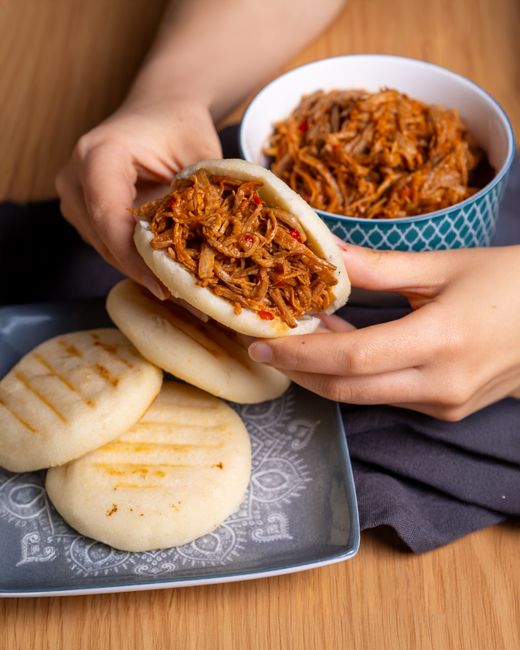
Masarepa is pre-cooked corn flour, so it hydrates into a workable dough in minutes with no boiling or soaking required. Griddling the patties first builds a crisp, deeply golden crust, and finishing them in the oven cooks the center through and creates the hollow pocket that makes arepas easy to split and stuff.
- Prep
- 15 min
- Cook
- 30 min
- Total
- 45 min
- Servings
- 6
Ingredients
- 2 cups masarepa (pre-cooked white corn flour)
- 2 1/2 cups warm water
- 1 tsp salt
- 3 tbsp vegetable oil, for the griddle
- 1 cup queso blanco or mozzarella, shredded, for filling (optional)
Nutrition per serving
- Calories
- 260
- Protein
- 7g
- Carbs
- 31g
- Fat
- 13g
Based on the recipe as written, one serving. Recalculates if you swap an ingredient above. An estimate only, exact values depend on the specific ingredients used.
Need different units or a different yield? Try our Conversion Calculator →
Instructions
- 1Preheat the oven to 350°F (175°C) and line a baking sheet with parchment.
- 2In a large bowl, whisk the masarepa and salt together.
- 3Slowly pour in the warm water while mixing with your hands, kneading until a smooth, moist dough forms that doesn't crack at the edges. Let it rest for 5 minutes.
- 4Divide the dough into 6 equal balls. Flatten each into a disk about 4 inches wide and 1/2 inch thick, smoothing any cracks around the edge with wet fingers.
- 5Heat the oil in a large skillet or griddle over medium heat. Cook the arepas for 5-7 minutes per side, until a deep golden crust forms.
- 6Transfer the arepas to the prepared baking sheet and bake for 15-20 minutes, until they sound hollow when tapped on top.
- 7Let cool for 5 minutes, then slice each arepa horizontally about three-quarters of the way through and open it up like a pita. Fill with cheese, shredded beef, black beans, or avocado.
Tips & variations
- Use only masarepa (labeled as pre-cooked corn flour, such as Harina P.A.N.), not regular cornmeal or masa harina for tortillas; those are raw and won't hydrate the same way.
- For thinner, crispier arepas, flatten the disks to about 1/3 inch and cook them fully on the griddle instead of finishing in the oven, reducing skillet time to about 4 minutes per side.
- Classic fillings include reina pistacho (chicken and avocado salad), shredded beef (carne mechada), and black beans with crumbled queso fresco.
Storage & reheating
Store cooled, unfilled arepas in an airtight container in the refrigerator for up to 4 days, or freeze for up to 2 months. Reheat directly from the fridge or freezer in a dry skillet over medium-low heat for 3-4 minutes per side, or in a 350°F (175°C) oven for about 10 minutes, until warmed through and re-crisped.
Tips from the Tulo kitchen
- Wetting your hands before shaping keeps the dough from sticking and helps smooth over any surface cracks that would otherwise open up during cooking.
- If the dough feels dry or crumbly after kneading, work in warm water a tablespoon at a time rather than adding it all at once.
FAQ
What is masarepa and can I substitute regular cornmeal?
Masarepa is pre-cooked, finely ground white or yellow corn flour sold under brands like Harina P.A.N. or Goya. Regular cornmeal and masa harina for tortillas are not pre-cooked and will not form the same smooth, moldable dough, so they aren't good substitutes.
Why did my arepas crack while shaping them?
Cracking usually means the dough is too dry. Knead in a little more warm water, a tablespoon at a time, until the dough feels like soft, moist play dough with no dry patches.
Can arepas be made ahead and frozen?
Yes. Cook them fully (griddle and oven steps both), cool completely, then freeze in a single layer before transferring to a freezer bag. Reheat from frozen in a dry skillet or oven rather than the microwave to keep the crust crisp.
What's the difference between arepas and gorditas or pupusas?
Arepas are made from plain masarepa dough with no filling mixed in, then split open after cooking to stuff. Pupusas are made from raw masa and stuffed before cooking, and gorditas are a fried or griddled Mexican corn dough that's typically thicker and made from masa harina, not masarepa.