
Yellow Bird Hot Sauce Recipe (Copycat)
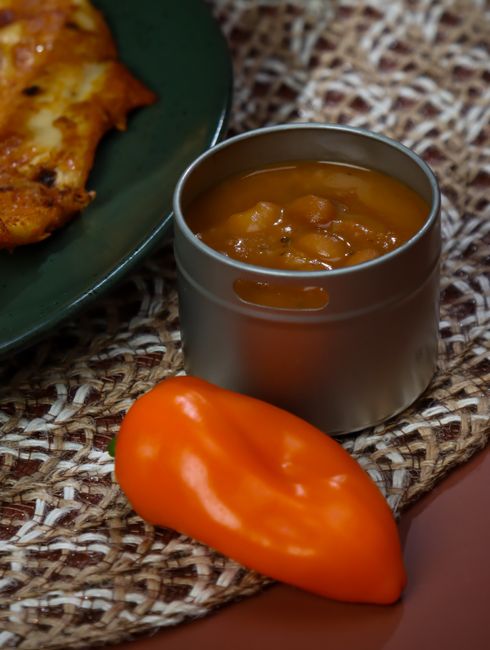
Simmering the habaneros with carrot and onion before blending mellows their raw sharpness into a rounder, fruitier heat, while the carrot's natural sugar and starch give the finished sauce the same thick, clingy texture as the bottled original.
- Prep
- 15 min
- Cook
- 15 min
- Total
- 1 hr 30 min
- Servings
- 32
Ingredients
- 10 peppers habanero peppers, stemmed and halved
- 2 medium carrots carrots, peeled and chopped
- 1/2 cup white onion, chopped
- 4 cloves garlic cloves, peeled
- 1 cup distilled white vinegar
- 1 cup water
- 1/4 cup fresh lime juice
- 2 tbsp agave nectar
- 1 tsp kosher salt
Nutrition per serving
- Calories
- 11
- Protein
- 0g
- Carbs
- 2g
- Fat
- 0g
Based on the recipe as written, one serving. Recalculates if you swap an ingredient above. An estimate only, exact values depend on the specific ingredients used.
Need different units or a different yield? Try our Conversion Calculator →
Instructions
- 1Combine the halved habaneros, chopped carrots, onion, garlic, vinegar, and water in a small saucepan.
- 2Turn the vent fan on or crack a window, then bring the mixture to a simmer over medium heat. Reduce heat to low and cook for 12-15 minutes, until the carrots are fork-tender.
- 3Remove the pan from heat and let the mixture cool for 10 minutes; blending hot liquid can force the blender lid open.
- 4Pour everything, liquid included, into a blender. Add the lime juice, agave nectar, and salt.
- 5Blend on high for 1-2 minutes, until completely smooth with no visible pepper or carrot flecks.
- 6For a thin, pourable sauce like the bottled version, strain through a fine-mesh sieve, pressing on the solids with a spoon. Skip this step for a thicker, spoonable sauce.
- 7Taste and adjust with more salt or lime juice as needed.
- 8Transfer to a clean glass bottle or jar and refrigerate for at least 1 hour before serving to let the flavors settle.
Tips & variations
- For a milder sauce closer to a jalapeno-based bottle, swap half or all of the habaneros for seeded jalapenos or serranos.
- A tablespoon of roasted garlic in place of raw garlic adds a deeper, sweeter background note.
- Wear gloves when handling habaneros and avoid touching your face; the oils linger on skin for hours and sting eyes badly.
- A pinch of ground turmeric or a few drops of orange food-safe coloring can punch up the color if the carrots you used were pale.
Storage & reheating
Store the sauce in a sealed glass bottle or jar in the refrigerator for up to 3 months. The vinegar and lime keep it shelf-stable in the fridge without any need to reheat; just shake before using since some separation is normal.
Tips from the Tulo kitchen
- Cutting the habaneros in half before simmering, rather than leaving them whole, helps them soften fully in the 15-minute cook time.
- If the sauce tastes flat after blending, it usually needs more salt rather than more vinegar; salt is what brings the pepper flavor forward.
FAQ
How hot is this compared to store-bought Yellow Bird?
Using 10 habaneros with the seeds left in produces a sauce in the same range as the brand's original habanero flavor, roughly medium-hot. Removing the seeds and inner membranes before cooking cuts the heat noticeably without changing the flavor much.
Can I use a different pepper?
Yes. Serrano or jalapeno peppers make a milder, greener-tasting sauce, while adding one or two chile de arbol or a small habanero-ghost pepper blend pushes the heat up significantly.
Why does my homemade version look thinner or thicker than the bottle?
Bottled hot sauce is strained to a specific consistency. Straining this batch through a fine-mesh sieve gets it close to the same pourable texture; skipping that step leaves a thicker, more textured sauce.
Do I need to can or process this for long-term storage?
No. The combination of vinegar and refrigeration keeps it safe for months without canning, but it isn't shelf-stable at room temperature the way commercially processed sauce is, so keep it chilled.