
Parsley vs. Cilantro: What's the Difference?
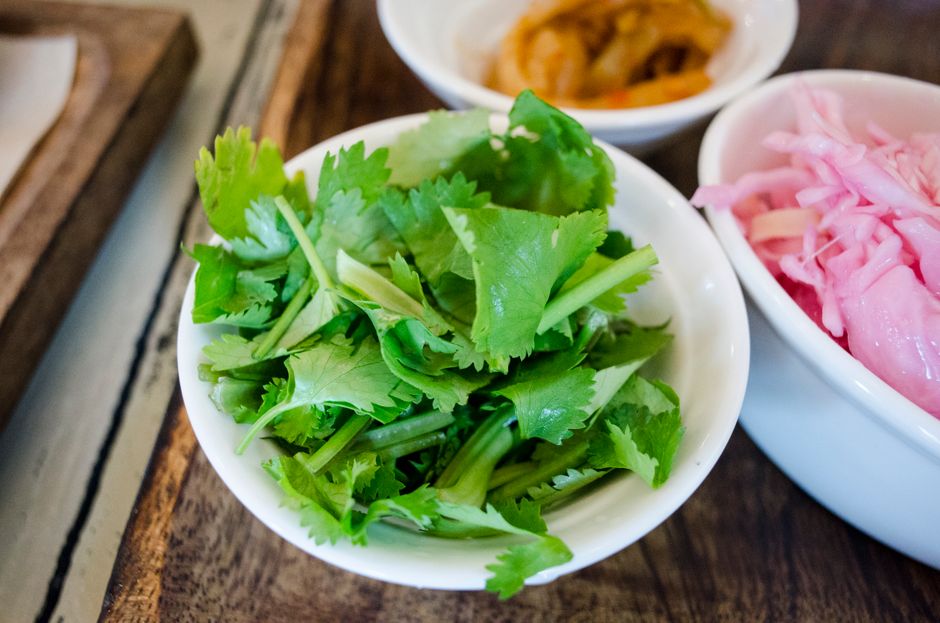
| Parsley | Cilantro | |
|---|---|---|
| Leaf shape | Pointed, more jagged edges | Rounder, more scalloped edges |
| Flavor | Mild, slightly peppery, grassy | Bright, citrusy, or soapy to a genetic subset of people |
| Common cuisines | Mediterranean, European | Mexican, Southeast Asian, Indian |
| Stems | Tougher, often discarded | Tender, often used along with the leaves |
Verdict
They're easy to mix up by sight in a grocery bin, but the flavor difference is unmistakable once tasted. Use parsley for a mild, background herbal note; use cilantro when the recipe wants its distinct bright, citrusy punch.
Parsley
A mild, versatile herb used across Mediterranean and European cooking, often as a background flavor or garnish rather than a dominant note. Flat-leaf (Italian) parsley has more flavor than curly parsley, which is mostly used for garnish.
Cilantro
The leaves of the coriander plant, with a bright, citrusy flavor central to Mexican, Indian, and Southeast Asian cooking. A genetic variant makes it taste soapy and unpleasant to a meaningful minority of people, which is why reactions to it are so polarized.
FAQ
Why does cilantro taste like soap to some people?
A genetic variant related to olfactory receptor genes makes some people perceive the aldehydes in cilantro as soapy rather than citrusy, it's a real, documented genetic difference, not just pickiness.
Can I substitute parsley for cilantro in a recipe?
You can for a similar visual garnish, but the flavor will be quite different, parsley lacks cilantro's bright, citrusy character entirely, so it's a substitution of convenience, not a flavor match.