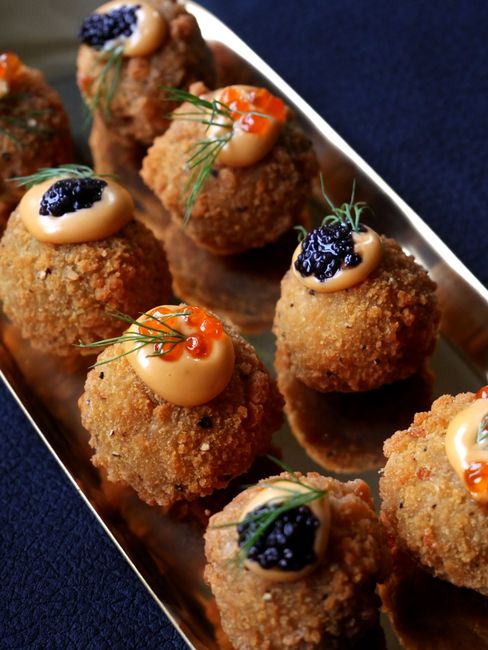
What Is Caviar?
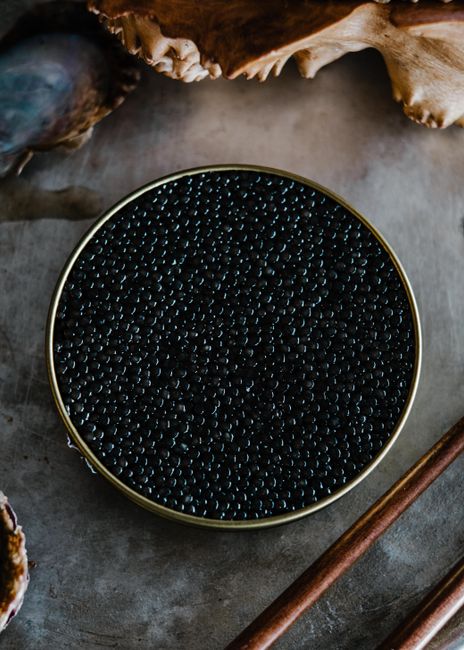
Caviar is salt-cured fish roe (eggs), and by strict traditional definition, specifically the roe of wild sturgeon from the Caspian and Black Sea regions.
More detail
Roe from other fish - salmon, trout, whitefish - is often sold as "caviar" in a looser, more common usage, but purists reserve the term strictly for sturgeon roe. Grading depends on the species of sturgeon, egg size, color, and firmness - beluga, osetra, and sevruga are the most well-known varieties.
Where it's used
Long associated with Russian and Persian aristocracy, caviar became internationally prestigious in the 19th and 20th centuries. Wild sturgeon populations have declined sharply from overfishing, so most caviar sold today comes from regulated sturgeon farms rather than wild-caught fish.
Substitutes
Salmon roe (ikura) or trout roe are common, far less expensive substitutes, though they differ noticeably in flavor, size, and texture from true sturgeon caviar.
FAQ
Is all fish roe technically caviar?
Strictly speaking, no, true caviar is sturgeon roe specifically. Roe from salmon, trout, and other fish is commonly labeled "caviar" in retail, but is more precisely just "roe" under the traditional definition.
How should caviar be served?
Traditionally chilled, in small portions, with a non-metal spoon (mother-of-pearl or bone), since metal can react with the roe and affect its flavor. Simple accompaniments, blini, crème fraîche, toast points, are preferred over anything that masks its flavor.