What Is Caviar?
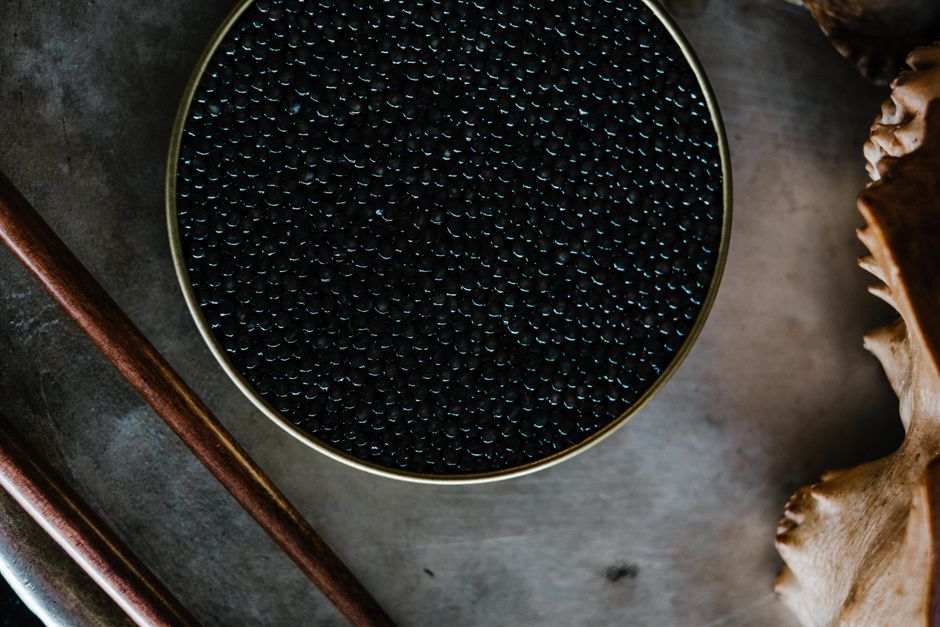
Caviar is the salt-cured, unfertilized eggs (roe) of sturgeon fish, prized for its briny flavor and delicate, pearl-like texture that pops slightly when bitten.
More detail
True caviar comes only from sturgeon, a family of large, slow-growing fish native to the Caspian and Black Seas, though sturgeon farms now operate worldwide, including in the U.S. and China. After the roe sacs are harvested, the eggs are gently sieved, rinsed, and cured in salt (a process called malossol, meaning "little salt"), which firms the eggs and develops their flavor without cooking them. The eggs are then packed into tins, often by hand, and graded by size, color, and firmness. Species matter a lot: beluga produces the largest, softest eggs and the highest price tag; osetra has a firmer, nuttier egg; and sevruga is smaller and more intensely briny. Because wild sturgeon populations collapsed from overfishing, nearly all caviar sold today is farm-raised.
Where it's used
Caviar is traditionally served chilled, straight from the tin, on its own or atop blini, toast points, or boiled potatoes, often with crème fraîche or a squeeze of lemon. It's typically eaten with a mother-of-pearl, bone, or plastic spoon, since metal spoons can react with the eggs and give them a metallic taste. It also appears in fine dining as a garnish on oysters, deviled eggs, or pasta.
Substitutes
Roe from salmon, trout, or whitefish (sometimes labeled "caviar" but technically not, since they're not from sturgeon) makes a much cheaper substitute, with larger, brighter-colored eggs and a milder, less briny flavor.
FAQ
Why is caviar so expensive?
Sturgeon grow slowly, taking anywhere from 6 to 20 years depending on species before they produce harvestable roe, and wild populations are heavily protected, so nearly all supply comes from labor-intensive fish farms.
Is all fish roe considered caviar?
No. Strictly speaking, caviar refers only to roe from sturgeon. Roe from salmon, trout, or flying fish is sold as roe or by species name (like salmon roe or tobiko), not true caviar.
How long does caviar last once opened?
An opened tin should be eaten within 2 to 3 days when kept tightly covered and refrigerated at just above freezing, ideally packed in ice.
Why shouldn't you use a metal spoon with caviar?
Metal, especially silver, can react with the salt-cured eggs and impart a slightly metallic or fishy off-taste, which is why mother-of-pearl, bone, or plastic spoons are traditional.