
What Is White Chocolate Made Of?
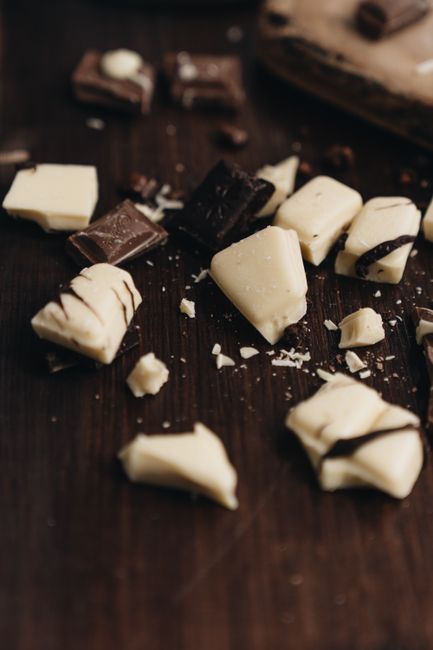
White chocolate is made from cocoa butter, sugar, milk solids, vanilla, and an emulsifier like soy lecithin. It contains no cocoa solids, which is why it's ivory-colored instead of brown and tastes creamy and sweet rather than chocolaty.
More detail
Cocoa beans are made up of two main parts: cocoa solids (which give chocolate its color, bitterness, and classic flavor) and cocoa butter (the pale, fatty portion that melts at body temperature). Dark and milk chocolate use both parts. White chocolate uses only the cocoa butter, blended with sugar, milk solids or milk powder, vanilla, and a small amount of lecithin to keep everything smooth and stable. Because it skips the cocoa solids entirely, some purists argue white chocolate isn't technically chocolate at all, though the FDA and most international standards still classify it as such as long as it contains a minimum percentage of cocoa butter (20% in the US). Cheaper versions swap real cocoa butter for vegetable oils or palm kernel oil and are usually labeled 'white baking chips' or 'confectionery coating' rather than white chocolate.
Where it's used
Cocoa butter has been used in skincare and pharmaceuticals for centuries, but white chocolate as a candy is a 20th-century invention, generally credited to Swiss company Nestlé in the 1930s, which developed it partly as a way to use surplus cocoa butter from milk chocolate production. It's now a staple in baking for blondies, macadamia nut cookies, and ganache-based frostings, and it's melted down for candy coatings and drizzles because its high cocoa butter content lets it set with a glossy snap.
Substitutes
There's no true substitute that replicates white chocolate's flavor, since its sweetness and creaminess come specifically from cocoa butter. In baking, a mix of shortening or coconut oil with powdered sugar and a splash of vanilla can approximate the texture for coatings, but it won't have the same richness or melt-in-the-mouth quality.
FAQ
Does white chocolate contain caffeine?
No, or only trace amounts. Caffeine comes from cocoa solids, which white chocolate doesn't contain, so it's a common choice for people avoiding caffeine but still wanting a chocolate-adjacent treat.
Why does white chocolate sometimes taste waxy?
Waxy-tasting white chocolate usually contains vegetable fats like palm kernel oil instead of real cocoa butter. Check the ingredient label; genuine white chocolate lists cocoa butter near the top.
Can white chocolate be tempered like dark chocolate?
Yes. It follows the same tempering curve as milk chocolate, generally melted to around 110°F, cooled to about 80°F, then rewarmed slightly to 84-86°F before use, so it sets with a firm snap and shine.
Is white chocolate healthier than dark chocolate?
No. It has no cocoa solids, meaning it lacks the flavanols and antioxidants associated with dark chocolate, and it's typically higher in sugar and lower in cocoa butter's mild health benefits.