
Persimmon Recipes
Which persimmon recipe works depends entirely on the variety: firm fuyu persimmons are eaten raw like an apple, sliced into salads or eaten out of hand, while soft, fully ripe hachiya persimmons are almost always baked or blended, never eaten firm, since an underripe hachiya is intensely astringent. Fuyu are shaped like a flattened tomato; hachiya are more pointed and acorn-shaped, which is the easiest way to tell them apart at the store. These recipes cover both.
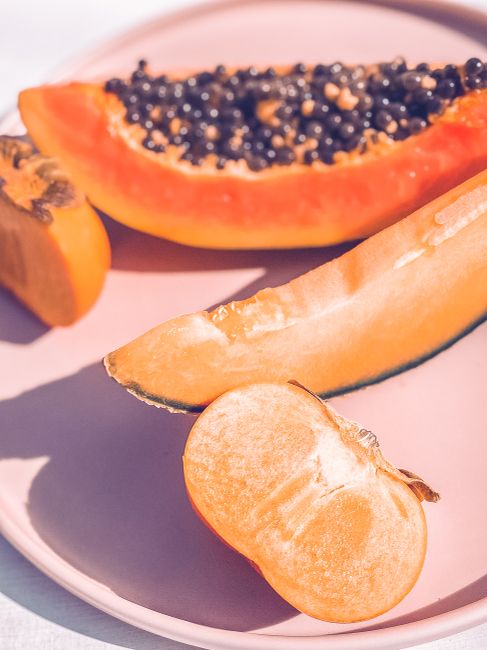
Sliced Fuyu Persimmon Salad
Crisp, raw fuyu persimmon slices with arugula, pomegranate, and a light vinaigrette.
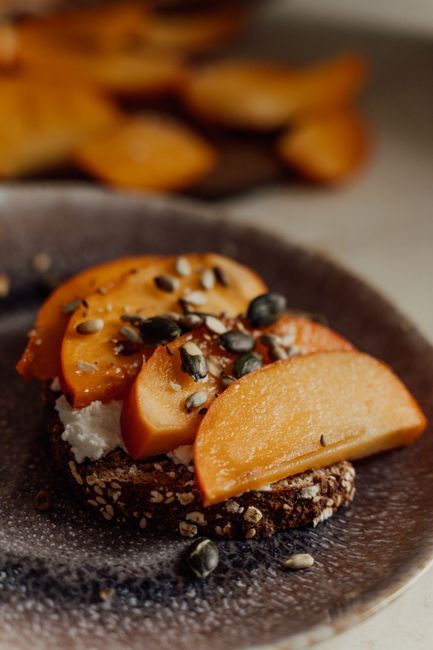
Persimmon Bread
A moist quick bread made from soft, fully ripe hachiya persimmon pulp.
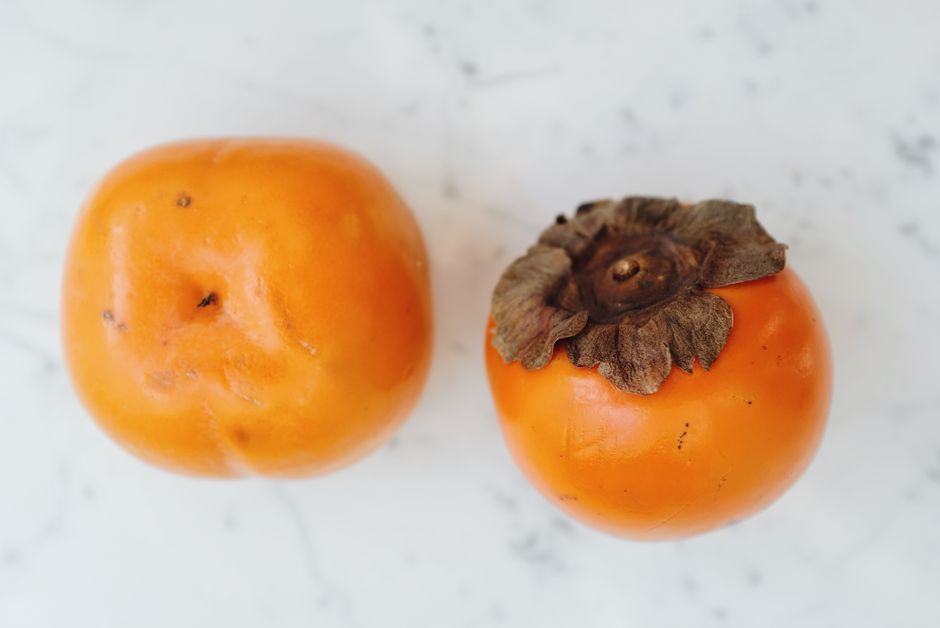
Roasted Fuyu Persimmons
Fuyu persimmon wedges roasted until caramelized at the edges.
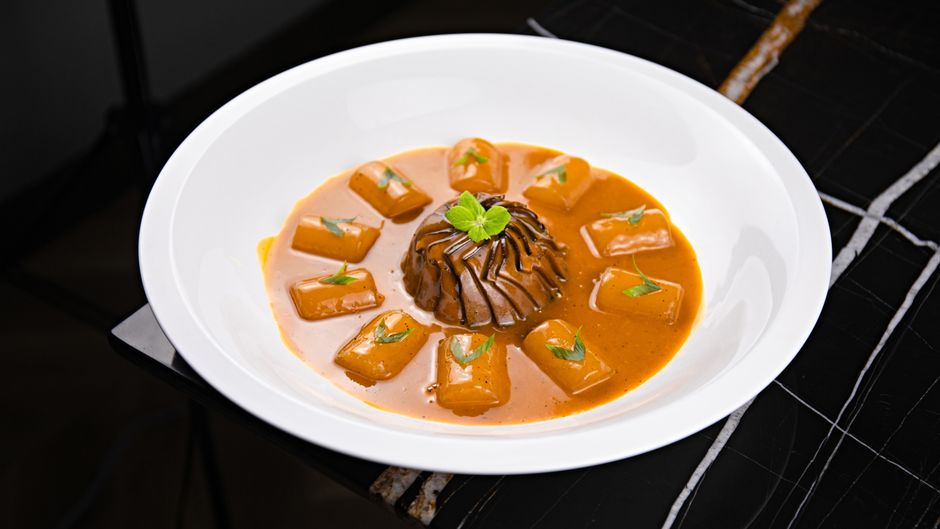
Persimmon Pudding
A traditional steamed or baked pudding made from hachiya persimmon pulp and warm spices.
Kaki Fruit Salad Recipe
Fuyu kaki fruit is sweet and firm enough to eat like an apple, skin and all, so slicing it raw and pairing it with tart lime, honey, and cool yogurt lets its natural sugars and slightly spiced flavor come through without any cooking.
FAQ
What's the difference between fuyu and hachiya persimmons?
Fuyu persimmons are squat and firm, eaten crisp like an apple even when ripe. Hachiya persimmons are acorn-shaped and intensely astringent until they become fully soft and jelly-like, at which point they're used in baking, never eaten firm.
What happens if I eat an underripe hachiya persimmon?
It will taste unpleasantly astringent and chalky, coating your mouth in a dry, puckering sensation, a hachiya must be fully soft, almost to the point of looking overripe, before it's palatable.
What happens if you eat an unripe hachiya persimmon?
It's extremely astringent and chalky from tannins that haven't broken down yet; hachiya needs to be very soft, almost jelly-like, before eating or baking with it.
How long does it take a hachiya persimmon to ripen?
Usually one to two weeks at room temperature; placing it in a paper bag with a banana or apple speeds up the process using the ethylene gas they release.