
Wild Salmon vs. Farmed Salmon: What's the Difference?
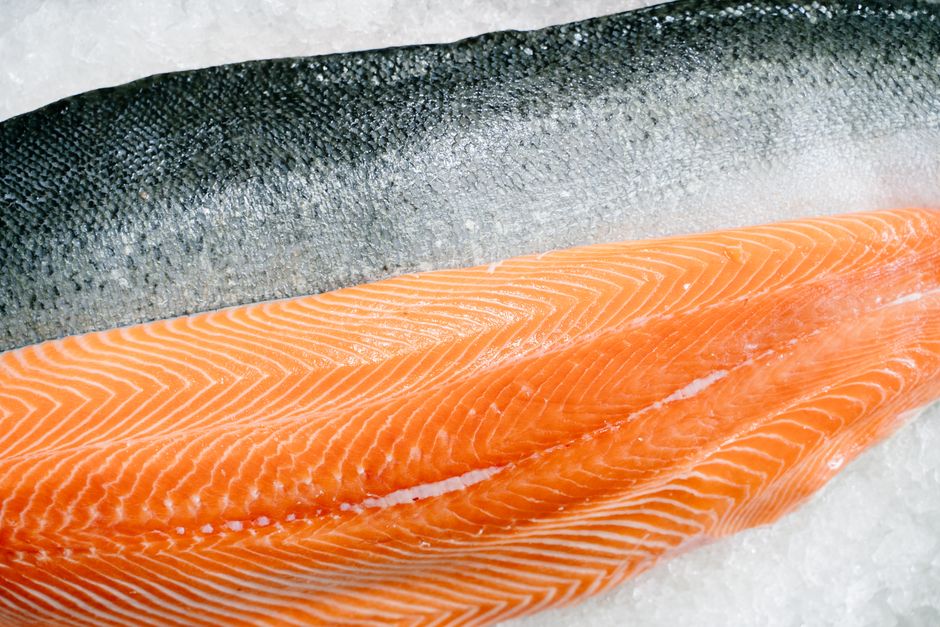
| Wild Salmon | Farmed Salmon | |
|---|---|---|
| Fat content | Leaner, roughly 5-10% fat depending on species and time of year caught | Fattier, roughly 15-20% fat from a consistent high-calorie feed diet |
| Flavor | Stronger, more distinct 'ocean' flavor that varies by species (king, sockeye, coho) | Milder, buttery, and consistent fillet to fillet |
| Color | Deep red-orange from a natural diet of krill and small crustaceans | Pink-orange from astaxanthin added to the feed pellets |
| Price | $15-25 per pound, higher for king or sockeye | $8-12 per pound, cheaper year-round |
| Texture | Firmer and leaner, dries out faster if overcooked | Softer and fattier, more forgiving on the heat |
| Availability | Seasonal, roughly May through September for most Pacific species, frozen the rest of the year | Available fresh year-round |
| Omega-3 content | Around 1.5 grams per 100 grams | Around 2.0-2.5 grams per 100 grams, due to the higher overall fat content |
| Where it comes from | Caught in open water using troll, gillnet, or seine methods | Raised in ocean net pens or land-based tanks and fed pellet feed |
Verdict
Choose wild salmon for a leaner fillet with a stronger, more distinct flavor, and look for MSC-certified or Alaskan sources for the most sustainable option. Choose farmed salmon for a milder, fattier fillet that's cheaper, more consistent, and available year-round.
Wild Salmon
Wild salmon spends its life swimming in open ocean and rivers, eating a varied diet of krill, shrimp, and smaller fish, which gives it that deep red-orange color and a more pronounced flavor. It's leaner because it's constantly active, and different species taste noticeably different: king salmon is the richest and fattiest of the wild options, sockeye is the leanest and most intensely flavored, and coho falls in between. Most wild salmon sold fresh is only in season for a few months a year, so outside that window it's typically previously-frozen.
Farmed Salmon
Farmed salmon, almost always Atlantic salmon, is raised in ocean net pens or closed land-based systems and fed a controlled pellet diet that includes fish meal, fish oil, and often plant-based proteins. That steady, high-fat diet produces a fattier, more uniform fillet with a milder flavor, since the fish doesn't have to migrate or hunt for food. Because it's raised on a schedule rather than caught seasonally, it's available fresh in grocery stores all year and costs noticeably less than wild-caught.
Which One Cooks Better
Farmed salmon's higher fat content makes it more forgiving on the grill or in a hot pan, since the extra fat bastes the fish as it cooks and buys a little more room for error before it dries out. Wild salmon, being leaner, cooks faster and is easy to overshoot past medium, so it benefits from slightly lower heat, a shorter cook time, or a marinade or basting fat like butter or olive oil to compensate for the lack of internal fat.
FAQ
Is wild salmon healthier than farmed salmon?
They're both good sources of protein and omega-3s, but farmed salmon actually has more total omega-3 fat per serving because of its higher overall fat content; wild salmon has fewer calories and less fat overall, so 'healthier' depends on what you're optimizing for.
Why is wild salmon more expensive?
It's limited by season and weather, has to be caught rather than raised on a schedule, and commercial fishing has higher labor and fuel costs than aquaculture, all of which drive up the per-pound price.
How can you tell wild salmon from farmed salmon at the store?
Wild salmon has a deeper, more uniform red-orange color and leaner flesh with thin, closely spaced white fat lines, while farmed salmon is paler pink-orange with thicker, more visible streaks of white fat running through the fillet.
Does farmed salmon taste 'fishier' than wild salmon?
No, it's usually the opposite: farmed salmon's controlled diet gives it a milder, more neutral flavor, while wild salmon's varied diet of small crustaceans and baitfish gives it a stronger, more distinct oceanic taste.
Can you substitute one for the other in a recipe?
Yes, but adjust the cook time: farmed salmon's higher fat content means it can handle a couple extra minutes on the heat, while wild salmon should come off the heat slightly sooner to avoid drying out.