
Acerola
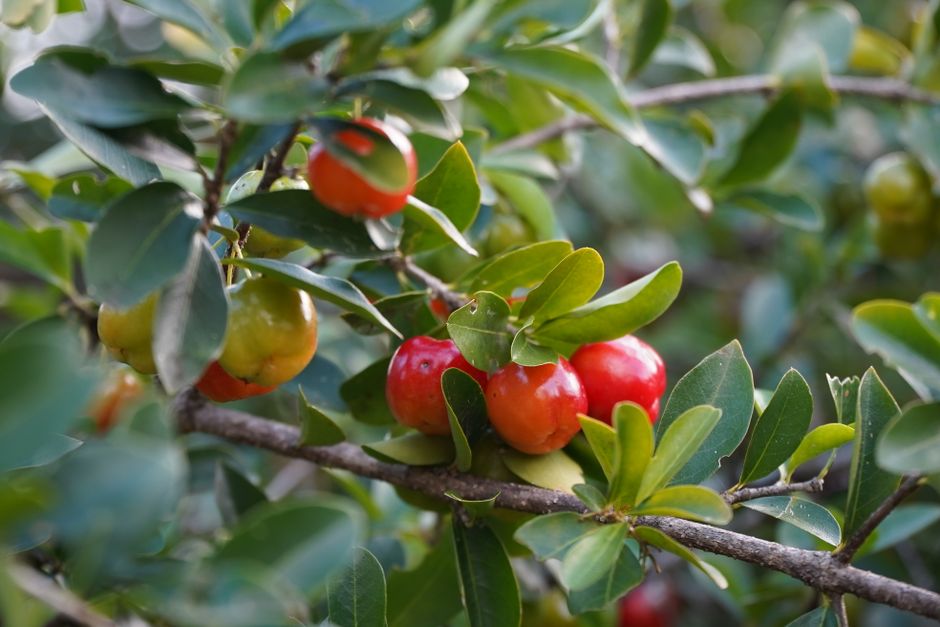
Acerola (Malpighia emarginata), also called West Indian cherry or Barbados cherry, is a small red tropical fruit that resembles a cherry but belongs to a different plant family. It has thin skin, juicy flesh, and a sharp, tart flavor closer to a cranberry than a sweet cherry. Acerola is best known for having one of the highest natural vitamin C concentrations of any fruit, which is why it shows up far more often as a dried powder or extract than as fresh fruit outside tropical growing regions.
Varieties
Acerola is sometimes confused with the common sweet or sour cherry (Prunus species) because of the shared name, but the two are botanically unrelated and taste nothing alike; acerola is much more sour and thin-skinned, and its nutritional profile, especially vitamin C, is dramatically higher.
Buying tips
Fresh acerola is rarely sold outside tropical growing regions like Brazil, the Caribbean, and parts of Florida and Hawaii; most shoppers elsewhere will only find it as a freeze-dried powder or juice concentrate. When buying powder, check that acerola is the first ingredient rather than a minor addition to a fruit blend, and look for one processed at low temperatures, since heat degrades vitamin C content.
Substitutes
Acerola powder (freeze-dried) — 1:1 by volume
The closest match when a recipe or smoothie calls for fresh acerola pulp but only powder is available; rehydrate with a splash of water or juice first.
Camu camu powder — 1:1
Another Amazonian fruit powder with an even higher vitamin C content and a similarly tart, slightly bitter edge; works in smoothies and juices interchangeably.
Fresh cranberries or sour cherries — 1:1 by weight
Matches the tartness and red color for cooking or baking, but has far less vitamin C, so this is a flavor substitute only, not a nutritional one.
Rosehip powder — 1:2 (use half as much rosehip)
Rosehip is more concentrated and slightly floral, so start with less and adjust to taste.
Vitamin C supplement (ascorbic acid powder) — Not a flavor substitute
Only use this if the goal is replacing acerola's nutritional role in a recipe, such as a homemade electrolyte mix; it has no fruit flavor at all.
Storage
Fresh acerola is extremely perishable and starts breaking down within a day or two of ripening, so refrigerate it immediately in a single layer and use within 2 to 3 days. It also freezes well: pit if possible, then freeze in a single layer before transferring to a bag, where it keeps for up to 6 months. Acerola powder should be kept in an airtight container away from light and moisture, where it stays potent for about a year.
How to use
Fresh acerola is eaten raw with a bit of sugar to offset the tartness, blended into juices and smoothies, or cooked down into jams and syrups since heat mellows the sourness. The powder is more common in North American and European kitchens and gets stirred into smoothies, yogurt, or homemade vitamin C drink mixes rather than used in baking, where its color and flavor are too subtle to notice.
What it pairs with
Pairs well with tropical fruits like pineapple, mango, and passion fruit in juices, and with citrus in vitamin C boosted drink blends. In jams, a touch of vanilla or cinnamon rounds out its sharp edge.
Nutrition
Acerola is exceptionally high in vitamin C, often cited between 1,000 and 4,500 mg per 100 grams of fresh fruit depending on ripeness, roughly 20 to 50 times the vitamin C of an orange by weight. It also contains modest amounts of vitamin A and polyphenols, but its main nutritional claim to fame is vitamin C density.
FAQ
Is acerola the same as regular cherries?
No. Acerola belongs to the Malpighiaceae family and only resembles cherries in size, shape, and color. Regular cherries belong to the Prunus genus and have a much sweeter flavor and far less vitamin C.
Can acerola powder be used in baking?
It can, but heat and prolonged baking destroy much of its vitamin C content, so it's more effective added to no-cook or lightly heated foods like smoothies, frostings, or dressings.
Why is fresh acerola so hard to find in stores?
The fruit bruises and spoils within a day or two of ripening and doesn't ship well, so most of the crop is processed into powder, juice, or extract close to where it's grown rather than sold fresh.
Does cooking acerola destroy its vitamin C?
Yes, vitamin C is heat-sensitive and breaks down during cooking, so jams and syrups made from acerola retain flavor and color but lose a significant portion of the raw fruit's vitamin C content.
Have acerola on hand? Find recipes with our Recipe Generator →