
Adobada
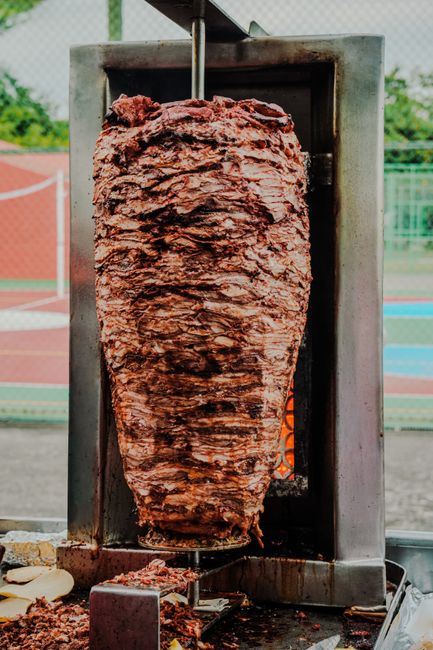
Adobada is a Mexican preparation in which meat, most often pork shoulder, is marinated in a thick red adobo made from soaked dried chiles, vinegar, garlic, and warm spices, then seared on a hot griddle or roasted until the edges char. The word covers both the marinade itself and the finished dish; taco stands that sell it call it tacos de adobada. A traditional adobo base is built from rehydrated guajillo and ancho chiles blended with garlic, cumin, Mexican oregano, black pepper, and vinegar into a paste thick enough to cling to the meat rather than run off it.
Varieties
Adobada is often confused with al pastor: both use a red chile marinade on pork, but al pastor traditionally includes achiote, pineapple, and is cooked shaved off a vertical trompo spit, while adobada is typically griddled or roasted in a pan without the spit. Mexican adobada also shares no real cooking connection with Filipino adobo, which is a soy sauce and vinegar braise; the two dishes only share the Spanish root word for 'marinade' or 'seasoning'.
Buying tips
Fresh adobada is often sold pre-marinated in sealed bags in the refrigerated Mexican foods section of well-stocked grocery stores; check the ingredient list if avoiding added nitrites or excess sodium. For a homemade batch, buy whole dried guajillo and ancho chiles rather than pre-ground chile powder; whole chiles that are pliable and glossy (not brittle or dusty) give a rounder, fresher flavor once soaked and blended.
Substitutes
Achiote paste (recado rojo) — 1:1 by volume
Earthier and less spicy than a guajillo-ancho adobo, with an orange-red color from annatto instead of a deep brick red. Common in Yucatecan-style adobada and cochinita pibil.
Canned chipotles in adobo, blended smooth — 3/4 cup puree per 1 cup homemade adobo
Hotter and smokier than a classic guajillo-ancho paste, so thin it with a little extra vinegar and a pinch of sugar to soften the heat and match the sweetness.
Ancho or New Mexico chile powder paste — 1/4 cup chile powder plus 1/3 cup vinegar per 1 cup homemade adobo
Whisk the powder and vinegar into a paste and simmer briefly to bloom the flavor; it lacks the body of soaked whole chiles, so the marinade will be thinner.
Store-bought adobo seasoning packet plus vinegar — 1 packet plus 1/4 cup vinegar per 1 cup homemade adobo
Fastest option and reasonably close in flavor, but check the label since many packets skip garlic and oregano and lean heavily on cumin and paprika.
Storage
Homemade adobo paste keeps in an airtight jar in the refrigerator for about 2 weeks and freezes well for up to 3 months in a flat bag. Once meat is coated in the marinade, keep it refrigerated and cook within 24 hours; the vinegar keeps breaking down the muscle fibers the longer it sits, and past a day or two the texture turns mushy instead of tender.
How to use
Adobada is the filling for tacos de adobada: diced or thin-sliced pork seared on a hot plancha with onion, then piled onto warm corn tortillas with chopped white onion, cilantro, and a squeeze of lime. The same marinade works on chicken thighs, shrimp, or beef for tortas, burritos, or as a topping for tostadas. It also braises well; simmering marinated pork shoulder low and slow before shredding gives a result closer to a spicy pulled pork.
What it pairs with
Serves well with grilled pineapple, chopped white onion, cilantro, and lime, the same accompaniments used for al pastor. Salsa verde or a squeeze of Valentina hot sauce cuts through the richness, and a side of refried beans or Mexican rice rounds out a plate version instead of tacos.
Nutrition
A serving of pork adobada made from pork shoulder runs high in protein with a moderate amount of fat depending on how much is trimmed before cooking. The dried chiles contribute vitamin A and some vitamin C, and the marinade itself adds meaningful sodium, especially in store-bought versions with added salt or preservatives.
FAQ
What is the difference between adobada and al pastor?
Adobada is marinated pork cooked on a flat griddle or in the oven, usually diced or thin-sliced. Al pastor uses a similar red chile marinade but is traditionally stacked on a vertical trompo with pineapple and shaved off in thin ribbons as it cooks.
Is Mexican adobo the same sauce used in Filipino adobo?
No. Mexican adobo is a chile, garlic, and vinegar paste used as a marinade; Filipino adobo is a soy sauce and vinegar braising liquid. They developed independently and only share a Spanish-derived name.
Can adobada be made with chicken or beef instead of pork?
Yes. Chicken thighs and thin-cut beef both take the marinade well; chicken needs less marinating time, around 2 to 4 hours, since it's more delicate than pork shoulder.
How long should meat marinate in adobo before cooking?
Most cuts do well marinating 4 to 24 hours in the refrigerator. Beyond about 24 to 48 hours the vinegar breaks down the proteins too far and the meat turns mushy rather than tender.
Have adobada on hand? Find recipes with our Recipe Generator →