
Alaska Roll
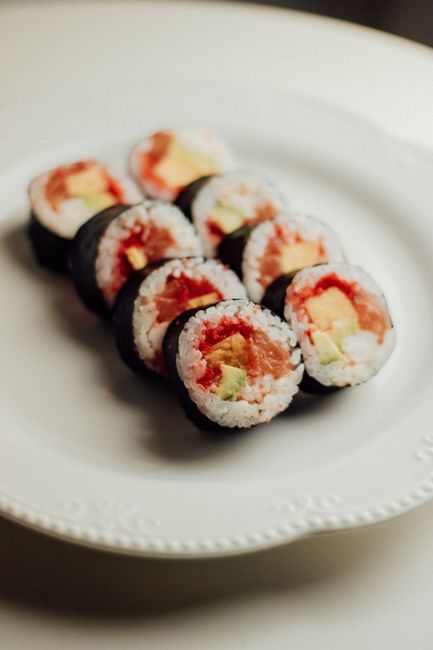
An Alaska roll is a maki-style sushi roll built around raw or smoked salmon, avocado, and cucumber, rolled with sushi rice and nori, usually uramaki style with the rice on the outside and a thin cap of salmon draped over the top. It was developed outside Japan as a West Coast riff on the California roll, swapping imitation crab for real (or smoked) salmon, and it's now a standard item on most American and Canadian sushi menus.
Varieties
The Alaska roll is often confused with the California roll and Philadelphia roll. A California roll uses imitation crab (or real crab) with avocado and cucumber, no salmon. A Philadelphia roll swaps in cream cheese alongside salmon. The Alaska roll is distinguished by real or smoked salmon draped over the outside with no crab or cream cheese involved.
Buying tips
For raw preparation, buy salmon specifically labeled sushi-grade or sashimi-grade from a fishmonger who can speak to how it was handled and frozen; standard grocery store fillets aren't reliably safe eaten raw. For a cooked version, any fresh or thawed frozen salmon works.
Substitutes
Smoked salmon in place of raw sashimi-grade salmon — 1:1 by weight
Common home-kitchen swap since it doesn't require sushi-grade fish; gives a saltier, denser texture than raw salmon.
Cooked shrimp in place of salmon — 1:1 by weight
Turns the roll closer to a shrimp version of a California roll; use cooked, cooled shrimp sliced thin lengthwise.
Mango in place of avocado — 1:1 by volume
Adds sweetness and a firmer bite; slice into matchsticks the same size as the avocado strips it replaces.
English cucumber in place of Persian cucumber — 1:1 by length
Seed it first since English cucumber holds more water, which can make the roll soggy if left unseeded.
Canned salmon in place of fresh, for a cooked filling — 1:1 by weight, drained
Only works well flaked and mixed with a little mayonnaise, more like a spicy salmon roll than a classic Alaska roll.
Storage
Sushi rolls are best eaten within an hour of rolling since the rice firms up and the nori softens as it sits. If storing leftovers, wrap tightly in plastic and refrigerate for up to a day; bring back closer to room temperature before eating because cold rice turns hard and dense straight from the fridge.
How to use
Served as a starter or party platter item, sliced into 6-8 pieces and eaten with soy sauce, wasabi, and pickled ginger. It also works scaled up as a hand roll (temaki) for a quicker, no-slicing version.
What it pairs with
Pairs with miso soup, a simple seaweed salad, or edamame as a light meal, and with a dry, slightly acidic white wine or cold sake if serving as an appetizer course.
Nutrition
A typical 6-8 piece roll runs around 300-350 calories, with the salmon contributing a solid dose of protein and omega-3 fats; the rice is the main carbohydrate source, so portion size matters more than the fillings for calorie counts.
FAQ
What's actually in an Alaska roll?
Sushi rice, nori, avocado, and cucumber rolled inside, with a layer of raw or smoked salmon laid over the outside of the roll.
Is the salmon in an Alaska roll always raw?
No. Many restaurants and most home versions use smoked salmon, which is already cooked-cured and doesn't require sushi-grade fish handling.
What's the difference between an Alaska roll and a California roll?
A California roll uses imitation or real crab with avocado and cucumber and no fish on top; the Alaska roll replaces the crab with a cap of salmon.
Can you make an Alaska roll without raw fish at home?
Yes, smoked salmon or well-cooked salmon works fine and avoids any sushi-grade sourcing requirements.
Why is it called an Alaska roll if it's not a Japanese dish?
It was created in North America, likely named for the Alaskan salmon used in it, as a regional variation rather than a traditional Japanese roll.
Have alaska roll on hand? Find recipes with our Recipe Generator →