
Beef Carpaccio
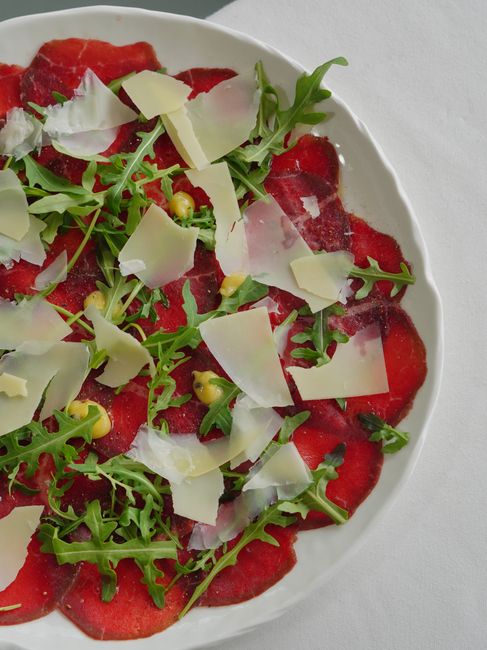
Beef carpaccio is raw beef sliced paper-thin and served uncooked, traditionally dressed with olive oil, lemon juice, and shaved Parmesan. It was invented at Harry's Bar in Venice in 1950, named for the pinkish-red palette of painter Vittore Carpaccio. The beef is almost always tenderloin, prized for its buttery texture and mild flavor since there's no cooking to mask toughness or gaminess.
Varieties
Carpaccio now refers more broadly to any food sliced paper-thin and served raw or barely cooked, including tuna, salmon, and even fruit or vegetable versions. This distinguishes it from tartare, which is hand-chopped or minced rather than sliced, and from crudo, an Italian-style raw fish preparation that overlaps with carpaccio but is specific to seafood.
Buying tips
Ask the butcher specifically for beef intended to be eaten raw; this usually means center-cut tenderloin (filet) from a trusted, high-turnover source, ideally USDA Choice or Prime. The meat should smell clean and faintly sweet, never sour, with a bright cherry-red color and no graying at the edges. Many butchers will slice it to order on a deli slicer if asked, which produces more even slices than a home knife.
Substitutes
Beef eye of round or top sirloin (well-trimmed) — 1:1
Firmer and slightly chewier than tenderloin but far cheaper; freeze briefly before slicing to compensate for the tougher grain.
Veal tenderloin — 1:1
Milder and slightly sweeter than beef, with a similar buttery texture when sliced thin.
Venison loin — 1:1
Leaner and more mineral-tasting; trim silverskin thoroughly since it doesn't soften when raw.
Sashimi-grade tuna — 1:1
Not beef at all, but the classic seafood parallel; use the same thin-slicing and citrus-oil dressing technique for a tuna carpaccio.
Seared beef tenderloin, chilled and sliced thin — 1:1
For anyone avoiding raw beef; sear all sides hard in a very hot pan for about 30 seconds per side, chill fully, then slice as thin as possible. Texture is firmer and the flavor loses some of the delicate rawness.
Portobello mushroom, thinly sliced — 1:1
A vegetarian stand-in that mimics the presentation; marinate briefly in olive oil and lemon juice since raw mushroom is bland on its own.
Storage
Buy beef for carpaccio the same day it will be served. Keep it in the coldest part of the refrigerator, well wrapped, and slice it as close to serving time as possible. Once sliced and dressed, carpaccio doesn't hold well; the acid in the dressing begins to change the surface texture of the meat within an hour.
How to use
Serve as a first course or light main, fanned out on a chilled plate and dressed just before serving with olive oil, lemon juice, and salt. Common additions include shaved Parmesan, capers, arugula, thinly sliced shallot, or a light mustard-mayonnaise drizzle. Keep portions small (2 to 3 ounces) since the flavor is rich and the dish is meant as a starter, not a main protein serving.
What it pairs with
Pairs well with peppery arugula, shaved Parmesan or Grana Padano, capers, thinly sliced shallot or red onion, and a squeeze of lemon. A drizzle of good extra-virgin olive oil and cracked black pepper is often all it needs; truffle oil or shaved fresh truffle is a common upscale addition.
Nutrition
A 3-ounce serving of raw beef tenderloin has roughly 150 calories and 22 grams of protein, with no carbohydrates. It's a good source of iron, zinc, and vitamin B12, though the added olive oil and cheese increase the calorie count of the finished dish.
FAQ
Is beef carpaccio safe to eat?
It carries the same food safety considerations as any raw meat: use very fresh, high-quality beef from a source that handles it for raw consumption, keep it cold until serving, and eat it the same day it's sliced. Pregnant women, young children, older adults, and anyone immunocompromised should avoid it.
How do you slice beef thin enough for carpaccio without a slicer?
Wrap the trimmed tenderloin tightly in plastic and freeze it for about 45 to 60 minutes, just until firm but not solid. A partially frozen roast holds its shape and slices far more evenly with a sharp knife than fully thawed meat.
Can you use frozen beef for carpaccio?
Beef that's been previously frozen and properly thawed is fine and actually easier to slice thin than fresh, but it should never be sliced and served while still frozen solid, and it should still come from a source rated for raw consumption.
What's the difference between carpaccio and tartare?
Carpaccio is sliced into thin, wide sheets and usually dressed lightly with oil and acid; tartare is finely chopped or hand-minced and typically mixed with stronger seasonings like mustard, egg yolk, capers, and onion.
Have beef carpaccio on hand? Find recipes with our Recipe Generator →