
Boudin Sausage
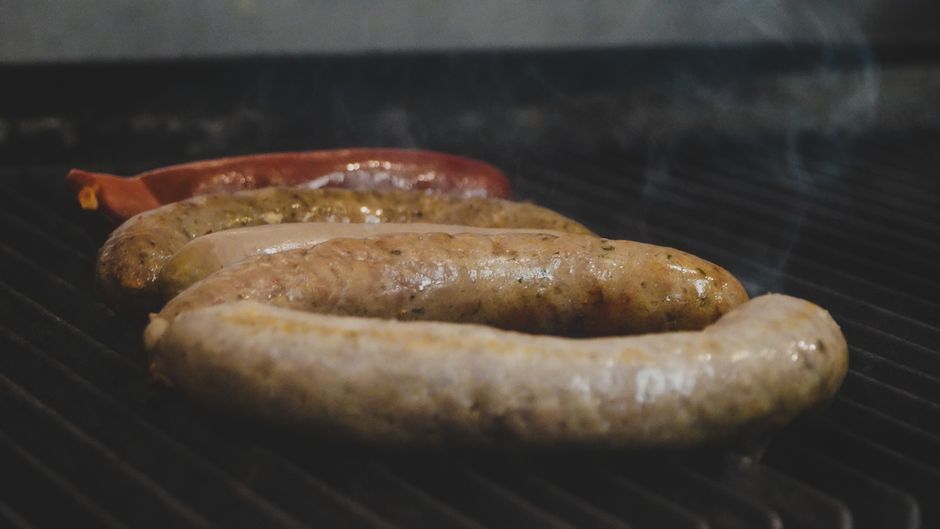
Boudin (pronounced boo-DAN) is a Cajun sausage from south Louisiana made by stuffing a mixture of cooked pork, pork liver, rice, onions, celery, and cayenne-heavy Cajun seasoning into a natural casing. Unlike most American sausages, it's already fully cooked when sold, since the meat and rice are cooked together before stuffing, so it only needs reheating rather than cooking through.
Varieties
Cajun boudin (sometimes called boudin blanc in Louisiana, confusingly) is the pork-and-rice sausage described here. French boudin blanc is a different, milder white sausage made with veal, chicken, or pork plus cream and eggs, with no rice. Boudin noir (blood sausage) uses pork blood as its base instead of rice and has a darker color and richer, iron-forward flavor. The three share a name but are not interchangeable in most recipes.
Buying tips
In Louisiana, buy from a butcher shop, gas station, or grocery meat counter that makes it fresh daily; the rice-to-meat ratio and heat level vary a lot by maker. Outside Louisiana, look for it in the refrigerated or frozen section of larger grocery chains, often labeled 'Cajun boudin' to distinguish it from French boudin blanc or boudin noir. The casing should look taut and moist, not dried out or cracked.
Substitutes
Andouille sausage, crumbled, mixed with cooked white rice — 3:1 (sausage to rice by volume)
Combine crumbled andouille with cooked rice and a pinch of cayenne to approximate the texture and heat of boudin; won't have the liver richness.
Breakfast sausage (bulk, not in casing) mixed with cooked rice — Equal parts by volume
Cook bulk sausage with diced onion, then fold in warm cooked rice and cayenne. Milder than real boudin, but close in texture for stuffing or boudin balls.
Kielbasa or smoked pork sausage — 1:1 by weight
No rice filling, so texture is firmer and denser, but it works as a stand-in in gumbo or on a plate where boudin would be sliced and served.
Boudin blanc (French-style white sausage) — 1:1 by weight
Milder, no cayenne, and usually made with veal or chicken plus cream instead of pork liver and rice; a reasonable swap in dishes that just need a soft, mild link sausage.
Storage
Keep fresh boudin refrigerated and use within 3 to 4 days of purchase. It freezes well for up to 2 months; wrap links individually in plastic before bagging so they thaw one at a time. Thaw in the refrigerator overnight before reheating.
How to use
Since boudin is precooked, the goal is just heating it through: simmer links in water for 8 to 10 minutes, steam for about 10 minutes, or grill over medium heat for 10 to 12 minutes, turning occasionally, until the casing is lightly charred. It's traditionally squeezed from the casing straight onto a cracker or eaten by hand with the casing split open. Leftover filling also gets rolled into balls, breaded, and deep-fried as boudin balls, or stuffed into kolaches.
What it pairs with
Serve with saltine crackers, spicy brown or Creole mustard, and pickled okra or pickled quail eggs. It also pairs well with a cold light beer and shows up alongside étouffée or gumbo as part of a larger Cajun spread.
Nutrition
Boudin is calorie-dense and high in sodium, since it combines fatty pork, pork liver, and heavily seasoned rice. A typical link runs 300 to 400 calories, with a meaningful amount of saturated fat and, thanks to the liver, more iron and vitamin A than a standard pork sausage.
FAQ
Is boudin sausage already cooked?
Yes. The pork, liver, and rice are all cooked before stuffing, so boudin only needs to be reheated, not cooked through, before eating.
Do you eat the casing on boudin?
Most people don't eat the natural casing itself; it's split open or squeezed to release the filling. Some casings are tender enough to eat, but the traditional method is to discard it.
What makes boudin different from regular pork sausage?
Boudin is bulked out with cooked rice rather than being all meat, which gives it a softer, looser texture, and it typically includes pork liver for a deeper, slightly mineral flavor that standard breakfast or Italian sausage doesn't have.
Can boudin be baked instead of boiled or grilled?
Yes. Bake links at 350°F for about 15 to 20 minutes, turning once, until the casing is lightly browned and the filling is hot throughout.
Have boudin sausage on hand? Find recipes with our Recipe Generator →