
Branzino
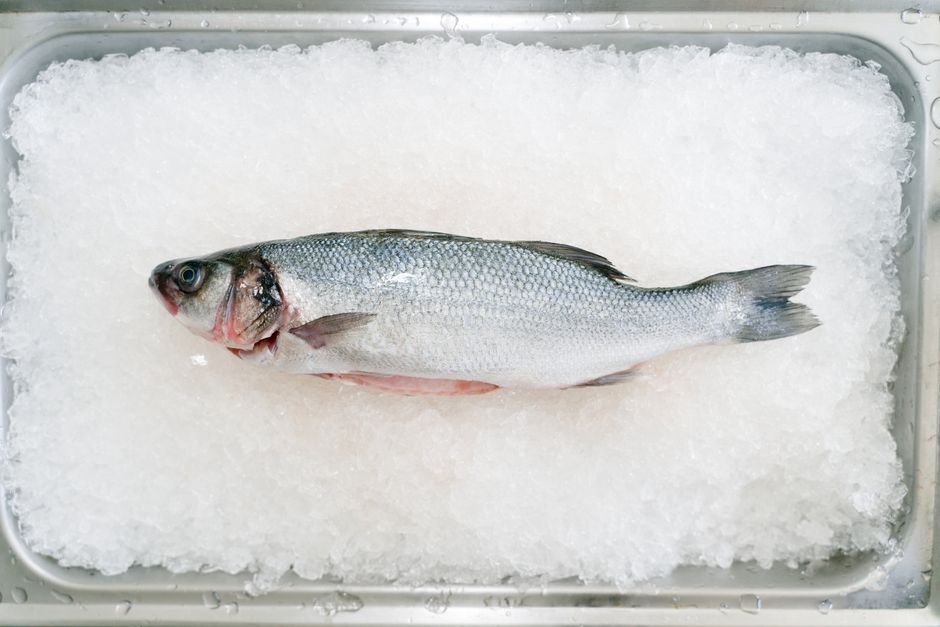
Branzino (Dicentrarchus labrax) is the Italian name for European sea bass, a mild, lean white fish found along the coasts of the Mediterranean and eastern Atlantic. It's prized for its delicate, slightly sweet flesh, thin skin that crisps well, and manageable size, most sold whole weigh between 1 and 2 pounds, making one fish a reasonable single serving or two smaller portions.
Varieties
European sea bass sold as "branzino" is the same fish sold as "loup de mer" in French and "spigola" in some Italian regions; the naming varies by market but the species is identical. It should not be confused with Chilean sea bass (Patagonian toothfish), a completely different, fattier, and much larger fish often substituted in American restaurants under a similar-sounding name.
Buying tips
Whole branzino should have clear, bulging eyes, bright red gills, and firm flesh that springs back when pressed, with no strong fishy odor beyond a clean, briny smell. Ask the fishmonger to scale and gut it if buying whole; most will do this for free. Farmed branzino is widely available and consistent in size and quality, while wild-caught tends to have slightly firmer flesh and a higher price.
Substitutes
Striped bass — 1:1 by weight
Very close in texture and flavor, slightly firmer flesh; the best swap for whole roasting or grilling.
Red snapper — 1:1 by weight
Slightly sweeter and firmer, holds up well to the same simple preparations of olive oil, lemon, and herbs.
Sea bream (dorade) — 1:1 by weight
Nearly interchangeable in Mediterranean cooking; similar size, skin, and mild flavor.
Fluke or flounder fillets — 1:1 by weight
Good for fillet preparations, but too delicate to roast whole the way branzino is typically served.
Halibut fillets — 1:1 by weight
Firmer and meatier than branzino, works for pan-searing but won't replicate the thin, crispy skin.
Storage
Keep whole branzino on ice or wrapped tightly in the coldest part of the refrigerator and cook within a day of purchase. Fillets should be used within a day or two; freeze whole fish or fillets tightly wrapped in plastic and foil for up to 3 months, though texture softens slightly after thawing.
How to use
Best roasted or grilled whole with the skin on, stuffed with lemon slices and herbs like rosemary or fennel fronds, which keeps the flesh moist while the skin crisps. Also good pan-seared skin-side down as fillets, or baked in parchment (en papillote) with white wine and vegetables. Because the flavor is mild, it takes on whatever fat, acid, and herbs it's cooked with rather than fighting them.
What it pairs with
Pairs well with olive oil, lemon, garlic, capers, fennel, and fresh herbs like parsley, dill, or thyme. On the plate, it goes naturally with white beans, roasted potatoes, sauteed greens, or a simple arugula salad, and with dry white wines like Vermentino or Sauvignon Blanc.
Nutrition
A 4-ounce serving of branzino has roughly 100 to 110 calories, about 20 grams of protein, and 2 to 3 grams of fat, making it one of the leaner white fish options. It also provides selenium and a modest amount of omega-3 fatty acids, though less than fattier fish like salmon.
FAQ
Is branzino the same fish as Chilean sea bass?
No. Branzino is European sea bass, a small, lean fish. Chilean sea bass is Patagonian toothfish, an unrelated species that's much larger, fattier, and has a buttery texture branzino doesn't have.
Can you eat branzino skin?
Yes, and it's the best part when cooked properly. Pat the skin dry before cooking and sear or roast it uncovered so it crisps rather than steams.
How do you know when whole branzino is fully cooked?
The flesh should be opaque and flake easily from the bone near the spine, and an instant-read thermometer inserted at the thickest part behind the head should read about 135 to 140°F.
Is farmed branzino lower quality than wild?
Not necessarily. Farmed branzino from the Mediterranean is closely regulated, consistently sized, and often fresher since it doesn't travel as far; wild branzino has slightly firmer flesh but more variable size and price.
Have branzino on hand? Find recipes with our Recipe Generator →