
Bulgur Wheat
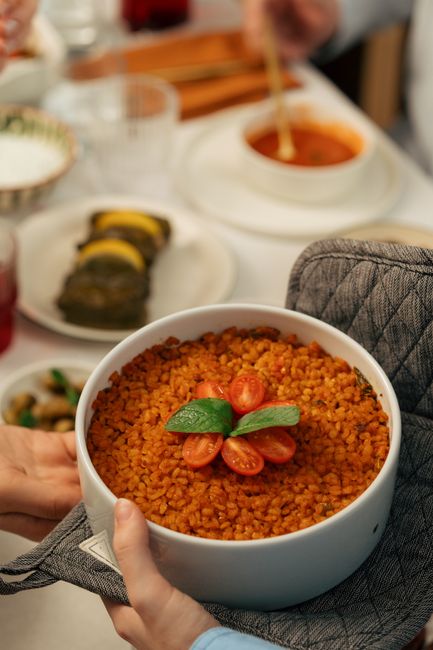
Bulgur wheat is made from whole wheat kernels that have been parboiled, dried, and cracked into pieces. Because it's partially cooked before packaging, it needs far less time on the stove than most whole grains, usually just a soak or a short simmer. It has a light, nutty flavor and a chewy texture, and it's sold in different grinds, from fine (used in tabbouleh) to coarse (used in pilafs).
Varieties
Fine bulgur is used for tabbouleh and kibbeh, where the grains need to soften without cooking. Medium bulgur is common in pilafs. Coarse bulgur holds its shape best and is used in stuffings and stews. Bulgur is also distinct from cracked wheat, which is raw and unparboiled and requires longer cooking.
Buying tips
Check the package for the grind size (fine, medium, or coarse) since recipes call for specific grinds and they aren't interchangeable without adjusting liquid and cook time. Buy from a store with good turnover, since bulgur can taste stale if it's sat on a shelf too long.
Substitutes
Quinoa — 1:1
Similar cook time and a fluffy texture, but quinoa is gluten-free and has a slightly grassier taste with a visible germ ring.
Couscous — 1:1
Couscous is pasta, not a whole grain, so it's softer and less chewy, but works as a quick swap in salads like tabbouleh.
Cracked wheat (uncooked) — 1:1 by volume, but simmer 15-20 minutes
The unparboiled version of the same wheat; it needs full cooking rather than a quick soak since it hasn't been pre-steamed.
Farro — 1:1
Chewier and nuttier with a longer cook time (25-30 minutes), good in pilafs and grain bowls but too dense for tabbouleh.
Brown rice — 1:1
Milder flavor and a longer cook time; best in pilaf-style dishes rather than cold salads where bulgur's chew matters.
Cauliflower rice — 1:1 by volume
A low-carb option for salads like tabbouleh; it won't absorb dressing the way bulgur does, so add it just before serving.
Storage
Store dry bulgur in an airtight container in a cool, dark pantry for up to a year; the germ has already been removed in processing, so it's more stable than whole wheat berries. Cooked bulgur keeps in the refrigerator for about 5 days in a sealed container, or frozen for up to 3 months.
How to use
Fine bulgur is the base of tabbouleh and kibbeh, and only needs to be soaked in hot water for 15-20 minutes off the heat. Coarse bulgur is simmered like rice, about 1 3/4 cups liquid to 1 cup bulgur for 12-15 minutes, and works in pilafs, stuffed vegetables, and as a side in place of rice or couscous.
What it pairs with
Pairs well with lemon, parsley, mint, olive oil, tomatoes, and chickpeas in Middle Eastern-style salads, and with roasted vegetables, lamb, or grilled chicken in pilafs.
Nutrition
Bulgur retains the wheat bran and germ, so it's higher in fiber and protein than white rice or couscous, with roughly 8 grams of fiber and 6 grams of protein per cooked cup.
FAQ
Do I need to cook bulgur or just soak it?
Fine bulgur can simply be soaked in hot water off the heat for about 15-20 minutes. Medium and coarse bulgur generally need a short simmer, around 12-15 minutes, to fully soften.
Is bulgur wheat gluten-free?
No, bulgur is made from wheat and contains gluten. Quinoa or cauliflower rice are the substitutes to use for a gluten-free version of the same dish.
Why is my bulgur mushy instead of fluffy?
Too much liquid or too long a cook time is the usual cause. Coarse bulgur needs less water than rice, roughly 1 3/4 cups per cup of grain, and should be removed from heat as soon as the liquid is absorbed.
Is bulgur the same as cracked wheat?
They start from the same wheat kernel, but bulgur has been parboiled before cracking, which is why it cooks so much faster than raw cracked wheat.
Have bulgur wheat on hand? Find recipes with our Recipe Generator →