
Cajeta
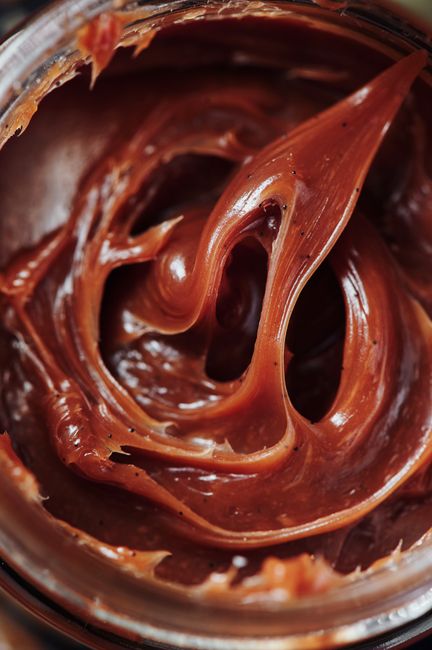
Cajeta is a Mexican caramel sauce made by slowly simmering goat's milk (or a mix of goat and cow's milk) with sugar until it reduces to a thick, amber, spoonable syrup. The classic version comes from Celaya in Guanajuato, and the goat's milk gives it a tangier, slightly funky edge that plain cow's milk caramel doesn't have. It's sold in jars ranging from pale gold (envinada, sometimes spiked with sherry) to dark brown (quemada, cooked longer for a deeper burnt-sugar flavor).
Varieties
Cajeta quemada is cooked longer for a darker, slightly bitter, burnt-sugar flavor, while cajeta envinada has sherry or another wine stirred in near the end of cooking. Dulce de leche is often confused with cajeta but is traditionally made entirely from cow's milk and lacks the tang goat's milk provides.
Buying tips
Look for jars labeled 'cajeta de leche de cabra' to confirm real goat's milk content rather than a cow's milk blend sold under the same name. Coronado and Duquesa are widely available Mexican brands; Mexican grocery stores often stock a wider range including flavored versions like vanilla or wine (envinada).
Substitutes
Dulce de leche — 1:1
Made from cow's milk instead of goat's milk, so it's sweeter and milder with none of cajeta's tang, but it has the same texture and works in nearly every application.
Homemade caramel sauce (cream, butter, sugar) — 1:1
Straightforward buttery caramel with no tang at all; add a squeeze of lemon juice or a pinch of goat cheese whisked in to fake some of cajeta's edge.
Sweetened condensed milk, simmered until caramelized — 1:1
Simmer an unopened can in water for 2 to 3 hours, or cook the milk directly in a pan over low heat, stirring often, until it turns deep amber.
Store-bought goat milk caramel (non-Mexican brands) — 1:1
Some specialty and Middle Eastern grocers carry goat milk caramel under other names; flavor is close but cooking time and thickness can vary by brand.
Storage
Unopened jars keep at room temperature per the label, often 6 to 12 months. Once opened, refrigerate and it will keep for 2 to 3 months; it thickens significantly when cold, so bring to room temperature or warm gently before pouring. Homemade cajeta should be refrigerated and used within about 3 weeks.
How to use
Drizzle over ice cream, flan, churros, or pancakes; stir into coffee or hot chocolate; use as a filling for crepes, empanadas, or alfajores; or thin slightly with warm milk to make a dipping sauce for fruit. It's also the traditional topping for crepas de cajeta.
What it pairs with
Pairs well with toasted pecans or walnuts, cinnamon, vanilla ice cream, tart fruit like apple or pineapple, and dark coffee. Also good balanced against something salty, like a sprinkle of flaky sea salt or a smear on salted crackers.
Nutrition
Cajeta is essentially concentrated milk sugar, roughly 60 to 70 calories per tablespoon, with small amounts of calcium from the milk solids. It offers no meaningful protein or fiber, so treat it as a dessert sauce rather than a health food.
FAQ
Is cajeta the same as dulce de leche?
They're closely related but not identical. Cajeta is made from goat's milk (or a goat-cow blend) and has a tangier flavor, while dulce de leche is traditionally made from cow's milk and tastes sweeter and milder.
Why is cajeta sometimes very dark and sometimes light gold?
Cooking time and added ingredients change the color. Longer simmering caramelizes the sugars further and produces the darker cajeta quemada, while shorter cooking or added wine (envinada) yields a lighter, less bitter sauce.
Can cajeta be made without goat's milk?
A sauce made purely from cow's milk is really dulce de leche, not cajeta. Some producers blend the two milks to cut cost while keeping some of the characteristic tang.
Why did my homemade cajeta turn grainy?
Sugar crystals forming on the sides of the pan and getting stirred back in usually causes graininess. Avoid stirring too early in the cook and wipe down the pan's sides with a wet pastry brush if crystals start to form.
Have cajeta on hand? Find recipes with our Recipe Generator →