
Pecans
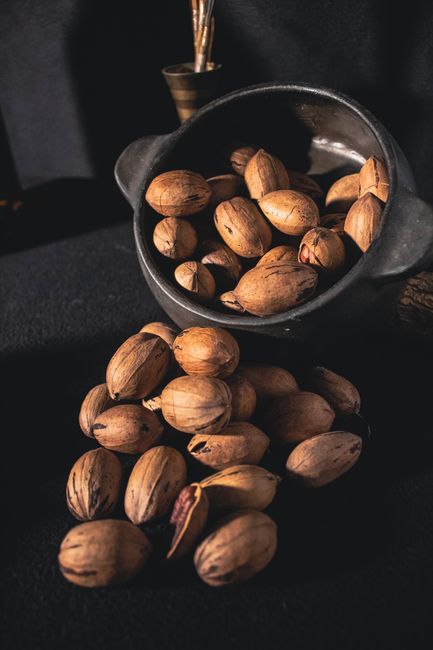
Pecans are the seed of the pecan tree (Carya illinoinensis), native to the southern United States and northern Mexico. They have a buttery, slightly sweet flavor and a soft, oily texture that sets them apart from firmer nuts like almonds. Sold shelled as halves or pieces, or in-shell, they're used in both sweet and savory cooking, though they're most closely associated with pecan pie and other Southern baking.
Varieties
Commercial varieties like Stuart, Desirable, and Elliott differ mainly in shell thickness and size rather than flavor, and are interchangeable in recipes. Pecans are a different species from walnuts; pecans are sweeter and softer, while walnuts have a firmer bite and a more bitter, tannic edge.
Buying tips
Choose shelled pecans that look plump and uniformly light tan; dark spots, shriveling, or a bitter smell mean the oils have started to break down. In-shell pecans should feel heavy for their size, a light shell usually means a dried-out or empty nut.
Substitutes
Walnuts — 1:1
Similar size and texture but more tannic and slightly bitter; toast lightly to soften the edge.
Sliced or slivered almonds — 1:1
Firmer and less sweet, but a fine stand-in for texture in salads or toppings.
Macadamia nuts — 1:1
Richer and more buttery than pecans, closest in fat content; good in cookies and candied nut mixes.
Cashews — 1:1
Milder and creamier with less of the tannic bite pecans have; works in savory dishes and granola.
Storage
Pecans are high in oil and go rancid faster than most nuts. Store shelled pecans in an airtight container in the refrigerator for up to 6 months, or in the freezer for up to a year. At room temperature in the pantry, they stay fresh for only about a month before the flavor starts to turn.
How to use
Use raw or toasted in baked goods like pecan pie, banana bread, and blondies, chopped over salads and oatmeal, ground into pie crusts or pesto, or candied with sugar and spices for a snack topping. Toast at 350°F for 6 to 8 minutes to bring out the oils before adding to a recipe.
What it pairs with
Pairs well with maple syrup, brown sugar, bourbon, cinnamon, and vanilla in desserts, and with blue cheese, dark leafy greens, and roasted sweet potatoes in savory dishes.
Nutrition
Pecans are calorie-dense and high in monounsaturated fat, with a solid amount of fiber, manganese, and copper per serving. A one-ounce (about 19 halves) serving has roughly 195 calories.
FAQ
Do pecans need to be refrigerated?
Not immediately, but their high oil content means they go rancid at room temperature within a few weeks. Refrigerating or freezing them keeps them fresh for months.
How can you tell if pecans have gone bad?
Rancid pecans smell faintly like paint or old crayons and taste bitter or soapy instead of sweet and buttery. Taste one before using a batch that's been stored a while.
Should pecans be toasted before baking with them?
Toasting isn't required but improves flavor noticeably, since heat releases the oils. Spread on a sheet pan and toast at 350°F for 6 to 8 minutes, stirring once, until fragrant.
Are pecans keto-friendly?
Yes. Pecans are one of the lowest-carb nuts, with about 4 grams of net carbs per ounce, making them a common choice in low-carb and keto baking.
Have pecans on hand? Find recipes with our Recipe Generator →