
Cajun Gumbo
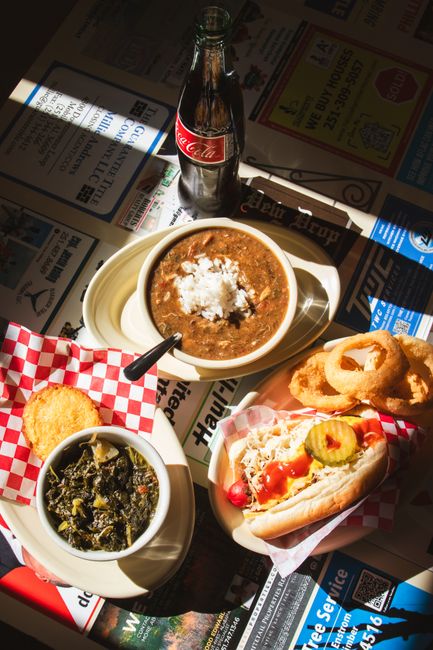
Cajun gumbo is a thick, dark stew from rural south Louisiana built on a roux cooked to the color of milk chocolate or darker, the 'holy trinity' of onion, celery, and bell pepper, and a protein base of andouille sausage, chicken, or seafood. Unlike Creole gumbo, it rarely includes tomatoes and leans on the roux itself for color and depth rather than added thickeners, though okra or filé powder are still common finishing touches.
Varieties
Cajun gumbo, from rural Acadiana, typically skips tomatoes and relies on a very dark roux for flavor and color. Creole gumbo, from New Orleans, often includes tomatoes and sometimes a lighter roux, giving it a redder, slightly tangier broth.
Buying tips
If buying andouille sausage, look for one labeled Louisiana-style with a coarse grind and visible pepper flecks; standard smoked sausage is much milder. Jarred dark roux is a legitimate shortcut for weeknight gumbo and tastes close to homemade if you doctor it with a little extra oil while heating.
Substitutes
Filé powder (ground dried sassafras leaves) — 1 teaspoon per quart of gumbo
Stir in off the heat after the pot is removed from the stove; boiling filé makes the broth stringy and slightly gummy.
Sliced okra — 1 cup per quart of gumbo
Cooked into the stew for the last 20 to 30 minutes; adds a milder, vegetal thickening and can be used fresh or frozen.
Extra dark roux — 2 additional tablespoons per quart of liquid
Useful if neither filé nor okra is on hand; a second small addition of roux whisked in and simmered for 10 minutes will thicken the pot without changing the flavor profile much.
Storage
Cooked gumbo keeps in an airtight container in the refrigerator for 3 to 4 days and actually improves overnight as the roux and spices settle in. It freezes well for up to 3 months, though gumbo made with filé powder can turn slightly stringy after freezing, so it's better to add filé fresh after reheating rather than freezing it in.
How to use
Ladle over a scoop of steamed white rice, which soaks up the broth and keeps each bite from being too rich. Leftover gumbo also works spooned over cornbread, thinned slightly and used as a base for a quick seafood soup, or reduced further and served as a sauce over grilled fish.
What it pairs with
Serve with potato salad on the side (a Louisiana tradition, sometimes even spooned right into the bowl), buttered cornbread, and a cold lager or a dry rosé to cut the richness of the roux.
Nutrition
A bowl of gumbo with sausage, chicken, and rice runs high in protein and sodium, largely from the andouille and stock; using low-sodium stock and controlling how much roux fat is skimmed off the top are the two easiest ways to lighten it.
FAQ
What's the difference between gumbo and jambalaya?
Gumbo is a roux-based stew served over rice; jambalaya cooks the rice directly in the pot with the meat and vegetables, so it's drier and doesn't use a roux at all.
Can gumbo be made without a roux?
It's rare in a Cajun version since the roux provides most of the color and nutty depth, but a roux-free gumbo can be thickened with okra alone, which produces a lighter-colored, more vegetable-forward stew.
Should I use filé powder or okra?
Use whichever fits the season and dish: okra is traditional in seafood gumbo and cooks right into the pot, while filé powder is more common in chicken and sausage gumbo and is stirred in at the table or just off the heat.
Why did my roux burn before it got dark?
A roux needs constant low-to-medium heat and near-continuous whisking as it darkens; once it passes deep brown it can go from perfect to burnt within a minute, so it's worth starting over with a fresh batch rather than using a scorched one, which tastes bitter.
Have cajun gumbo on hand? Find recipes with our Recipe Generator →