
Capellini
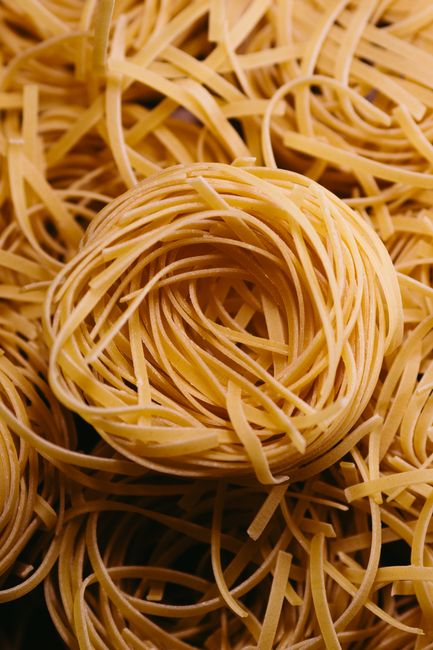
Capellini (Italian for "little hairs") is a long, extremely thin durum wheat pasta, thinner than spaghetti but slightly thicker than true angel hair. It's sold both straight and coiled into nests, and cooks in about 3 to 5 minutes, making it one of the fastest-cooking dry pastas on the shelf.
Varieties
Capellini and angel hair are often used interchangeably, but angel hair (capelli d'angelo) is technically the thinner of the two. Some Italian brands sell capellini as a slightly heavier strand meant to hold up marginally better than angel hair in broth-based dishes.
Buying tips
Check the box for "capellini" specifically rather than assuming any thin pasta is the same cut; brands vary in whether they label similar strands as angel hair or capellini. Nests should look uniformly pale gold with no dark or brittle patches, a sign of uneven drying.
Substitutes
Angel hair (capelli d'angelo) — 1:1
Nearly identical; angel hair is marginally thinner and cooks about a minute faster, so pull it slightly earlier.
Vermicelli — 1:1
A touch thicker and often slightly more resistant to overcooking, making it a forgiving swap for beginners.
Thin spaghetti (spaghettini) — 1:1
Noticeably sturdier bite; works better with heavier sauces that would overwhelm true capellini.
Rice vermicelli (gluten-free) — 1:1 by weight
Soaks or boils in minutes and has no wheat flavor; best in broths and cold noodle salads rather than tomato-based sauces.
Broken spaghetti — 1:1
Snap regular spaghetti into 2-3 inch pieces and boil 1-2 minutes longer; not as delicate but usable in a pinch.
Storage
Store dry capellini in its sealed box or an airtight container in a cool, dry pantry, where it keeps for up to two years. Cooked capellini dries out and clumps fast; toss it with a little oil or sauce immediately and refrigerate in an airtight container for up to 2 days, reheating gently with a splash of water or broth.
How to use
Best with light, oil-based or thin sauces, garlic and olive oil, lemon butter, simple tomato, or brothy soups, since it's too delicate for heavy cream sauces or chunky ragùs that won't cling to strands this fine. Cook in well-salted boiling water and check at the minimum package time; capellini goes from al dente to mush within 30 seconds.
What it pairs with
Pairs well with delicate seafood like shrimp or crab, fresh cherry tomatoes, basil, and a light drizzle of good olive oil. Also common in clear chicken or vegetable broths as a quick-cooking noodle addition.
Nutrition
A 2 oz dry serving has roughly 200 calories, 7 grams of protein, and 1-2 grams of fiber, comparable to other durum wheat pastas since the difference is shape and thickness, not composition.
FAQ
Why does capellini turn gummy so quickly?
Its thinness gives it a huge surface-area-to-mass ratio, so it absorbs water and releases starch far faster than thicker pasta, turning soft within seconds of hitting the ideal al dente point.
Should capellini be rinsed after draining?
Only if it's going into a cold noodle salad; for hot dishes, skip rinsing since it washes away the starch that helps sauce cling, and toss it with sauce or oil within a minute of draining instead.
Can capellini be baked into a dish like other pasta?
It can, but only briefly and with extra liquid, since its thin strands dry out and toughen faster than penne or spaghetti under sustained oven heat.
Is capellini the same as fideo?
They're similar in thinness, but fideo is often pre-toasted or fried in Mexican cooking before simmering in broth, giving it a nuttier flavor that plain capellini lacks.
Have capellini on hand? Find recipes with our Recipe Generator →