
Cavatelli
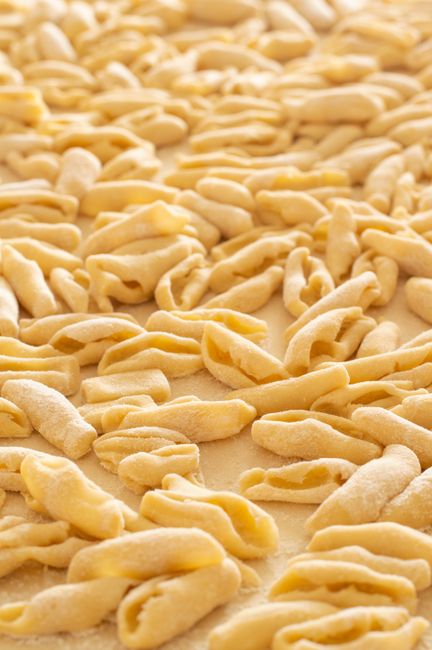
Cavatelli is a small, shell-shaped pasta from Southern Italy, traditionally made from just durum wheat semolina and water (no egg), rolled into short lengths and curled by dragging a finger or ridged tool across the dough. The result is a dense, chewy noodle with a rolled edge and a hollow curl on one side, built specifically to hold onto chunky or creamy sauces. Some regional versions, especially from Puglia and Molise, add ricotta to the dough for a softer, more tender bite.
Varieties
Standard cavatelli is made from semolina and water alone. Ricotta cavatelli, common in Puglia and parts of the American Northeast, adds ricotta to the dough for a softer, slightly tangy result that cooks faster and feels closer to a small gnocchi. Cavatelli is not the same as cavatappi, which is a corkscrew-shaped extruded pasta with no relation beyond the similar name.
Buying tips
Look for bronze-die cut dried cavatelli, which has a rougher, more porous surface that grabs sauce better than the smoother Teflon-die versions. Fresh cavatelli is sold refrigerated in Italian markets and some supermarket pasta cases; it should look slightly matte and dry to the touch, not wet or sticky, which signals it was made too far in advance.
Substitutes
Orecchiette — 1:1
Similar dense semolina texture and Southern Italian pedigree; the cupped shape catches sauce differently but works well with the same broccoli rabe and sausage pairings.
Small shells (conchiglie) — 1:1
Widely available and similarly good at trapping sauce or small bits of vegetable and meat, though less chewy than true semolina cavatelli.
Gnocchi — 1:1
Softer and pillowy rather than chewy since it's potato-based, but works in the same brothy or ricotta-sauced dishes.
Gemelli or casarecce — 1:1
Twisted, ridged shapes that grip sauce well; a reasonable stand-in when a curled shape isn't available.
Storage
Dried cavatelli keeps in its sealed package in the pantry for up to two years. Once opened, transfer to an airtight container to keep out moisture and pantry pests. Fresh cavatelli should be used within two days if refrigerated on a lightly floured tray, or frozen in a single layer before transferring to a freezer bag, where it keeps for about two months and cooks straight from frozen without thawing.
How to use
Cavatelli's curled shape and dense chew make it best with sauces that need something to cling to: broccoli rabe and sausage, tomato-based ragu, ricotta and pea, or a simple garlic and olive oil toss with breadcrumbs. It also holds up well in baked pasta dishes and soups since it doesn't turn mushy as quickly as thinner shapes.
What it pairs with
Pairs classically with broccoli rabe, Italian sausage, and a hit of chili flake; also good with ricotta and fresh peas, a simple tomato and basil sauce, or a brothy white bean and greens preparation. Avoid delicate cream sauces meant for thin noodles since cavatelli's chew calls for something with more texture and body.
Nutrition
A 2-ounce dried serving has roughly 200 calories and 7 grams of protein, similar to other durum wheat pastas. Ricotta-enriched versions run slightly higher in fat and protein per serving. Whole wheat cavatelli, when available, adds 3-4 grams of fiber per serving.
FAQ
What's the difference between cavatelli and gnocchi?
Cavatelli is a semolina-and-water pasta with a chewy, dense bite, while gnocchi is made from potato (and often flour and egg), giving it a soft, pillowy texture. They're often used interchangeably in sauced dishes but cook differently.
Does cavatelli contain egg?
Traditional cavatelli does not use egg, unlike many other Italian pasta shapes. It relies on semolina and water, sometimes with ricotta added, for its structure.
How long does dried cavatelli take to cook?
Dried cavatelli typically takes 10 to 13 minutes in well-salted boiling water, a few minutes longer than thinner shapes because of its density. Check package timing since bronze-die versions can cook slightly faster.
Can cavatelli be cooked from frozen?
Yes, homemade or store-bought frozen cavatelli can go straight into boiling water without thawing; it usually needs about 1-2 extra minutes compared to fresh.
Have cavatelli on hand? Find recipes with our Recipe Generator →