
Ciabatta Rolls
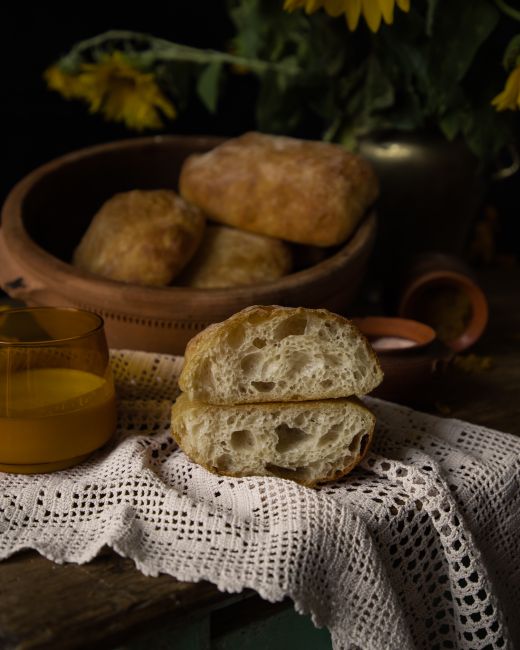
Ciabatta rolls are individual-sized portions of ciabatta, an Italian white bread made with a very wet, high-hydration dough that produces an irregular, open crumb full of large air pockets under a thin, crackly crust. The name means 'slipper' in Italian, a reference to the flattened, elongated shape of the original loaf. Rolls are simply that same dough baked in smaller portions, giving each piece its own crust-to-crumb ratio, which makes them a popular choice for sandwiches and sliders since they hold fillings without being too dense.
Varieties
Whole wheat ciabatta rolls use part whole wheat flour for a denser crumb and nuttier flavor, while rosemary or olive ciabatta rolls have those ingredients folded into the dough, making them better suited to eating on their own than as a neutral sandwich base.
Buying tips
Choose rolls that feel light for their size, a sign of the open, airy crumb; a dense, heavy roll usually means a tighter dough and less authentic texture. The crust should sound hollow when tapped and look uneven and craggy rather than smooth and uniform, which suggests a mass-produced dough.
Substitutes
Kaiser rolls — 1:1
Denser and chewier with less of an open crumb, but a similar size and sturdiness for holding sandwich fillings.
French bread rolls (petit pain) — 1:1
Firmer crust and tighter crumb than ciabatta, so sandwiches will feel less airy but still substantial.
Focaccia, cut into roll-sized squares — 1:1 by size
Softer and richer from the olive oil in the dough; works especially well for pressed or grilled sandwiches.
Sourdough rolls — 1:1
Adds a tangy flavor the original doesn't have, with a similarly chewy crust, though the crumb is usually less open.
Italian sub rolls — 1:1
Softer crust and more uniform crumb, a reasonable stand-in when a crisp ciabatta crust isn't essential to the dish.
Storage
Ciabatta rolls stale fast because of their high crust-to-crumb ratio. Keep them at room temperature in a paper bag for up to a day if eating soon, since plastic softens the crust. For longer storage, freeze in a sealed bag for up to two months and refresh in a 375°F oven for 8-10 minutes straight from frozen.
How to use
Split and toast for sandwiches, panini, and sliders, where the open crumb catches sauces and melted cheese without getting soggy. Torn into pieces, they work for bread salads like panzanella or for dipping in olive oil and balsamic. Sliced and rubbed with garlic, they make sturdy bruschetta bases since the crust holds up under toppings.
What it pairs with
Pairs well with fillings that need a sturdy but absorbent bread: mozzarella and tomato, cured meats like prosciutto or salami, grilled vegetables, and olive oil-based dressings. Also good alongside soups and stews for sopping up broth.
Nutrition
A typical ciabatta roll runs around 150-200 calories, made mostly of refined wheat flour, so it's a source of carbohydrates with modest protein and little fat unless olive oil is brushed on before baking.
FAQ
Why are ciabatta rolls full of holes?
The dough is mixed very wet, often 70-80% hydration, which creates steam pockets during baking that expand into the large, irregular air holes typical of the bread.
Can I make sandwiches ahead with ciabatta rolls?
Yes, but wrap tightly and add moisture-heavy ingredients like tomatoes or dressing just before serving, since the open crumb absorbs liquid quickly and can turn soggy within a couple of hours.
How do I freshen a stale ciabatta roll?
Mist the crust lightly with water and bake at 375°F for 5-7 minutes; the steam re-crisps the exterior and softens the interior without needing to add oil or butter.
Are ciabatta rolls the same dough as ciabatta loaves?
Yes, they're typically the identical high-hydration dough, just divided into smaller portions before baking, which shortens the bake time and increases the crust ratio per piece.
Have ciabatta rolls on hand? Find recipes with our Recipe Generator →