
Coconut Cream
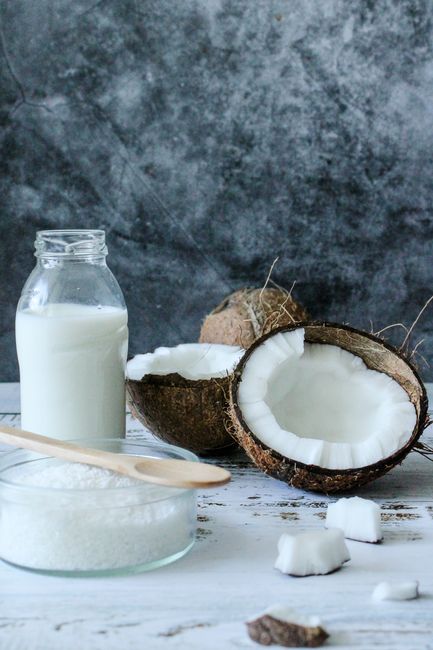
Coconut cream is the thick, high-fat layer pressed from grated coconut meat with very little added water, or the layer that naturally rises to the top of a can of full-fat coconut milk when left undisturbed. It has a fat content around 20-25%, compared to roughly 10-20% for coconut milk, which is why it holds its shape, whips, and adds richness without thinning a dish.
Varieties
Coconut cream, coconut milk, and cream of coconut are three different products. Coconut cream is thick and low in water; coconut milk is thinner and more pourable; cream of coconut is heavily sweetened and used mainly in cocktails like pina coladas. The thick layer that separates at the top of a can of full-fat coconut milk is essentially homemade coconut cream and can be scooped off and used the same way.
Buying tips
Read the ingredient list: the best products list only coconut and water, sometimes with a small amount of guar gum as a stabilizer. Avoid cans labeled 'cream of coconut,' which is sweetened for cocktails and desserts, not savory cooking. Shake the can before buying if possible; a heavy, sloshing sound means more water and less cream.
Substitutes
Full-fat coconut milk, simmered down — 1.5 cups milk reduced to 1 cup
Simmer uncovered over low heat, stirring occasionally, until it thickens and reduces by about a third. Works in both sweet and savory recipes.
Heavy cream with a few drops of coconut extract — 1:1
Matches the richness and texture closely but lacks the natural coconut oil flavor; the extract fills that gap. Not dairy-free.
Cashew cream (soaked cashews blended with water) — 1:1
Blend 1 cup soaked raw cashews with about a third cup water until smooth. Neutral in flavor, so best for savory curries and sauces rather than coconut desserts.
Full-fat Greek yogurt — 1:1
Adds tang and won't whip, but works for finishing curries and soups off the heat. Stir in at the end to avoid curdling.
Evaporated milk — 1:1
Close in thickness and richness for baking and savory sauces, but has no coconut flavor at all, so it only works when coconut taste isn't the point.
Storage
Unopened cans keep at room temperature for a year or more; check the date. Once opened, transfer to an airtight container and refrigerate for up to 5 days. It also freezes well for up to 3 months; portion it into ice cube trays or small containers first since thawed coconut cream can separate and needs a quick whisk or blend to smooth back out.
How to use
Use it to enrich curries and braises at the end of cooking, whip it into a dairy-free topping for pies and hot chocolate (chill the can overnight first), stir it into rice puddings and custards, or blend it into smoothies and vegan ice cream bases for a denser, less icy texture.
What it pairs with
Pairs well with lime, chili, lemongrass, and fish sauce in Southeast Asian curries; with mango, pineapple, and lime in desserts; and with coffee, chocolate, and cardamom in drinks and baked goods.
Nutrition
Coconut cream is calorie-dense and high in saturated fat, though much of that fat is medium-chain triglycerides (MCTs), which the body metabolizes differently than long-chain fats. Unsweetened varieties have little to no sugar; always check the label since some canned products add sugar or stabilizers.
FAQ
Is the thick layer on top of canned coconut milk the same as coconut cream?
Yes. When a can of full-fat coconut milk sits undisturbed, the fat rises and solidifies into a thick layer that behaves the same as store-bought coconut cream. Chilling the can overnight makes this separation more pronounced and easier to scoop out.
Can coconut cream be whipped like heavy cream?
Yes, but only the solid portion. Chill the can for at least 8 hours, scoop out just the thickened top layer (leaving the watery liquid behind), and whip it with a mixer once it's cold; it stiffens faster than dairy cream and can go grainy if overwhipped.
Why did my coconut cream separate or look curdled in a curry?
High heat and long boiling can cause the fat and water in coconut cream to split. Add it toward the end of cooking and keep the heat at a low simmer rather than a rolling boil.
Can coconut cream replace coconut milk in a recipe?
Yes, if you thin it first. Whisk in water, about a quarter cup per cup of coconut cream, until it reaches a pourable consistency similar to coconut milk.
Have coconut cream on hand? Find recipes with our Recipe Generator →