
Coconut Jelly
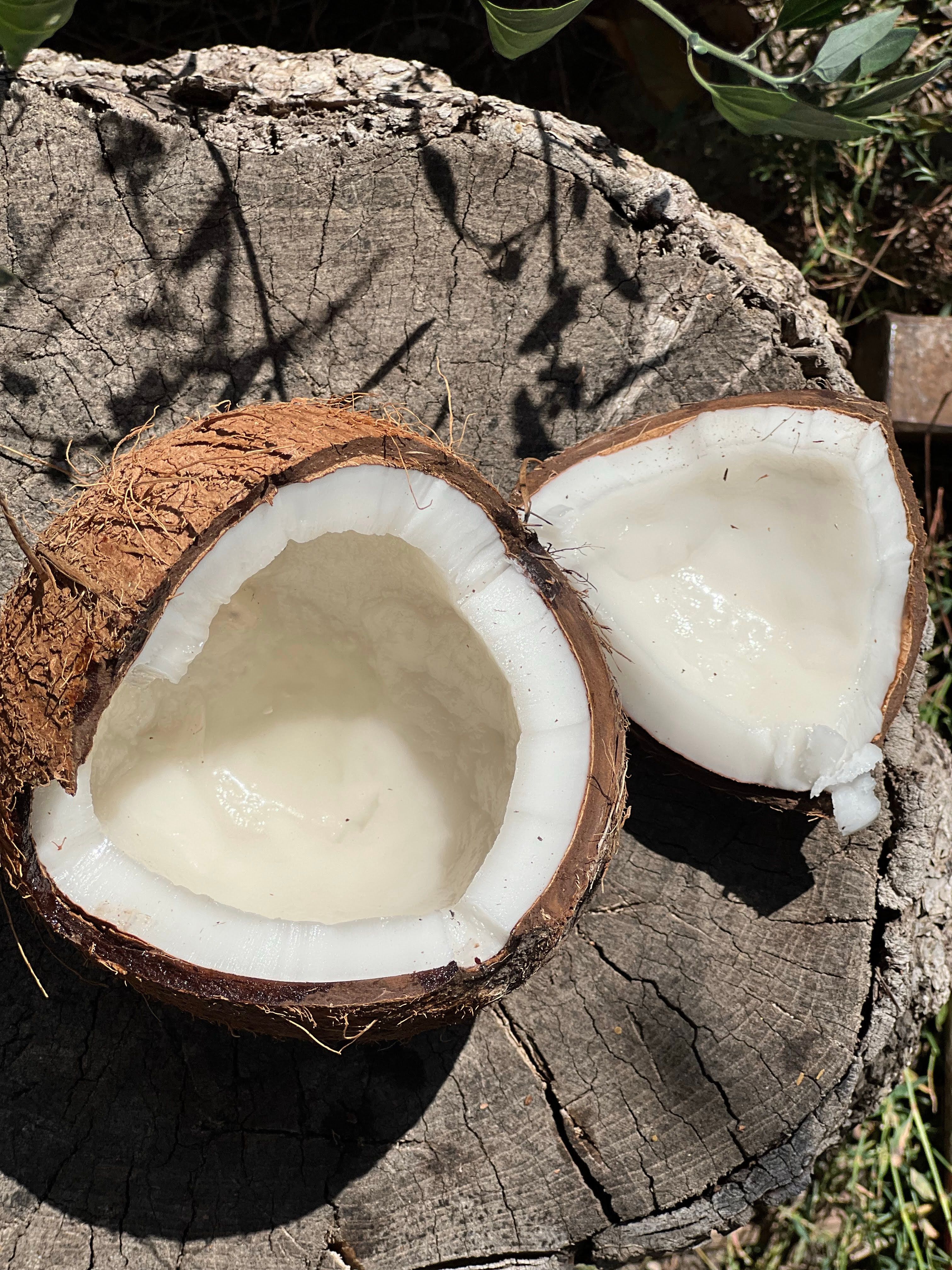
Coconut jelly most commonly refers to nata de coco, a chewy, translucent gel made by fermenting coconut water with Komagataeibacter bacteria, which spin the liquid into a dense mat of cellulose. That mat is cut into cubes, cooked in sugar syrup, and sold in jars or cans as a topping for desserts and drinks. It's distinct from coconut milk jelly, an opaque, custard-like agar dessert set from coconut milk and used in dishes like buko pandan. Nata de coco has almost no coconut flavor of its own; it's prized for texture and for soaking up whatever syrup or drink it's added to.
Varieties
Nata de coco (fermented, chewy, translucent) and coconut milk jelly (agar-set, opaque, custard-like) are frequently sold under the same 'coconut jelly' label but are made by entirely different processes and taste different: nata de coco is neutral and chewy, while coconut milk jelly is rich, creamy, and distinctly coconut-flavored.
Buying tips
Look for jars or cans labeled 'nata de coco' rather than generic 'coconut jelly,' since some products sold under that name are actually coconut milk-based agar desserts. Check that the syrup is clear rather than cloudy, and look for cube size consistency; smaller cubes blend more evenly into drinks while larger cubes hold up better as a standalone topping.
Substitutes
Lychee jelly cubes (canned, in syrup) — 1:1 by volume
Very similar chewy, translucent texture with a mild fruity sweetness instead of neutral flavor.
Aloe vera jelly cubes (bottled, in syrup) — 1:1 by volume
Similar translucent, slightly bouncy texture; flavor is milder and slightly more vegetal than nata de coco.
Grass jelly, cubed — 1:1 by volume
Firmer and darker in color with an herbal, slightly bitter edge; works in the same drinks and dessert bowls but changes the flavor noticeably.
Cooked tapioca pearls (boba) — 1:1 by volume
Chewier and opaque rather than translucent; a common swap in bubble tea and shaved-ice desserts when nata de coco isn't on hand.
Homemade coconut milk agar jelly, cubed — Not interchangeable by volume
A different dessert entirely: opaque, creamy, and made from coconut milk rather than coconut water, so it changes both texture and flavor rather than simply substituting.
Storage
Unopened jars or cans of nata de coco keep at room temperature in the pantry for many months; check the label date. Once opened, transfer the jelly and its syrup to an airtight container and refrigerate, where it keeps for 1 to 2 weeks. Keep it submerged in syrup so it doesn't dry out or firm up further.
How to use
Spoon over shaved ice desserts like halo-halo, mix into fruit cocktails and gelatin salads, add to bubble tea and fruit teas, fold into buko pandan or fruit salad with cream, or use as a topping for ice cream and shaved ice with condensed milk.
What it pairs with
Pairs well with lychee, jackfruit, and mango in fruit cocktails, with sweetened condensed milk and shaved ice in halo-halo, and with pandan-flavored gulaman or coconut milk in Filipino and Southeast Asian desserts.
Nutrition
Nata de coco itself is essentially indigestible cellulose fiber with almost no calories, but the packing syrup it's sold and served in adds significant sugar, typically 40 to 45 grams of carbohydrate per cup. It contributes negligible protein, fat, vitamins, or minerals.
FAQ
What is coconut jelly actually made from?
Traditional nata de coco is made by fermenting coconut water with a bacterial culture that produces a thick mat of cellulose over several days; that mat is then cut, boiled, and cooked in sugar syrup.
Does coconut jelly taste like coconut?
Nata de coco has almost no coconut flavor on its own; its appeal is a chewy, slightly springy texture that carries whatever syrup or drink it's mixed with. Coconut milk jelly, by contrast, tastes strongly of coconut.
Can coconut jelly be made at home without special equipment?
Traditional fermented nata de coco requires a starter culture and about a week of fermentation at a warm, stable temperature. A faster home version sets coconut water or coconut milk with agar powder instead, which produces a jelly in under an hour but with a firmer, less stretchy texture.
Is coconut jelly a healthy food?
On its own the jelly is mostly indigestible fiber with very few calories, but it's almost always sold and eaten in sugar syrup, which is where the bulk of its calories and carbohydrates come from.
Have coconut jelly on hand? Find recipes with our Recipe Generator →