
Cracklins
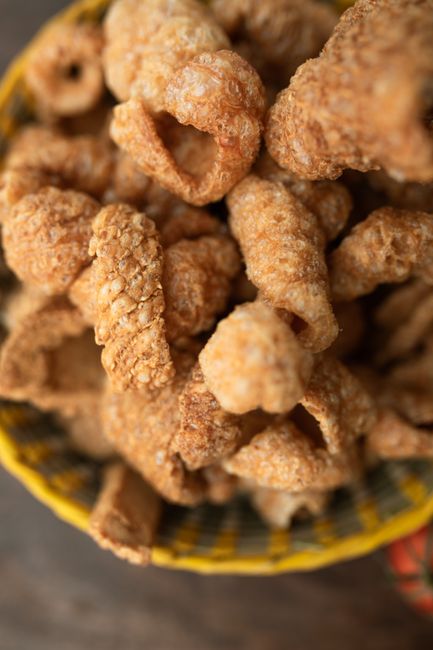
Cracklins (also spelled cracklings, or cochon de lait cracklins in Cajun Louisiana) are pieces of pork skin, fat, and often a thin layer of meat, deep-fried or slow-rendered until the skin puffs and turns crisp while the fat underneath stays tender. Unlike plain fried pork skin, traditional cracklins usually keep some meat attached, giving them a chewier bite and more savory flavor than pure pork rinds.
Varieties
Cajun-style cracklins (sometimes called grattons) keep a layer of meat attached to the fat and skin and are cut into thick, irregular chunks. Chicharrones, especially the Mexican style, are usually pure skin fried until it puffs hollow with almost no meat. Commercial pork rinds sold in bags are a mass-produced version of chicharrones, uniformly thin and puffed for shelf stability.
Buying tips
Fresh cracklins from a Cajun meat market or boucherie should feel light for their size and shatter with a crisp snap, not bend or feel greasy. Avoid pieces that look dark brown or blistered black, a sign the fat scorched during frying and will taste bitter.
Substitutes
Pork rinds (chicharrones) — 1:1
Skin-only and puffier with no meat layer, so they're lighter and crunchier all the way through rather than chewy in spots.
Fried pork belly bits — 1:1
Closest in richness since it includes both fat and meat, though the skin won't puff as dramatically as true cracklins.
Crumbled cooked bacon — 3/4 cup per 1 cup cracklins
Much saltier and smokier, and lacks the crackling texture, so use it as a flavor stand-in in cornbread or greens rather than a snack replacement.
Fried chicken skin — 1:1
Lighter flavor and thinner texture; a reasonable swap for garnishing soups or greens but too delicate for boudin or cornbread mix-ins.
Storage
Store cooled cracklins in an airtight container at room temperature for up to 2 days if the kitchen is dry, or in the refrigerator for up to a week. They soften as they sit; re-crisp them in a 350°F oven for 5 to 8 minutes before serving. Avoid the freezer, which turns the skin rubbery on thawing.
How to use
Eaten straight as a bar snack with hot sauce and cold beer, folded into cracklin cornbread, mixed into boudin, or sprinkled over collard greens, red beans, or gumbo for crunch and pork flavor. Add them to hot dishes just before serving so they don't go soft.
What it pairs with
Pairs well with hot sauce, pickled okra, or Creole mustard as a snack, and with cornbread, boiled crawfish, or braised greens as a cooking ingredient.
Nutrition
Cracklins are high in fat and sodium and carry no carbohydrates, but they're a dense source of protein per ounce because they're mostly rendered skin and meat rather than batter or breading.
FAQ
What's the difference between cracklins and pork rinds?
Cracklins typically include a layer of meat and fat along with the skin, giving a chewier, more savory bite, while pork rinds are made from skin alone and puff into a light, airy crunch.
Are cracklins the same as chicharrones?
They overlap but aren't identical. Chicharrones are traditionally skin-only and fried until fully puffed, while Cajun cracklins usually retain meat and fat, making them denser and less uniformly crisp.
How long do cracklins stay crispy after cooking?
At room temperature in a humid climate, fresh cracklins start softening within a few hours. Sealed in an airtight container they hold their crunch for about a day before needing to be re-crisped in the oven.
Can cracklins be made at home?
Yes. Pork skin and fat, often with a bit of meat attached, is cut into strips, simmered slowly to render most of the fat, then fried at a higher temperature until the skin blisters and puffs, a two-stage process that takes over an hour total.
Have cracklins on hand? Find recipes with our Recipe Generator →