
Creme Fraiche
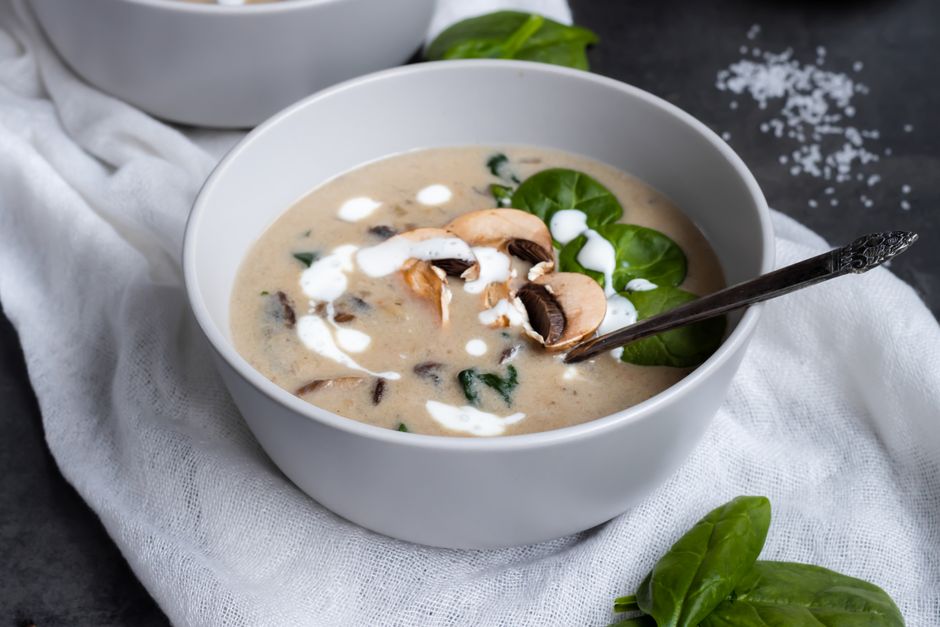
Creme fraiche is a thickened, cultured cream with a mild tang and a high fat content, typically around 30 to 45 percent butterfat. It's made by adding a bacterial culture to heavy cream and letting it sit at room temperature until it thickens naturally, similar to how sour cream is made but with less acidity and more richness. That higher fat content is what lets it hold up to simmering and boiling without curdling, which is where it really earns its place in the kitchen.
Varieties
There isn't much variation between brands beyond fat percentage and additives; the main distinction most cooks need to know is creme fraiche versus sour cream, not different types of creme fraiche itself.
Buying tips
Look for containers with a short ingredient list, ideally just cream and cultures, since some grocery store versions add stabilizers or thickeners that dull the flavor. A thick, spoonable consistency out of the tub (not runny) is a sign of a well-made product.
Substitutes
Sour cream — 1:1
Tangier and thinner, and it can curdle if boiled or added to a hot pan directly. Stir in off heat or temper it first.
Full-fat Greek yogurt — 1:1
Noticeably tangier and less rich. Works well in dips and dolloped on top of dishes, but is more prone to breaking when heated.
Mascarpone thinned with a little lemon juice or buttermilk — 3/4 cup mascarpone plus 2 tablespoons buttermilk per 1 cup creme fraiche
Milder tang than real creme fraiche, but similar richness and mouthfeel. Good for desserts and finishing sauces.
Homemade version: heavy cream plus buttermilk — 1 cup heavy cream plus 2 tablespoons buttermilk, left at room temperature 12-24 hours
The closest match in flavor and behavior since it's essentially the same process. Needs advance time to thicken and culture.
Storage
Keep sealed in the refrigerator and use within about 1 to 2 weeks of opening; check the sell-by date on unopened containers, which can run several weeks out. It doesn't freeze well since the texture turns grainy and separates on thawing.
How to use
Stir into pan sauces, soups, and braising liquids at the end of cooking to add richness without curdling, thanks to its higher fat content. Dollop it over soups, baked potatoes, blini, or fruit desserts, or whisk it into vinaigrettes and dressings for body. It also whips more softly than heavy cream and holds a gentle tang, making it good folded into mashed potatoes or scrambled eggs off heat.
What it pairs with
Pairs well with smoked fish, caviar, potatoes, fresh herbs like dill and chives, and tart fruit like berries or rhubarb. Also works as a finishing swirl on tomato-based soups and curries to soften acidity and heat.
Nutrition
Creme fraiche is high in fat and calories relative to its volume, roughly 40 to 45 calories per tablespoon depending on brand, and contains fat-soluble vitamins A and D along with small amounts of calcium.
FAQ
Can creme fraiche be boiled without curdling?
Yes, its higher fat content (usually 30-45%) stabilizes it against heat far better than sour cream, so it can simmer in sauces and soups without separating.
Is creme fraiche the same as sour cream?
No. Both are cultured dairy products, but creme fraiche has more fat and less acidity, giving it a milder tang and a smoother, richer texture that holds up better to cooking.
Why is my homemade creme fraiche not thickening?
It usually needs a warmer spot, ideally 70-75°F, and more time; in a cold kitchen it can take well over 24 hours. Using ultra-pasteurized cream also slows the culture down since the proteins behave differently.
Can creme fraiche be whipped like heavy cream?
It can be softly whipped but won't hold stiff peaks the way heavy cream does on its own; mixing it with a little heavy cream before whipping gives more stable results.
Have creme fraiche on hand? Find recipes with our Recipe Generator →