Chives
Peak season: April–July
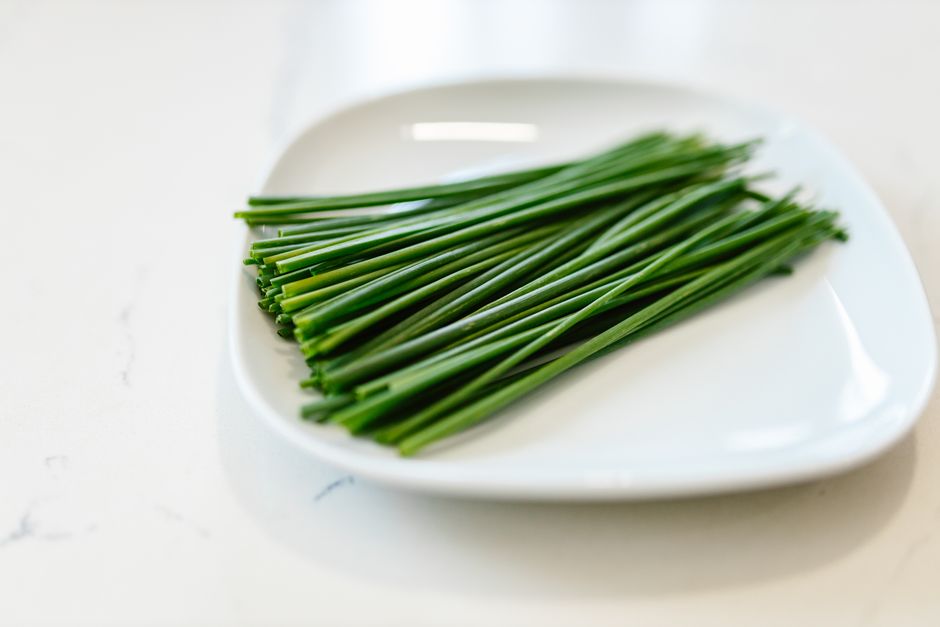
Chives (Allium schoenoprasum) are the mildest member of the onion family, grown for their thin, hollow, grass-like green stems. They deliver a delicate onion flavor without the sharpness of scallions or raw onion, which is why they're used as a finishing herb rather than a base cooking ingredient.
Varieties
Garlic chives (Chinese chives) are a different plant entirely, flat, wider leaves and a mild garlic flavor rather than onion. They are not a 1:1 swap for standard chives in flavor, though both work as a garnish.
Buying tips
Look for bright green, firm stems with no yellowing or sliminess at the cut ends. Buy in small bunches, they wilt within a few days, so a bunch used up gradually beats a large one going slimy in the crisper.
Substitutes
Scallion greens (green onion tops) — 1:1
Slightly stronger onion flavor, but the closest visual and flavor match.
Green onion, whole — 1:1
Similar flavor profile to scallion greens, a bit more oniony overall.
Parsley + a pinch of onion powder — 1:1 (as parsley)
Use for the color/garnish effect without onion flavor; add onion powder separately to taste.
Leek greens, finely minced — 1:1
Milder and slightly sweeter; mince very finely since leek greens are more fibrous.
Storage
Fresh chives wilt quickly. Wrap loosely in a damp paper towel and store in a sealed container or bag in the refrigerator crisper drawer, they'll keep for about a week. For longer storage, snip and freeze in an airtight bag or ice cube tray with a little water or oil; frozen chives lose their crisp texture but keep their flavor well for cooked dishes.
How to use
Snip with scissors directly onto finished dishes, baked potatoes, scrambled eggs, soups, dips, and salads. Chives lose flavor and turn dull if cooked for long, so add them at the very end or as a garnish rather than early in cooking.
What it pairs with
Pairs naturally with sour cream, crème fraîche, and butter in potato and egg dishes, and with mild white fish or chicken where a stronger onion flavor would overpower.
Nutrition
Chives are low in calories and used in small quantities, but they contain vitamin K, vitamin C, and modest amounts of vitamin A, more of a flavor accent than a significant nutrient source at typical serving sizes.
FAQ
Are chives and green onions the same thing?
No, though they're often confused. Chives are a distinct, thinner herb with a milder flavor and are never eaten beyond the green stem. Green onions (scallions) are a young onion with both a white bulb end and green top, both of which are eaten, and have a noticeably stronger flavor.
Can I substitute dried chives for fresh?
You can, but expect a real drop in flavor and color, drying mutes chives' flavor more than most herbs. Use about a third of the amount called for fresh, and add them earlier in cooking rather than as a raw garnish.
Do chives regrow after you cut them?
Yes, if grown as a live plant rather than bought pre-cut. Snip stems about an inch above the soil, leaving the base intact, and a healthy plant will regrow within about two weeks.
Have chives on hand? Find recipes with our Recipe Generator →