Roquefort Cheese Sauce Recipe
Building the sauce in the same pan used to sear the steak pulls the browned fond into the liquid, so the sauce carries real meaty flavor instead of tasting like cream and cheese alone. Melting the Roquefort off the heat, rather than boiling it into the cream, keeps the sauce silky instead of grainy or greasy.
- Prep
- 20 min
- Cook
- 20 min
- Total
- 40 min
- Servings
- 4
Ingredients
- 4 steaks beef steaks (ribeye or New York strip, about 6 oz each)
- 1 tsp kosher salt
- 1 tsp black pepper, freshly cracked
- 3 tbsp unsalted butter
- 1 medium shallot, minced
- 1/2 cup dry white wine
- 3/4 cup heavy cream
- 4 oz Roquefort cheese, crumbled
- 2 tbsp fresh chives, chopped
Nutrition per serving
- Calories
- 755
- Protein
- 47g
- Carbs
- 3g
- Fat
- 61g
Based on the recipe as written, one serving. Recalculates if you swap an ingredient above. An estimate only, exact values depend on the specific ingredients used.
Need different units or a different yield? Try our Conversion Calculator →
Instructions
- 1Pat the steaks dry with paper towels and season both sides generously with salt and pepper. Let them sit at room temperature for 20-30 minutes before cooking.
- 2Heat a heavy skillet, cast iron or stainless steel, over high heat until it's smoking hot. Add a thin coating of oil.
- 3Sear the steaks 3-4 minutes per side for medium-rare (130°F internal), then transfer to a plate and tent loosely with foil to rest while you make the sauce.USDA safe minimum for beef, pork, lamb, veal: 145°F (63°C), plus a 3-minute rest
- 4Reduce the heat to medium and add the butter and minced shallot to the same pan, scraping up the browned bits stuck to the bottom. Cook for 1-2 minutes until the shallot softens.
- 5Pour in the white wine, scraping the pan again, and simmer until it reduces by about half, roughly 2 minutes.
- 6Stir in the heavy cream and simmer for 3-4 minutes, until it thickens slightly and coats the back of a spoon.
- 7Remove the pan from the heat and whisk in the crumbled Roquefort a little at a time until it melts into a smooth sauce. Season with black pepper.
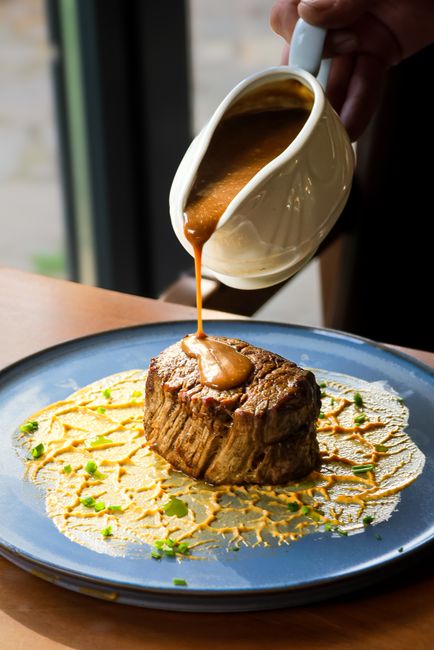
- 8Spoon the sauce over the rested steaks, scatter with chopped chives, and serve immediately.
Tips & variations
- Swap the Roquefort for Gorgonzola dolce or Stilton if a milder blue flavor is preferred; both melt the same way.
- A splash of cognac or brandy in place of the white wine gives the sauce a more traditional French bistro edge.
- The same sauce works well spooned over grilled pork chops or tossed with pappardelle for a blue cheese pasta.
- If the sauce seizes or looks oily, whisk in a tablespoon of cold cream off the heat to bring it back together.
Storage & reheating
Store leftover sauce separately from the steak in an airtight container in the refrigerator for up to 3 days. Reheat gently in a small saucepan over low heat, stirring constantly, and don't let it boil or it will separate. Reheat steak separately in a low oven or skillet so it doesn't overcook.
Tips from the Tulo kitchen
- Letting the steaks come closer to room temperature before searing helps them cook more evenly from edge to center.
- A cast iron or stainless steel pan (not nonstick) builds a better fond, which is what gives the sauce its depth once deglazed with wine.
FAQ
What is Roquefort cheese exactly?
Roquefort is a French blue cheese made from raw sheep's milk and aged in the natural limestone caves of Roquefort-sur-Soulzon. It has AOC (protected designation of origin) status, meaning cheese labeled Roquefort must be made and aged in that specific region.
Can I substitute another blue cheese for Roquefort?
Yes. Gorgonzola dolce gives a softer, sweeter result, while Stilton makes a slightly firmer, less tangy sauce. Both melt into cream the same way Roquefort does.
Why did my Roquefort sauce turn oily or grainy?
This usually happens when the cheese is added while the cream is still boiling. Pull the pan off the heat first, then whisk in the cheese gradually so the fat stays emulsified instead of breaking out.
Is Roquefort safe to eat if it's made with raw milk?
Roquefort's long aging process and high salt content are part of what makes the traditional raw-milk version considered safe under French food regulations, but pregnant women and those with compromised immune systems are often advised to choose a pasteurized blue cheese instead.