
Egyptian Food
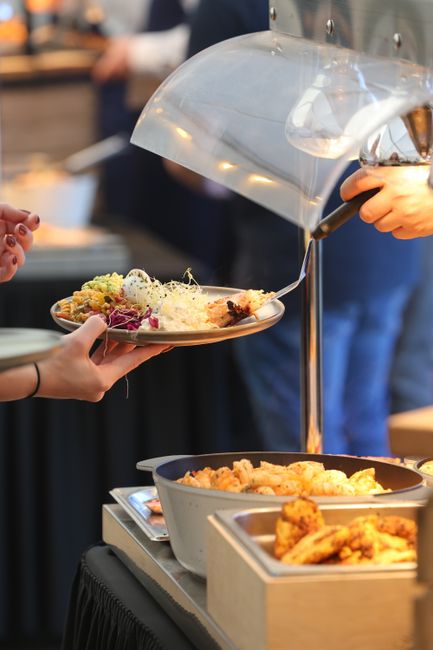
Egyptian food centers on a handful of staples that show up across nearly every meal: ful medames (stewed fava beans), molokhia (a jute-leaf stew), koshari (a lentil-rice-pasta dish), baladi bread, and seasoning blends like dukkah and taameya spice. Rather than one ingredient, Egyptian cooking is built on cheap, filling legumes and grains stretched with garlic, lemon, cumin, and coriander, plus a handful of ingredients (molokhia leaves, kishk, mahlab) that are genuinely hard to find outside Egyptian or wider Middle Eastern grocers.
Varieties
Molokhia varies by region: Upper Egyptian versions are often thicker and more heavily garlic-and-coriander forward, while coastal versions sometimes include rabbit or seafood broth instead of chicken stock. Koshari recipes vary mainly in the tomato sauce, some cooks add vinegar and dried chile for sharpness, others keep it mild and let the fried onions carry the flavor.
Buying tips
Dried molokhia leaves (sold pre-chopped in bags) are more shelf-stable than fresh and easier to find outside Egypt; look for a deep green color without a grayish tint, which signals age. For ful medames, small dried fava beans labeled 'ful hammam' cook faster and break down more easily than larger fava varieties. Buy dukkah from a shop with visible turnover, since the nuts inside go rancid within a few months of grinding.
Substitutes
Frozen chopped spinach (for fresh or frozen molokhia leaves) — 1:1 by volume
Spinach lacks molokhia's natural mucilage-like thickening and its slightly bitter, mineral flavor, but it works in a pinch if you add a bit of extra garlic and cornstarch slurry to compensate for the lost body.
Canned fava beans (for dried fava beans in ful medames) — 1 can (about 15 oz) replaces roughly 1 cup dried favas after cooking
Skip the multi-hour soak and simmer; just heat canned favas gently with garlic, cumin, and lemon and mash lightly. Texture is softer than long-simmered dried beans.
Toasted sesame seeds mixed with cumin and coriander (for dukkah) — 1:1 as a spice-blend swap
Real dukkah includes crushed hazelnuts or chickpeas for crunch; this quick version covers the toasty, warm-spice flavor but won't have the same texture for dipping bread in olive oil.
Plain yogurt thinned with milk (for kishk, a fermented wheat-yogurt powder) — Use to replace kishk in soups, roughly 1 cup per 2 tablespoons kishk called for
Kishk has a tangy, funky depth from fermentation that yogurt alone won't replicate, but it approximates the sour, creamy base in a soup broth.
Storage
Dried fava beans, lentils, and rice for koshari keep well in a sealed container in a cool, dark pantry for up to a year. Dukkah and other dry spice blends stay potent for about 3 months at room temperature, longer if refrigerated. Fresh or frozen molokhia leaves should be used within a few days if fresh, or kept frozen for several months once chopped and bagged. Baladi bread is best eaten the day it's made; freeze extra loaves in a sealed bag and reheat directly from frozen.
How to use
Ful medames is typically mashed with garlic, lemon juice, cumin, and olive oil and eaten for breakfast with bread. Molokhia is finely chopped, simmered into a thick garlicky stew, and ladled over rice, often alongside chicken or rabbit. Koshari layers rice, lentils, macaroni, and chickpeas under a spiced tomato sauce and crispy fried onions. Dukkah is used as a dip, pressed onto bread dipped in olive oil, or sprinkled over roasted vegetables and eggs.
What it pairs with
Ful medames and molokhia both pair naturally with fresh flatbread, raw sliced onion, and a squeeze of lemon. Koshari is traditionally topped with a vinegary garlic-chili sauce called shatta or a simple tomato-vinegar dressing. Dukkah pairs well with soft-boiled eggs, roasted carrots, or grilled halloumi.
Nutrition
Egyptian staples lean heavily on legumes and grains: fava beans and lentils are high in plant protein and fiber, molokhia leaves are rich in vitamin A, iron, and calcium, and dukkah's nut and seed base adds healthy fats and protein to otherwise carb-heavy meals.
FAQ
Is koshari vegetarian?
Yes, in its traditional form. It's built from rice, brown lentils, macaroni, chickpeas, tomato sauce, and fried onions, with no meat or animal fat in a classic recipe.
What does molokhia taste like if you've never had it?
Slightly bitter and earthy, similar to a cross between spinach and okra, with the same slightly slick, thickened texture okra gives a gumbo when simmered.
Can dukkah be made without nuts?
Yes, replace the hazelnuts with extra toasted chickpeas or pumpkin seeds; the core flavor comes from the toasted cumin, coriander, and sesame, not the nuts specifically.
Why is ful medames usually eaten for breakfast?
It's traditionally left to simmer very slowly overnight in a narrow-necked pot called an idra, so it's ready first thing in the morning with minimal active cooking time.
Have egyptian food on hand? Find recipes with our Recipe Generator →