
Fava Beans
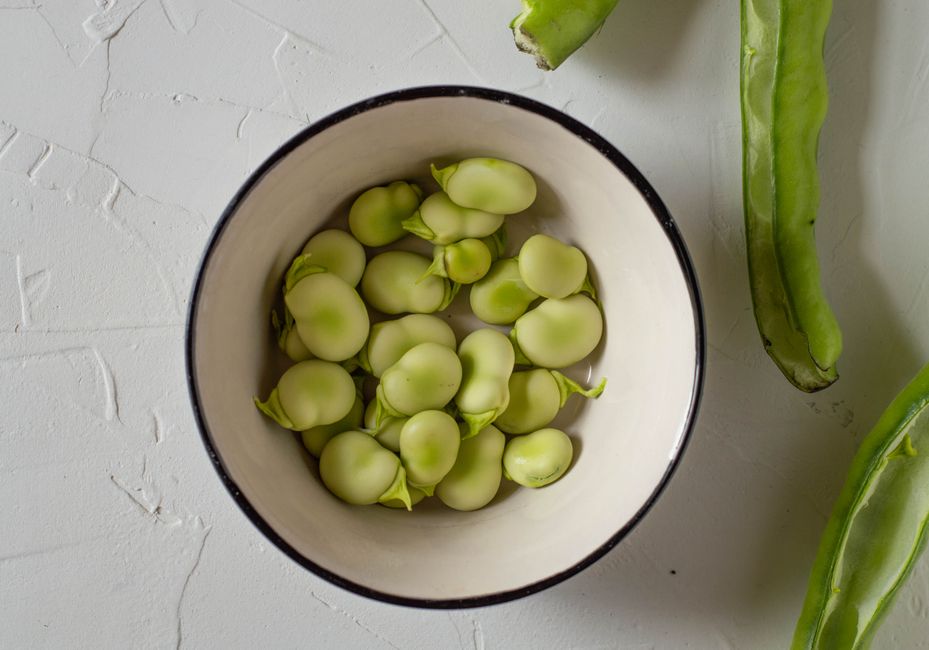
Fava beans (Vicia faba), also called broad beans, are large, flat legumes that grow inside thick, fuzzy-lined pods. Fresh favas have a grassy, slightly bitter outer skin covering a tender, buttery, faintly nutty bean underneath, which is why most recipes call for shelling the pods and then peeling each individual bean before cooking. They're sold fresh in the pod during spring, frozen already shelled, or dried and dried-split like other pulses.
Varieties
Fresh young favas eaten straight from thin-skinned pods differ noticeably from mature dried favas, which need soaking and much longer cooking and are used in dishes like Egyptian foul medames rather than fresh salads.
Buying tips
Choose pods that are firm, glossy, and well-filled, without soft brown spots or shriveling. Smaller, younger pods hold sweeter, more tender beans with thinner skins that sometimes don't need peeling at all.
Substitutes
Lima beans (fresh or frozen) — 1:1
Similar size, starchiness, and buttery texture, though lima beans lack the slight bitterness and nutty edge of fava skins.
Edamame (shelled) — 1:1
Firmer texture and a sweeter, less earthy flavor; works well in salads and side dishes but not in purees where fava's creaminess matters.
Butter beans (canned or dried, cooked) — 1:1
Softer and milder than fava; best in stews, dips, and braises where the bean isn't the visual centerpiece.
Gigante beans, cooked — 3:4
Larger and starchier, so use slightly less by volume; good in Mediterranean-style bean salads and braises.
Dried split fava beans (foul medames style) — 1:1 by weight after soaking and cooking
Not a true substitute for fresh favas, but the correct choice when a recipe specifically calls for dried favas rather than fresh.
Storage
Keep unshelled fresh favas in a paper bag or loosely wrapped in the refrigerator for up to 5 days; shell just before cooking since the pods dry out fast once opened. Shelled, peeled favas keep 2 to 3 days refrigerated in an airtight container, or freeze well for up to 8 months. Dried favas store in a sealed container in a cool, dark pantry for over a year.
How to use
Blanch shelled favas for 1 to 2 minutes, shock in ice water, then slip off the outer skin by pinching one end. Toss the bright green beans into pastas, grain salads, and spring vegetable saut\u00e9s, or mash them with olive oil, lemon, and garlic for a quick spread. Larger, more mature favas benefit from a longer simmer (5 to 8 minutes) before peeling since the skins toughen as the bean ages.
What it pairs with
Pairs well with pecorino or ricotta salata, mint, lemon, prosciutto or pancetta, and spring vegetables like peas and asparagus.
Nutrition
Fava beans are high in plant protein and fiber, and a good source of folate, iron, and manganese. People with G6PD deficiency should avoid them, since favas can trigger a serious reaction called favism.
FAQ
Do you have to peel fava beans after shelling them?
For most mature beans, yes: the outer skin is tough and slightly bitter. Very young, small favas from early spring often have skins tender enough to skip peeling.
Can frozen fava beans replace fresh?
Yes, and they're often already peeled, saving a step. Thaw and blanch briefly, or add directly to soups and stews during the last few minutes of cooking.
Why do fava beans taste bitter?
The bitterness lives mostly in the outer skin, not the bean itself. Peeling after a quick blanch removes nearly all of it, leaving a mild, buttery flavor.
How long do dried fava beans need to soak?
Plan on 12 to 24 hours in cold water, then simmer for 1 to 1.5 hours until fully tender; split, skinless dried favas cook faster, in about 45 minutes.
Have fava beans on hand? Find recipes with our Recipe Generator →