
Fiddleheads
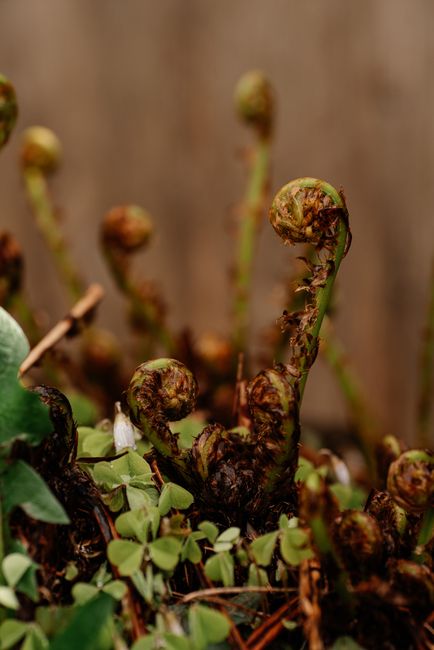
Fiddleheads are the tightly coiled, unopened fronds of the ostrich fern (Matteuccia struthiopteris), harvested for only a few weeks each spring before they unfurl into mature fern leaves. Their flavor sits somewhere between asparagus, green beans, and spinach, with a grassy, slightly nutty edge and a firm, snappy texture when cooked properly.
Varieties
Only fiddleheads from the ostrich fern are widely sold and considered safe to eat when properly cooked. Other fern species, such as bracken fern, contain different compounds and are not recommended for regular consumption, so species identification matters if foraging rather than buying from a market.
Buying tips
Choose tightly coiled, firm, bright green fronds no larger than a quarter in diameter, and avoid any that are yellowing, soft, or starting to unfurl. Buy only from a grocer or forager who can confirm the species is ostrich fern, since several other fern species produce similar-looking fiddleheads that aren't safe to eat.
Substitutes
Asparagus tips, chopped — 1:1
Closest match in texture and flavor for sautés and pasta dishes, though less earthy.
Green beans, trimmed and halved — 1:1
Milder and sweeter, but keeps a similar snap when blanched or sautéed.
Pea shoots or snap peas — 1:1
Best for salads and quick sautés; sweeter and more delicate, without the earthiness.
Storage
Fresh fiddleheads are highly perishable. Keep them unwashed in a paper bag or loosely wrapped in a damp paper towel in the refrigerator crisper, and use within 2 days for the best texture, or up to 5 days at most. For longer storage, blanch for 2 minutes, cool in ice water, drain thoroughly, and freeze in an airtight bag for up to a year.
How to use
Never eat fiddleheads raw. Rinse off the brown papery husk, trim the dry ends, then boil for about 15 minutes or steam for 10 to 12 minutes before finishing with a quick sauté in butter or olive oil. They show up in spring pastas, omelets, risottos, and simple side dishes with garlic and lemon.
What it pairs with
Pairs well with butter, lemon, garlic, morel mushrooms, and other early spring vegetables like ramps and asparagus. Good in cream sauces, light pastas, and alongside eggs.
Nutrition
Fiddleheads are low in calories and provide vitamin A, vitamin C, iron, and a notable amount of fiber, along with small amounts of omega-3 and omega-6 fatty acids that are unusual for a leafy spring vegetable.
FAQ
Can you eat fiddleheads raw?
No. Raw or undercooked fiddleheads have caused documented foodborne illness outbreaks, so they should always be boiled or steamed thoroughly before eating.
How long is fiddlehead season?
Typically just 2 to 4 weeks in mid to late spring, depending on region and temperature, since the fronds unfurl and toughen quickly once the weather warms.
How do you clean fiddleheads before cooking?
Rub off the brown papery husk under cool running water, trim any dry or dark ends, then rinse several times since grit often collects inside the tight coil.
Can fiddleheads be frozen?
Yes. Blanch for 2 minutes, cool immediately in ice water, drain well, and freeze in an airtight bag for up to a year.
Have fiddleheads on hand? Find recipes with our Recipe Generator →