
Frozen Blueberries
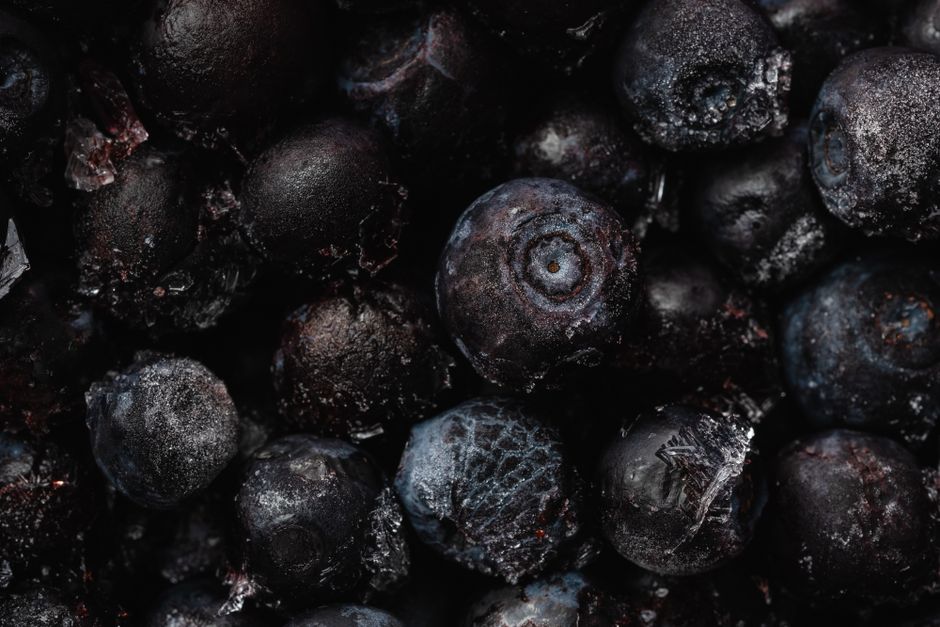
Frozen blueberries are blueberries picked at peak ripeness and flash-frozen within hours, which locks in sugar content and nutrients better than berries that sit in a grocery store bin for days. They come in two main forms: cultivated (highbush) berries, which are larger and milder, and wild (lowbush) berries, which are smaller, more tart, and hold their shape better in baking because they have less surface moisture per berry.
Varieties
Wild (lowbush) blueberries, often labeled 'Maine wild blueberries,' are noticeably smaller and more tart than standard cultivated (highbush) blueberries. Because they have a higher skin-to-flesh ratio, they hold their shape better during baking and are less likely to turn a batter mushy or streaked.
Buying tips
Shake the bag before buying; berries that are clumped into a solid frozen block have likely thawed and refrozen at some point, which affects texture. Choose bags with loose, separate berries. Unsweetened bags labeled 'wild blueberries' are smaller, more tart, and better for baking where you don't want excess sweetness or a soft, mushy result.
Substitutes
Fresh blueberries — 1:1 by volume
Use straight in, though fresh berries release less liquid, so baked goods will be slightly less moist and won't bleed as much color.
Frozen blackberries — 1:1 by volume
Larger seeds and a tarter, less sweet flavor; works well in muffins, crisps, and sauces but changes the color to deep purple-black.
Frozen raspberries — 1:1 by volume
Tarter and softer once thawed, breaks down faster than blueberries, best in sauces, smoothies, or compotes rather than muffins.
Dried blueberries, rehydrated — About 1/3 cup dried, soaked 10 minutes in warm water, per 1 cup frozen called for
Texture stays chewy rather than plump and juicy, and there's no liquid release, so it isn't a true drop-in swap for recipes relying on the berries' moisture.
Storage
Keep frozen blueberries in the freezer in their original sealed bag, pressing out excess air, or transfer to a freezer bag or airtight container. They keep well for 10 to 12 months. Once thawed, use within a day or two; refreezing thawed berries turns them mushy.
How to use
Bake with them straight from frozen, without thawing, to keep muffins, pancakes, and quick breads from turning gray or streaky. Toss frozen berries in a spoonful of flour before folding into batter to keep them from sinking and bleeding. For smoothies, sauces, compotes, and pie fillings, frozen berries work as well as fresh and often better since the freezing process breaks down cell walls and speeds up how quickly they release juice when heated.
What it pairs with
Pairs well with lemon zest, cinnamon, vanilla, oats, and cream cheese in baked goods, and with banana, spinach, or yogurt in smoothies.
Nutrition
Frozen blueberries retain essentially the same vitamin C, fiber, and anthocyanin content as fresh, since freezing at peak ripeness doesn't significantly degrade these nutrients the way days of storage and shipping can for fresh berries.
FAQ
Should frozen blueberries be thawed before baking with them?
No, add them frozen. Thawing first releases their juice early and causes more color bleeding and a soggier batter; frozen berries hold together better during mixing and baking.
Why do frozen blueberries turn muffin batter gray or purple?
The skins release anthocyanin pigment once they thaw and are stirred, which reacts with batter and turns it grayish. Tossing berries in flour before folding them in and minimizing stirring reduces the bleeding.
Are frozen blueberries as healthy as fresh blueberries?
Yes. Flash-freezing at peak ripeness preserves vitamin C, fiber, and antioxidant levels close to fresh, and in some cases frozen berries retain more nutrients than fresh ones that traveled and sat in storage for days.
Can frozen blueberries be used in a smoothie without a blender struggling?
Yes, but let them sit at room temperature for 2 to 3 minutes first, or add a bit more liquid, since a full cup of rock-hard frozen berries can strain a standard blender motor.
Have frozen blueberries on hand? Find recipes with our Recipe Generator →