
Fusilli
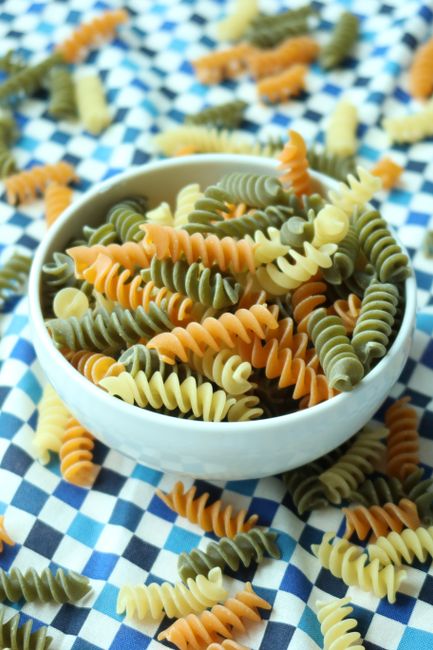
Fusilli is a short, spiral-shaped pasta made by twisting a strand of dough around itself into a corkscrew, either by machine or, in the fresh version, by hand around a thin rod. The twisted shape creates ridges and pockets that trap chunky sauces, pesto, and small vegetables far better than a smooth noodle. It's made from the same basic durum wheat semolina and water dough as most dried pasta, so the flavor is neutral; the shape is the whole point.
Varieties
Fusilli and rotini are close enough that most cooks use the names interchangeably, though rotini is technically a shorter, tighter spiral often made by extrusion rather than twisting. Fusilli bucati adds a hollow core to the same twist, giving it more sauce-holding capacity than solid fusilli.
Buying tips
Look for pasta labeled 'bronze-cut' or 'trafilata al bronzo' if available; the rougher surface from bronze dies grips sauce noticeably better than the smoother finish from Teflon dies. Fresh fusilli, sold refrigerated, cooks in 2 to 3 minutes and has a softer, more tender bite than dried.
Substitutes
Rotini — 1:1
Nearly identical corkscrew shape, often used interchangeably; rotini spirals are usually a bit tighter and shorter.
Fusilli bucati (hollow fusilli) — 1:1
Same twist but with a hollow center like a tiny tube, holds even more sauce; cooks about a minute faster.
Farfalle (bowtie pasta) — 1:1
Different shape but similar surface area for catching sauce; works well in cold pasta salads where fusilli is common.
Penne — 1:1
Smoother surface holds less sauce in the ridges, but the tube still traps chunky sauce inside; a fine stand-in for baked pasta dishes.
Cavatappi — 1:1
A hollow, corkscrew tube that behaves almost identically to fusilli bucati in both texture and cook time.
Storage
Dried fusilli keeps in a sealed container in the pantry for up to two years; check the package date rather than guessing. Cooked fusilli keeps in an airtight container in the refrigerator for 3 to 5 days; toss with a little olive oil before chilling so the spirals don't fuse together.
How to use
Best in dishes where sauce or small ingredients need something to cling to: chunky tomato sauces, pesto, creamy sauces, cold pasta salads with diced vegetables, and baked casseroles. Cook until al dente (check the package time, usually 9 to 11 minutes for dried fusilli) since the ridges hide overcooked mush more than a flat noodle would forgive.
What it pairs with
Pairs well with pesto, ricotta-based sauces, roasted vegetables like broccoli or zucchini, Italian sausage, and vinaigrette-based cold salads with olives and feta.
Nutrition
A 2-ounce dry serving of regular fusilli has roughly 200 calories and 7 grams of protein. Whole wheat fusilli has more fiber (around 5 to 6 grams per serving versus 2 grams for regular), and chickpea or lentil-based fusilli roughly doubles the protein content.
FAQ
Is fusilli the same as rotini?
They're close enough to substitute 1:1 in almost any recipe. Rotini tends to be a shorter, tighter spiral; fusilli is often slightly longer and looser, but package shapes vary by brand.
Why does fusilli sometimes come apart into straight strands when cooked?
That usually means the pasta was undercooked or made with lower-quality dough; the twist should hold through a full boil. Fresh, high-durum-content pasta keeps its spiral shape even at al dente.
Does fusilli need a different sauce than long pasta like spaghetti?
Not strictly, but it performs best with sauces that have small solid pieces, like diced tomatoes, peas, or ground meat, since the spirals catch and hold them in a way a smooth strand can't.
How much dried fusilli is a single serving?
About 2 ounces (56 grams) dry per person is standard, roughly a cup once cooked, though a heaping handful works fine for casual measuring.
Have fusilli on hand? Find recipes with our Recipe Generator →