
Gingerbread Houses
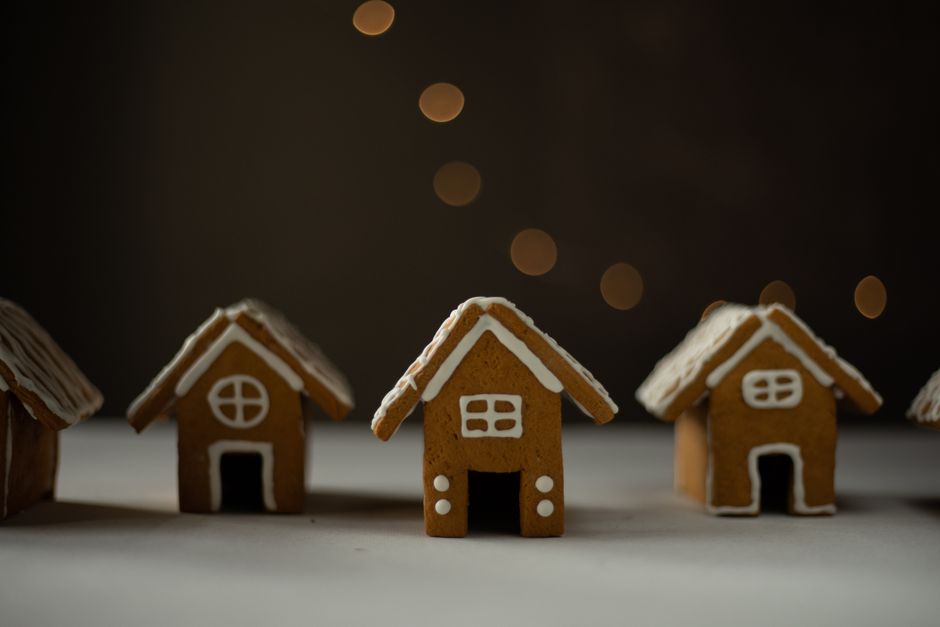
Gingerbread house dough is a stiffer, less spiced cousin of eating gingerbread, built specifically to hold a shape after baking rather than to taste soft or chewy. It's rolled thicker and baked longer than cookie gingerbread so the walls and roof panels stay rigid enough to support their own weight and a layer of icing and candy. The dough itself uses less baking soda than a snacking gingerbread recipe, since too much lift makes the panels puff and warp out of their template shape.
Varieties
A graham cracker house is a distinct, faster tradition built with no baking at all, typically for younger kids decorating with canned frosting. A true gingerbread house uses rolled, baked dough and royal icing, and holds up structurally far longer than a graham cracker version, which softens within days.
Buying tips
For kits, check that the panels arrived unbroken and that the icing packet or mix isn't already hardened; a cracked panel can usually be patched with extra icing but a badly broken wall often needs replacing. For homemade dough, use blackstrap or dark molasses rather than light for a firmer, less sticky dough that holds its shape.
Substitutes
Graham crackers — 1:1 panel-for-panel
No baking or rolling required; break rectangles at the scored lines to match wall and roof dimensions. Weaker than baked gingerbread, so brace corners with extra icing.
Store-bought gingerbread house kit panels — 1:1
Pre-baked and often slightly thicker than homemade dough, giving a sturdier base for beginners or for houses that need to survive shipping or travel.
Sugar cookie dough, rolled thick and chilled — 1:1
Milder flavor and paler color than gingerbread; rolls and cuts the same way but is more brittle once baked, so handle panels only after they've fully cooled.
Cardboard or foam board base panels — not applicable
Used only for structural walls hidden under a layer of icing and candy on display houses not meant to be eaten; not a food substitute.
Melted white or dark chocolate as glue — 1:1 in place of royal icing
Sets fast and holds heavy candy well, but is less forgiving for repositioning pieces since it hardens within a minute or two.
Storage
Unassembled baked panels keep at room temperature in an airtight container for up to 2 weeks, since gingerbread dough is dry and low in moisture. Once assembled and decorated, a finished house is best treated as a decoration rather than food: it stays structurally sound at room temperature for several weeks but the panels soften and the icing can sweat if stored somewhere humid or refrigerated.
How to use
Bake panels from a template cut from cardstock, cool them completely flat before assembly, and use royal icing (egg white or meringue powder based) as both glue and decoration since it hardens fully within a few hours. Let walls set upright against cans or a heavy mug for 15 to 20 minutes before adding the roof.
What it pairs with
Display alongside hot cocoa, cinnamon-spiced simple syrups for drinks, or a plate of actual soft gingerbread cookies for guests who want to eat something rather than admire the house.
Nutrition
Gingerbread house dough and its icing and candy decorations are meant for building, not eating in quantity; a single house typically uses several cups of sugar between the dough, icing, and candy, so any edible portions are an occasional treat rather than a regular food.
FAQ
Why did my gingerbread house walls collapse?
Usually the icing glue didn't fully set before the roof went on, or the panels were still slightly warm and flexible when assembled. Let walls dry upright for at least 15 minutes before adding weight on top.
Can you eat a decorated gingerbread house after it's been displayed for weeks?
Technically yes if kept dry and free of dust, but the panels dry out and the icing can discolor, so most people treat it as decor only after the first few days.
Why is gingerbread house dough different from gingerbread cookie dough?
House dough uses less leavening and is rolled thicker so it bakes flat and rigid; cookie dough is meant to puff slightly and stay soft, which would make walls warp or bow.
What's the best glue for attaching candy decorations?
Royal icing made with meringue powder, since it hardens completely at room temperature within a few hours and won't soften like frosting made with butter or cream cheese.
Have gingerbread houses on hand? Find recipes with our Recipe Generator →