
Greek Rice
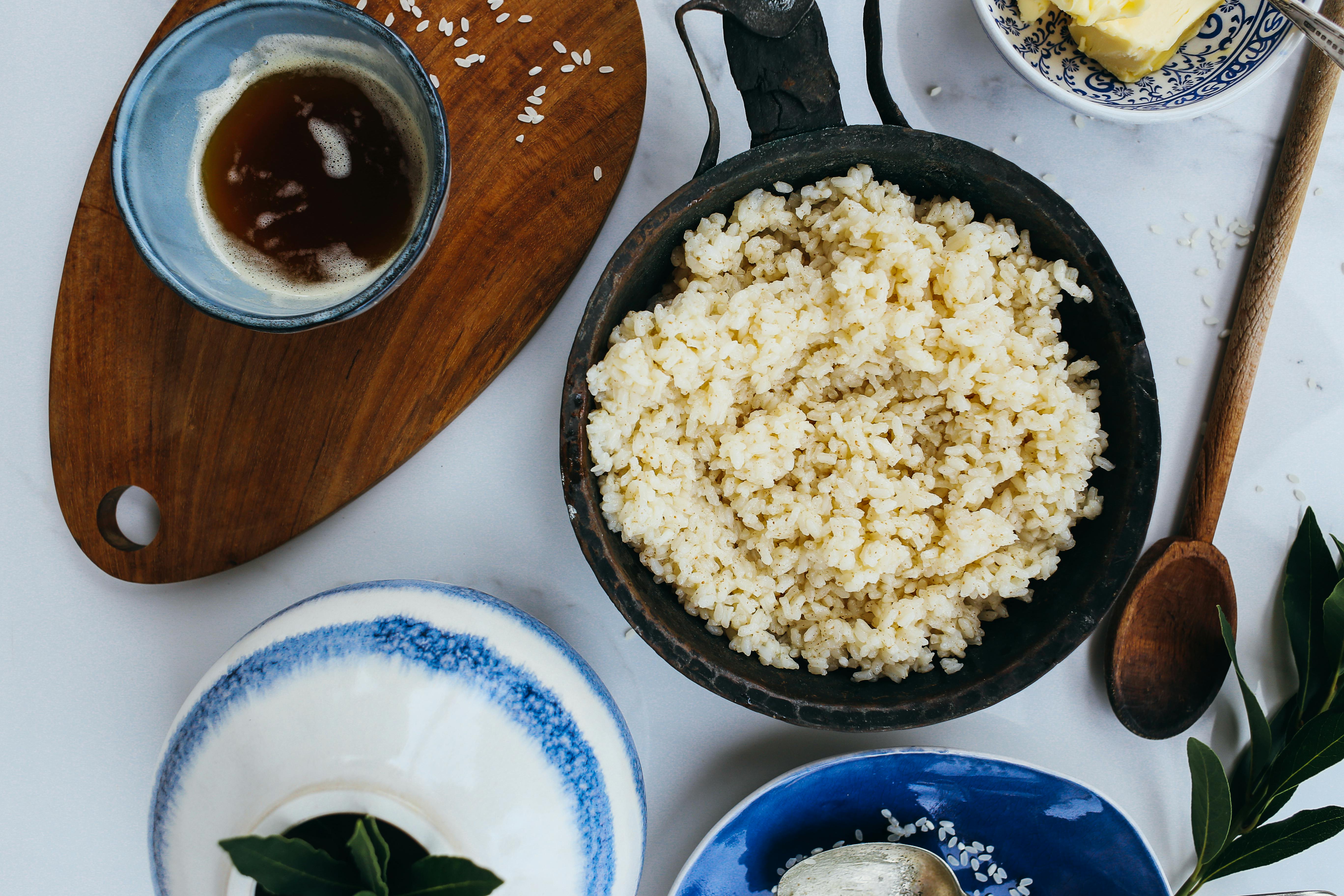
Greek rice, often called Greek lemon rice or rizi pilafi, is a side dish built on long-grain rice (frequently mixed with orzo or broken vermicelli) simmered in chicken or vegetable broth with olive oil, lemon juice, and herbs like dill or oregano. It's the standard accompaniment to grilled meats, roasted chicken, and fish across Greek home cooking, valued for being brighter and lighter than a plain buttered pilaf.
Varieties
Plain Greek lemon rice (rizi pilafi) is simmered in broth with lemon and olive oil only. Spanakorizo adds spinach and turns the dish green and slightly tangier. Domatorizo is made with tomato instead of lemon, giving a deep red, sweeter pilaf. Avgolemono rice stirs in an egg-lemon sauce at the end for a creamier, custard-like finish.
Buying tips
Use a broth-suited long-grain rice such as basmati or a Greek brand like Agrino; avoid short-grain or sushi rice, which turns gluey with this method. If buying orzo to blend in, a small amount (about a quarter of the total grain volume) is enough to add traditional texture without the dish going starchy.
Substitutes
Basmati rice — 1:1
Cooks up fluffy and separate like long-grain rice; slightly more floral aroma but works well in the same broth-and-lemon method.
Orzo (in place of half the rice) — 1:1 by volume for the portion replaced
Traditional in many Greek households as rizi me fide; gives a softer, starchier texture and cooks a few minutes faster than rice, so add it partway through simmering.
Brown rice — 1:1
Chewier and nuttier with more fiber; needs roughly 15-20 extra minutes of simmering and a bit more liquid than white long-grain rice.
Cauliflower rice — 1:1
A low-carb swap that changes the dish substantially; sauté briefly in olive oil rather than simmering in broth, since it releases water fast and turns mushy if boiled like grain rice.
Storage
Cooked Greek rice keeps in an airtight container in the refrigerator for 3-4 days. It also freezes well for up to 2 months; spread it out to cool quickly before freezing so the grains don't clump into a dense mass.
How to use
Serve as a side under grilled souvlaki, roast lemon chicken, or pan-seared fish. It also works cold as a base for a lemony rice salad with cucumber, feta, and olives, or stuffed into hollowed tomatoes and peppers (gemista) before baking.
What it pairs with
Pairs naturally with grilled lamb or chicken, tzatziki, Greek salad, and grilled halloumi or feta. A squeeze of extra lemon and a scattering of fresh dill or parsley at the table brightens it further.
Nutrition
A cup of cooked Greek rice made with olive oil and broth runs roughly 220-260 calories depending on how much oil is used, with the lemon juice adding negligible calories but a good amount of vitamin C.
FAQ
Why does my Greek rice turn out mushy?
Too much liquid or stirring during simmering breaks down the starch. Use a roughly 1:1.75 rice-to-broth ratio, cover, and leave it undisturbed on low heat rather than stirring.
When should the lemon juice go in?
Add it near the end of cooking or right after the rice is fluffed. Lemon juice added too early with acidic broth can slow the rice's ability to fully soften.
Can Greek rice be made vegetarian?
Yes, swap the chicken broth for vegetable broth; the olive oil, lemon, and herbs carry most of the flavor, so the dish holds up well without meat-based stock.
Is Greek rice the same as Spanish or Mexican rice?
No. Spanish and Mexican rice are typically tomato-based and cooked with sofrito or chili, while Greek rice is lemon- and herb-forward with no tomato in the base version.
Have greek rice on hand? Find recipes with our Recipe Generator →