
Hamachi
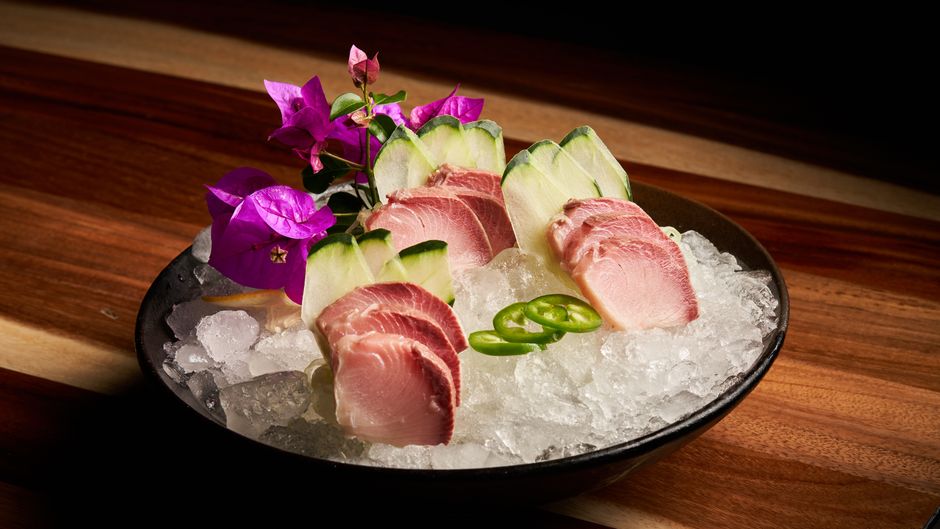
Hamachi is the Japanese name for young yellowtail amberjack (Seriola quinqueradiata), a firm, fatty fish prized for sushi, sashimi, and crudo. Its flesh is pale pink to ivory, buttery in texture, and mild enough to take on citrus, chile, and olive oil without being overpowered. Almost all hamachi sold in the US and at sushi counters is farm-raised, which gives it a consistent fat content that raw preparations depend on.
Varieties
Hamachi, kanpachi, and buri are all yellowtail-family fish often confused with one another. Hamachi is specifically young, farm-raised Japanese amberjack; kanpachi is a related but distinct species (greater amberjack) with firmer flesh; buri refers to the same fish as hamachi but at full maturity, with darker, fattier meat typically served in winter when fat content peaks.
Buying tips
Buy only fish explicitly labeled sushi-grade or sashimi-grade from a fishmonger or market that handles raw fish regularly; this labeling isn't federally regulated, so it depends on the seller's standards, not a certification. Fresh hamachi should smell like clean ocean water, not fishy, with flesh that's firm and springs back when pressed, in a pale pink to almost white shade with faint marbling. Previously frozen (flash-frozen at sea) is standard and actually required to kill parasites, so don't avoid it in favor of never-frozen fish.
Substitutes
Yellowtail (wild-caught, labeled sashimi-grade) — 1:1 by weight
Leaner and slightly firmer than farmed hamachi, with a cleaner, less buttery flavor; still the closest match in texture and species family.
Kanpachi (greater amberjack) — 1:1 by weight
A close relative of hamachi with a firmer bite and slightly sweeter, cleaner flavor; widely used interchangeably at high-end sushi counters.
Fluke or halibut (hirame) — 1:1 by weight
Much leaner and more delicate, so cut it thinner than hamachi to avoid a rubbery bite; best with lighter dressings like ponzu rather than heavy oil.
Sushi-grade salmon — 1:1 by weight
Higher fat content gives a similar richness but a much stronger, more assertive flavor and deeper color; good in citrus-and-soy preparations.
Sushi-grade bluefin or bigeye tuna (akami cuts) — 1:1 by weight
Leaner and denser than hamachi with almost no fat marbling; works better in preparations built around acid rather than oil.
Storage
Raw hamachi is highly perishable and should be used the day it's bought. Keep it in its original vacuum packaging or wrap tightly in plastic, set on a bed of ice in a shallow container, and store at the back of the refrigerator (the coldest spot) rather than the door. Slice only right before serving; pre-cut fish oxidizes and dulls in color within a couple of hours.
How to use
Sliced thin (about 1/8 inch) for crudo, sashimi, and carpaccio-style plates; cubed for poke and ceviche; seared briefly on the outside (tataki-style) while leaving the center raw. Crudo preparations typically dress the fish just before serving with olive oil, citrus juice, flaky salt, and a sharp or spicy accent like jalapeño, yuzu kosho, or shaved garlic, since the acid and salt should hit the fish minutes before eating, not sit and cure it.
What it pairs with
Pairs well with yuzu juice, ponzu, extra-virgin olive oil, flaky sea salt, thinly sliced jalapeño or serrano, shiso leaves, microgreens, and citrus segments like grapefruit or blood orange. Soy sauce works but should be used sparingly since it can mute the fish's natural sweetness.
Nutrition
Hamachi is high in protein and rich in omega-3 fatty acids, with notably more fat than lean white fish like fluke or snapper, which is why it feels richer on the tongue. It's also a good source of selenium and vitamin D.
FAQ
Is hamachi the same fish as yellowtail?
Yes, hamachi is the Japanese market name for young Japanese amberjack, which is sold in English simply as yellowtail. Older, larger fish of the same species are called buri.
Is it safe to eat hamachi raw?
Yes, when it's been properly handled and labeled sushi-grade, meaning it was flash-frozen at very low temperatures to kill parasites, a step the FDA requires for most fish intended to be eaten raw.
What's the difference between hamachi and kanpachi?
They're different species within the same amberjack family. Kanpachi has firmer, denser flesh and a cleaner, slightly sweeter taste, while hamachi is fattier and more buttery due to farm-raising practices.
Can frozen hamachi be used for crudo?
Yes, and it usually should be. Properly flash-frozen and thawed hamachi is standard practice for raw preparations and is safer than fish that was never frozen, since freezing is what eliminates parasite risk.
Why does my hamachi crudo taste watery or mushy?
This usually means the fish was dressed with acid or salt too far in advance. Both draw moisture out of the flesh and begin to cure it, so add dressing within a few minutes of serving.
Have hamachi on hand? Find recipes with our Recipe Generator →