
Hamachi Kama
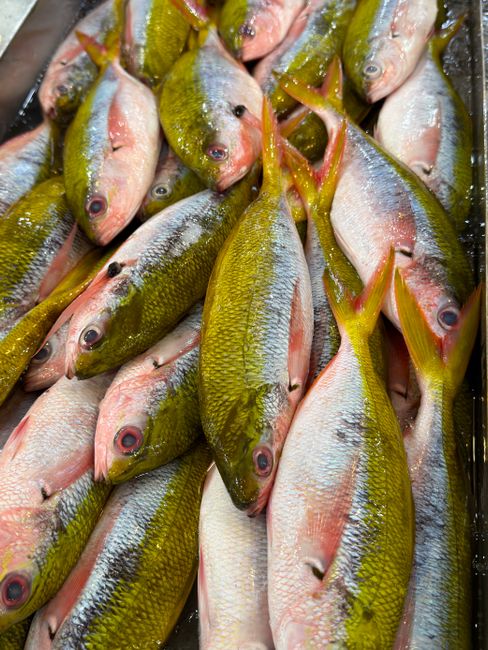
Hamachi kama is the collar cut from yellowtail (hamachi, also called buri when fully mature), taken from the section behind the gills and pectoral fin. It's a fatty, bone-in cut prized in Japanese cooking for the rich, almost buttery meat that clings close to the bone, similar to how a chicken thigh is more flavorful than a breast. Each collar yields a relatively small amount of meat relative to its size, but the fat content and proximity to bone make it far more flavorful than a fillet cut from the same fish.
Varieties
Hamachi refers to farm-raised or younger yellowtail (Seriola quinqueradiata); buri is the same species at full maturity and larger size, with a richer, fattier collar. Kanpachi (amberjack) collars look nearly identical and are sometimes sold interchangeably, though kanpachi tends to be slightly leaner.
Buying tips
Ask at a fish counter or Japanese/Korean grocery specifically for kama; it's often sold whole, bone-in, and priced lower per pound than fillets because it's considered a byproduct cut. Look for firm, glossy skin and clear, bright flesh with no ammonia smell. Larger collars from bigger fish have more meat and are easier to portion.
Substitutes
Salmon collar (sake kama) — 1:1 by weight
Widely available at Japanese markets and sushi counters; slightly higher fat content and a milder flavor than hamachi.
Yellowtail fillet (hamachi loin) — 1:1 by weight
Same fish, same flavor profile, but leaner and without the bone; cooks faster and lacks the collagen-rich texture near the joint.
Tuna collar (maguro kama) — 1:1 by weight
Larger and meatier with a denser texture; needs a longer cook time and benefits from being cut into sections before grilling.
Black cod collar or fillet — 1:1 by weight
Very high fat content, closer to butterfish territory; good substitute if richness matters more than matching the exact flavor.
Chicken thigh, bone-in — 1:1 by weight
Not a seafood substitute, but mimics the fatty, near-the-bone eating experience for a broiled or grilled preparation in a pinch.
Storage
Keep raw hamachi kama tightly wrapped on ice or in the coldest part of the refrigerator, and cook it within a day or two of purchase. Once cooked, refrigerate in a sealed container and eat within 2 days; the high fat content means it turns rancid-tasting faster than leaner cuts if held longer.
How to use
Best salted and broiled or grilled until the skin blisters and the fat renders, then served simply with a squeeze of yuzu or lemon and a shake of shichimi togarashi. Also good deep-fried whole (kama age) or simmered in a soy-mirin-sake broth. Avoid pairing with heavy sauces since the point of the cut is the natural fat.
What it pairs with
Pairs well with steamed short-grain rice, pickled daikon or ginger, a simple ponzu dipping sauce, and cold beer or dry sake, since the fat needs something acidic or crisp to cut through it.
Nutrition
Hamachi kama is high in omega-3 fatty acids and protein, with more fat per ounce than a standard yellowtail fillet because of the cut's proximity to the fin and gills. A typical serving also delivers a solid dose of vitamin D and selenium.
FAQ
Is hamachi kama the same fish as hamachi sashimi?
Yes, it's the same yellowtail, just a different cut. The collar is bone-in and fattier than the loin meat used for sashimi and sushi.
Do I need to descale or clean hamachi kama before cooking?
Most fish counters sell it already scaled and cleaned, but check for stray scales near the fin edges and rinse before salting; any pin bones near the collar joint should be left in since they're part of the structure that keeps the meat intact while cooking.
Why does hamachi kama taste so much richer than a hamachi fillet?
The collar sits near the fish's most active muscles and stores more fat there for energy, plus the bone and skin help retain moisture and render fat into the meat during cooking, something a lean fillet cut can't replicate.
Can hamachi kama be eaten raw?
It's almost always cooked, typically grilled or broiled, because the tougher connective tissue near the bone and fin needs heat to break down; raw preparations are reserved for the loin meat instead.
Have hamachi kama on hand? Find recipes with our Recipe Generator →