
Head Cheese
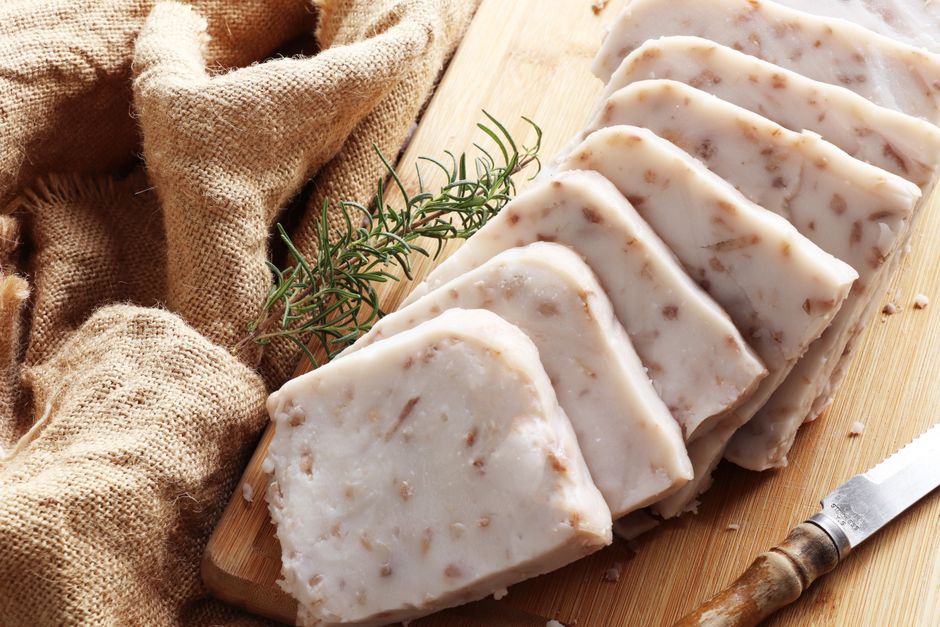
Head cheese is not a dairy product at all. It's a traditional charcuterie terrine made by simmering a pig's head (sometimes with feet or tongue added) until the meat falls off the bone, then packing the picked meat into a mold with the cooking liquid, which sets into a firm, savory aspic as it cools. The result is sliced thin and eaten cold, similar to a pate or terrine, with a gelatinous texture and a mild, herby, slightly tangy pork flavor from vinegar and spices added during cooking.
Varieties
Souse is the closest relative but leans more heavily on vinegar and sometimes includes diced pickled vegetables or hot pepper, giving it a sharper, tangier profile than most head cheese. French fromage de tete and German Sulze follow the same basic method with regional differences in spicing. Philadelphia-style scrapple is a different product entirely, a cornmeal-and-pork-scrap loaf that's sliced and fried, not aspic-set.
Buying tips
Look for it at butcher counters, delis, or specialty grocers rather than standard supermarket cold-cut cases. The aspic should look clear rather than cloudy, and you should be able to see distinct pieces of meat rather than a uniform paste, which signals a traditionally made product rather than a processed loaf.
Substitutes
Souse (soused pork) — 1:1 by weight
A close cousin made the same way but pickled more heavily in vinegar, sometimes with hot pepper or diced pickles folded in; swap directly in sandwiches.
Pork terrine or country pate — 1:1 by weight
Firmer and less gelatinous since it's usually bound with fat rather than aspic, but delivers a similar rustic, cold-sliced pork flavor.
Veal head cheese (fromage de tête) — 1:1 by weight
Milder and slightly more delicate than pork versions, a good swap if pork head cheese isn't available at the deli counter.
Mortadella — 1:1 by weight
Not aspic-set and won't have the same jellied texture, but works as a cold-cut stand-in for sandwiches where texture matters less than flavor.
Storage
Keep tightly wrapped in the refrigerator and use within 5 to 7 days of opening, since the moist, gelatin-rich texture spoils faster than drier cured meats. For longer storage, wrap unsliced portions in plastic then foil and freeze for up to 2 months; texture softens slightly after thawing but flavor holds up.
How to use
Slice thin and serve cold as part of a charcuterie board or sandwich, typically on dark rye or pumpernickel with sharp mustard. It can also be pan-fried in a little butter until the edges crisp and turn golden, which firms up the aspic and adds texture contrast.
What it pairs with
Pairs well with sharp mustard, malt or cider vinegar, pickled onions or cornichons, dark rye bread, and a cold pilsner or dry cider to cut the richness.
Nutrition
High in protein and collagen from the gelatin, with moderate fat and essentially no carbohydrates. It's also high in sodium from the curing and pickling process, so portion size matters for anyone watching salt intake.
FAQ
Is head cheese actually made from cheese?
No. It contains no dairy at all. The name refers to its old-fashioned meaning of a molded, pressed food, similar to how 'cheese' was once used for anything set into a firm block.
What does head cheese taste like?
Savory and porky with a mild tang from vinegar and a soft, gelatinous texture from the natural collagen in the cooking liquid, closer to a cold terrine than to any deli meat.
Do you need to cook head cheese before eating it?
No, it's fully cooked during preparation and sold ready to eat cold, straight from the refrigerator, though pan-frying slices is a common way to serve it warm.
Is head cheese the same thing as souse?
They're closely related but not identical. Souse is typically pickled more aggressively in vinegar and sometimes includes diced pickles or hot pepper, giving it a sharper flavor than standard head cheese.
Have head cheese on hand? Find recipes with our Recipe Generator →