
Healthy Crackers
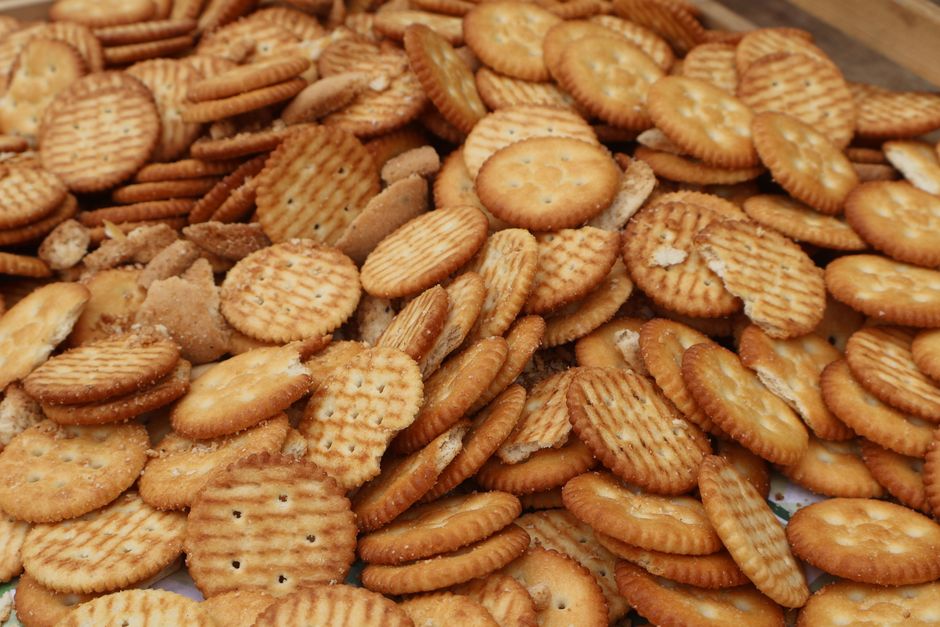
"Healthy crackers" isn't a single ingredient but a category of shelf-stable, baked snack crackers made with whole grains, seeds, legumes, or rice instead of refined white flour and hydrogenated oils. The healthiest options list a whole grain or seed as the first ingredient, keep sodium under about 140mg per serving, and skip added sugars beyond a gram or two. Texture and calorie density vary a lot across the category, from dense seed-and-flax crackers to airy puffed rice cakes.
Varieties
Wheat-based whole grain crackers are the most neutral-tasting and versatile. Seed and flax crackers are denser, higher in fat and fiber, and taste noticeably nuttier. Rice cakes are the lightest and lowest in fat but offer the least staying power. Legume-based crackers (chickpea, lentil) sit between wheat and seed crackers in texture but bring more protein.
Buying tips
Check that a whole grain, seed, or legume flour appears first on the ingredient list rather than 'enriched wheat flour.' A short ingredient list (six or fewer items) usually signals less processing. Compare sodium and added sugar per serving across brands since they vary widely even within the same category.
Substitutes
Whole grain wheat crackers (e.g. whole wheat Triscuit-style) — 1:1 by weight
Closest texture and use case to standard crackers, with more fiber from the intact wheat bran.
Flax and seed crackers (flax, chia, sesame based) — 1:1 by weight
Denser and more filling per ounce; higher fat from seeds but mostly unsaturated and omega-3 rich.
Plain brown rice cakes — 1:1 by weight, but expect more pieces per ounce since they're light and airy
Lower fat and fewer calories per ounce, but far less filling and crumbles under wet toppings like hummus.
Roasted chickpea crackers or crisps — 1:1 by weight
More protein and fiber per ounce than wheat crackers, good for holding up under heavier dips.
Homemade dehydrated vegetable chips (beet, zucchini, sweet potato) — To taste, not a fixed weight swap
Moisture content and slice thickness vary too much for a reliable weight ratio; best treated as a separate snack rather than a direct cracker replacement.
Storage
Keep crackers in their original resealable bag or an airtight container at room temperature, away from humidity, and they'll stay crisp for several weeks past opening. Seed and flax crackers have more oil and can turn slightly rancid faster in a hot kitchen, so keep them in a cool cupboard rather than near the stove or oven.
How to use
Serve alongside hummus, guacamole, or bean dips for a fiber-forward snack, crumble over soups in place of croutons, or crush seed crackers into a breading for baked fish or chicken. Rice cakes work best topped immediately since they soften within minutes of contact with wet toppings.
What it pairs with
Pairs well with hummus, mashed avocado, cottage cheese, smoked salmon, or a smear of nut butter. Seed crackers hold up especially well under sharp aged cheddar or goat cheese since their nutty flavor doesn't get lost.
Nutrition
Sodium is the number to watch: many packaged crackers run 150-230mg per small serving, which adds up fast if eaten by the handful. Whole grain and seed-based versions add real fiber (2-5g per ounce) that plain refined-flour crackers lack, which slows the blood sugar spike from the carbs they contain.
FAQ
What actually makes a cracker healthy?
A short ingredient list led by a whole grain, seed, or legume flour, moderate sodium (under roughly 140mg per serving), minimal added sugar, and at least 2g of fiber per serving.
Are rice cakes healthier than regular crackers?
They're lower in fat and calories per ounce, but also lower in fiber and protein than whole grain or seed crackers, so they're less filling and can spike blood sugar faster if eaten alone.
Are gluten-free crackers automatically healthier?
No. Many gluten-free crackers are made from refined rice or potato starch with little fiber, so removing gluten doesn't by itself improve the nutrition profile.
How many crackers count as a reasonable serving?
Most packaged crackers list a serving size around 5-8 crackers or about 28g (1 ounce); check the label rather than assuming, since cracker size varies a lot between brands.
Have healthy crackers on hand? Find recipes with our Recipe Generator →