
Iranian Cucumbers
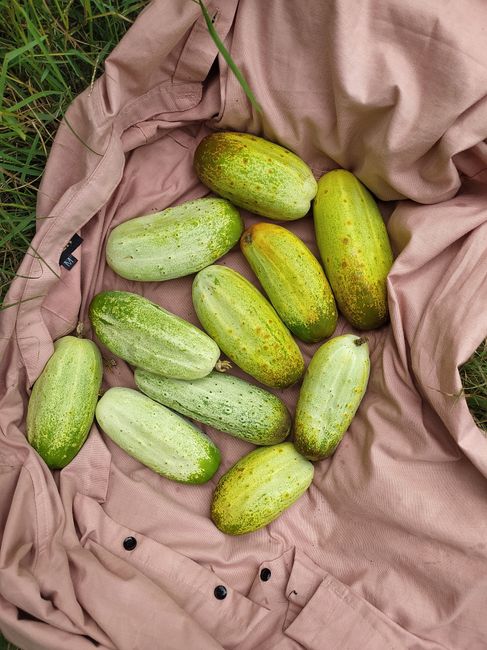
Iranian cucumbers, also sold as Persian cucumbers, are short (usually 5 to 6 inches), slender cucumbers with thin, dark green, bump-free skin and almost no seeds. They're bred to be parthenocarpic, meaning they set fruit without pollination, which is why the seed cavity stays small and undeveloped. The flesh is dense, crisp, and mildly sweet with none of the bitterness or excess water that can show up in larger slicing cucumbers.
Varieties
Iranian and Persian cucumbers refer to the same short, thin-skinned cultivar group and the names are used interchangeably depending on the store. They differ from English (hothouse) cucumbers mainly in length and packaging, and from Kirby cucumbers, which have bumpier, thicker skin and are typically used for pickling rather than eaten raw.
Buying tips
Choose firm cucumbers with taut, deep green skin and no soft spots, yellowing, or wrinkling at the ends. Smaller ones tend to have fewer developed seeds and a crisper bite than larger specimens from the same batch.
Substitutes
English (hothouse) cucumber — 1:1 by weight
Longer and often shrink-wrapped, with a similarly thin edible skin and few seeds, though the flesh holds slightly more water.
Kirby cucumber — 1:1 by weight
Bumpier, thicker skin and more visible seeds; peel if the skin seems tough, and expect a slightly crunchier bite.
Regular American slicing cucumber, peeled and seeded — 1:1 by weight after peeling and seeding
Has a waxed, bitter skin and a large seed core, so remove both before using in place of Iranian cucumber.
Storage
Keep unwashed in the refrigerator crisper drawer, either loose or in a perforated bag, for up to a week. Don't store near apples, bananas, or tomatoes, which release ethylene gas and speed up softening and yellowing.
How to use
Eaten raw and unpeeled in salads, sandwiches, and yogurt-based dips like mast-o khiar or tzatziki. Their low water content makes them a better choice than watery slicing cucumbers for dishes that sit for a while, like chopped salads or grain bowls. Also common sliced whole as part of a Persian sabzi khordan herb platter, or cut into spears for lunches and snacks since the skin needs no peeling.
What it pairs with
Pairs well with yogurt, dill, mint, lemon juice, garlic, feta, tomatoes, and olive oil, and holds up in vinegar-based quick pickles without going soft.
Nutrition
About 95% water and very low in calories, with small amounts of vitamin K and potassium. Because they're eaten with the skin on, they retain slightly more fiber than a peeled cucumber.
FAQ
Do Iranian cucumbers need to be peeled?
No. Their skin is thin, tender, and not bitter, so they're typically eaten unpeeled.
Are Iranian cucumbers and Persian cucumbers the same thing?
Yes, they're the same cucumber type sold under different regional names, both short, thin-skinned, and nearly seedless.
Why do Iranian cucumbers have so few seeds?
They're bred as parthenocarpic varieties, which set fruit without pollination, so the seed cavity stays small and underdeveloped compared to standard slicing cucumbers.
Can Iranian cucumbers be pickled?
Yes, they pickle well and stay crisper than larger slicing cucumbers because of their lower water content, though they soften faster than Kirby cucumbers in long-brined pickles.
Have iranian cucumbers on hand? Find recipes with our Recipe Generator →