
Irish Butter
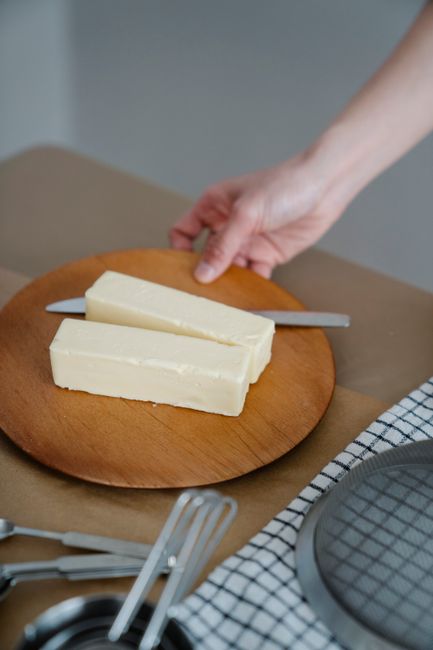
Irish butter is a high-fat butter, typically 80-82% butterfat compared to about 80% for standard American butter, made from the milk of cows that graze on grass for most of the year rather than grain feed. The grass diet gives the milk more beta-carotene, which is what turns the butter a noticeably deeper yellow. Many Irish butters, including well-known brands like Kerrygold, are also slightly cultured, meaning the cream is fermented briefly before churning, which adds a faint tang. This combination of higher fat, lower water content, and mild tang is why it tastes richer spread on bread and behaves differently in baking than lower-fat butters.
Varieties
Salted Irish butter is more common for table use and spreading, while unsalted is preferred for baking where salt levels need to be controlled. Some brands sold outside Ireland labeled 'Irish-style butter' are made with the same fat percentage but from grain-fed cow's milk, so the color and flavor will be milder.
Buying tips
Check the butterfat percentage on the label; genuine Irish and European-style butters list 80-85%. Foil-wrapped blocks (rather than sticks) are the more traditional format. Kerrygold and Dubliner are widely available in the US, but any butter labeled 'Irish' should state the country of origin on the package if it's authentic.
Substitutes
European-style butter (82% butterfat) — 1:1
The closest match in fat content and richness, though it usually lacks the grass-fed color and mild tang of true Irish butter.
Any cultured butter — 1:1
Matches the tangy flavor well; check the fat percentage on the label since cultured butters vary from 80% to 85%.
Standard unsalted butter (80% butterfat) — 1:1
Works fine for most cooking and baking, but expect a slightly less rich texture and paler color in finished baked goods.
Ghee — 3:4
Ghee has no water content, so use about three-quarters the amount. Good for pan-frying or finishing dishes, not ideal for baking that needs butter's moisture.
Storage
Keep Irish butter wrapped tightly in its foil or an airtight container in the refrigerator, where it keeps for about a month past the sell-by date. It also freezes well for up to six months; wrap the block in plastic on top of the foil to prevent it from picking up freezer odors.
How to use
Spread thick on brown soda bread or scones, stirred into mashed potatoes for colcannon or champ, used to fry boxty (potato pancakes), and swapped into baking recipes where a richer crumb and deeper color are wanted, such as shortbread or pastry.
What it pairs with
Pairs naturally with brown soda bread, smoked salmon, boxty, and jam. In savory cooking, it rounds out cream-based sauces, mashed potatoes, and pan-fried fish.
Nutrition
The higher fat and lower water content mean slightly more calories per tablespoon than standard butter, roughly 100-102 calories versus about 100-104 depending on brand, and it contains more fat-soluble vitamins A, D, E, and K from the grass-fed milk.
FAQ
Why is Irish butter more yellow than regular butter?
The color comes from beta-carotene in the grass the cows eat. Grass-fed milk naturally contains more of this pigment than milk from grain-fed cows, which produces paler butter.
Can Irish butter be substituted 1:1 in baking recipes?
Yes, in most recipes, though the higher fat content can make cookies and pastry slightly more tender and rich. If a recipe is very precise, like French macarons, weigh the butter rather than measuring by volume.
Is all Kerrygold butter actually made in Ireland?
Yes, Kerrygold is produced by Ornua, an Irish dairy cooperative, and the milk comes from grass-fed cows in Ireland year-round.
Does Irish butter taste different from American butter on its own?
Most people notice it tastes richer and slightly tangy from the culturing process, with a more pronounced dairy flavor than standard sweet cream American butter.
Have irish butter on hand? Find recipes with our Recipe Generator →