
Italian Sandwich
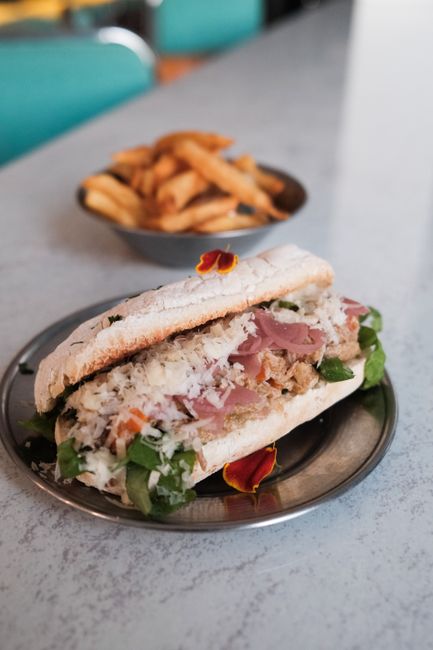
The Italian sandwich (also called an Italian sub or Italian hoagie) is a cold sandwich built on a long, crusty roll and layered with a mix of Italian cured meats such as genoa salami, capicola, and mortadella, plus provolone cheese. It's dressed with olive oil, red wine vinegar, shredded lettuce, tomato, red onion, and often a sprinkle of dried oregano or an Italian seasoning blend. It's a deli-counter staple in the Northeastern U.S. rather than a sandwich you'd actually find in Italy, where a panino is a different, usually simpler thing.
Varieties
An Italian sub and a hoagie are the same basic sandwich under different regional names (hoagie in Philadelphia, Italian sub or grinder elsewhere in the Northeast). A muffuletta is a distinct New Orleans version built on a round sesame loaf with a chopped olive salad instead of vinegar and lettuce. A panino, by contrast, is Italian in origin and usually much simpler, often just one or two fillings pressed hot between bread, without the full deli-meat stack.
Buying tips
At a deli counter, ask for meats sliced thin rather than shaved for better texture, and buy a roll baked that day since a stale roll is the most common way an Italian sub falls apart. If assembling at home, look for genoa salami and capicola specifically rather than generic deli ham for an authentic flavor base.
Substitutes
Muffuletta-style sandwich (olive salad instead of oil-and-vinegar dressing) — 1:1
Swap the shredded lettuce and vinegar dressing for a chopped olive-and-giardiniera relish; the meats and cheese stay largely the same.
Grilled panino with the same fillings — 1:1
Press the same meats and cheese in a panini press instead of serving cold; skip the raw vegetables since they turn soggy under heat.
Turkey and provolone hoagie — 1:1
A lighter, less fatty stand-in when cured pork products aren't available; add a splash of vinegar to keep the tang.
Vegetarian version with roasted vegetables and provolone — 1:1
Replace the meats with roasted red peppers, marinated artichokes, and extra provolone; add a few olives for the missing salty, fatty note.
Storage
Assembled sandwiches hold for a few hours at room temperature but turn soggy fast once dressed with vinegar and oil. For make-ahead lunches, store the roll, meats, cheese, and dressing separately and assemble just before eating, or wrap an assembled sandwich tightly in parchment and refrigerate up to 24 hours with the vegetables added last if possible.
How to use
Served whole or cut into halves or thirds for lunch, picnics, and casual gatherings. Often warmed briefly in an oven to soften the cheese without fully toasting the vegetables, or served fully cold straight from the deli case.
What it pairs with
Pairs well with kettle chips, a side of Italian pickled vegetables (giardiniera), a simple green salad, or a cup of minestrone. A cold Italian soda or a light lager cuts through the richness of the cured meats.
Nutrition
A full-size Italian sub typically runs 700 to 900 calories depending on roll size and meat quantity, with a high sodium content from the cured meats, often 1,800 to 2,500 mg per sandwich. It supplies a solid amount of protein, generally 30 to 40 grams, from the combined meats and cheese.
FAQ
What meats go into a classic Italian sandwich?
Genoa salami, capicola (hot or sweet), and mortadella are the standard trio, sometimes with prosciutto or ham added or substituted depending on the shop.
Is the Italian sandwich actually eaten in Italy?
No. It developed among Italian immigrant communities in the U.S., particularly around Philadelphia and New England, and doesn't correspond to a specific traditional Italian dish.
What's the difference between an Italian sub and a hoagie?
They're generally the same sandwich; the name changes by region, with hoagie common in Philadelphia and grinder or Italian sub used elsewhere in the Northeast.
How do you keep an Italian sandwich from getting soggy?
Layer the cheese directly against the bread as a moisture barrier before adding dressed vegetables, and add the oil and vinegar just before eating rather than during early assembly.
Have italian sandwich on hand? Find recipes with our Recipe Generator →