
Kani Salad
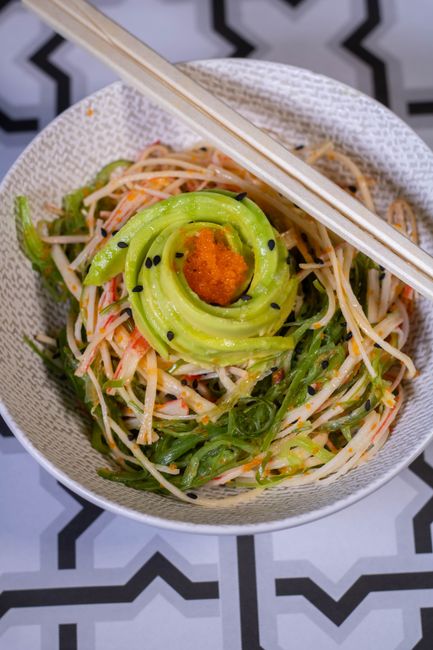
Kani salad is a Japanese-American dish built on kanikama, the cooked, flavored surimi sold as imitation crab, shredded and tossed with julienned cucumber, sometimes carrot, and a mayo-based dressing often brightened with rice vinegar and a little sugar. It shows up on sushi restaurant menus as a starter or a topping for spicy tuna and California rolls, and it's popular precisely because kanikama is cheap, pre-cooked, and needs no prep beyond shredding.
Varieties
Classic kani salad uses a plain rice vinegar and mayo dressing, while spicy kani salad adds sriracha or chili oil, and California-style versions mix in avocado and sometimes tobiko for color and pop. Some restaurants sell a drier, less-dressed version meant purely as a roll filling rather than a standalone salad.
Buying tips
Buy kanikama sold as sticks or flake-style shreds in the refrigerated seafood case, not the frozen section; fresher refrigerated packs shred more cleanly. Check the ingredient list if crab flavor matters, since cheaper brands rely almost entirely on artificial crab flavoring rather than any real crab extract.
Substitutes
Real lump crab meat — 1:1
Sweeter and less rubbery than imitation crab, but far more expensive and it won't hold the shredded, stringy texture kani salad is known for.
Cooked bay shrimp, chopped — 1:1
A common swap when kanikama isn't available; gives a similar mild seafood flavor but a firmer bite.
Shredded rotisserie chicken — 1:1
Not traditional, but works in the same mayo-vinegar dressing if making a seafood-free version for someone with shellfish concerns (note that surimi itself is fish-based, not shellfish, so this swap is usually about flavor preference, not allergy).
Hearts of palm, shredded — 1:1
A vegetarian substitute with a similar pale color and fibrous, shreddable texture, though it tastes nothing like seafood.
Storage
Kani salad is best eaten within a day of mixing since the mayo dressing makes the cucumber weep and the salad turns watery. Store in an airtight container in the refrigerator for up to 2 days, and drain off any accumulated liquid before serving leftovers. Do not freeze; both the mayo dressing and the cucumber break down badly.
How to use
Serve chilled as a side salad, spoon it over sushi rice for a quick chirashi-style bowl, or use it as a filling for hand rolls and California rolls. It also works stuffed into avocado halves or piled onto rice crackers as an appetizer.
What it pairs with
Pairs well with sushi rice, avocado, cucumber, and pickled ginger, and takes well to a drizzle of sriracha mayo or unagi sauce for a spicy or sweet-savory version.
Nutrition
Kani salad is moderate in calories mainly because of the mayo dressing; the kanikama itself is low in fat but also lower in protein than real crab since it's mostly whitefish paste (surimi) bulked with starch and egg white. Check labels if avoiding gluten, since some kanikama brands use wheat starch as a binder.
FAQ
Is kani salad made with real crab?
Usually not. Kani salad is traditionally made with kanikama, a cooked surimi product flavored to taste like crab, since it's far cheaper and more consistent than real crab meat.
Is kani salad safe to eat raw?
Yes, kanikama is fully cooked during processing, so kani salad requires no additional cooking, unlike raw fish preparations.
Why does my kani salad get watery?
Cucumber releases water once salted or mixed with dressing. Salt and drain julienned cucumber for 10 minutes before mixing, and dress the salad shortly before serving rather than hours ahead.
Does kani salad contain shellfish?
Imitation crab is typically made from whitefish like pollock, not shellfish, but many brands add a small amount of real crab extract for flavor, so anyone with a shellfish allergy should check the label carefully.
Have kani salad on hand? Find recipes with our Recipe Generator →