
Lasagna Noodles
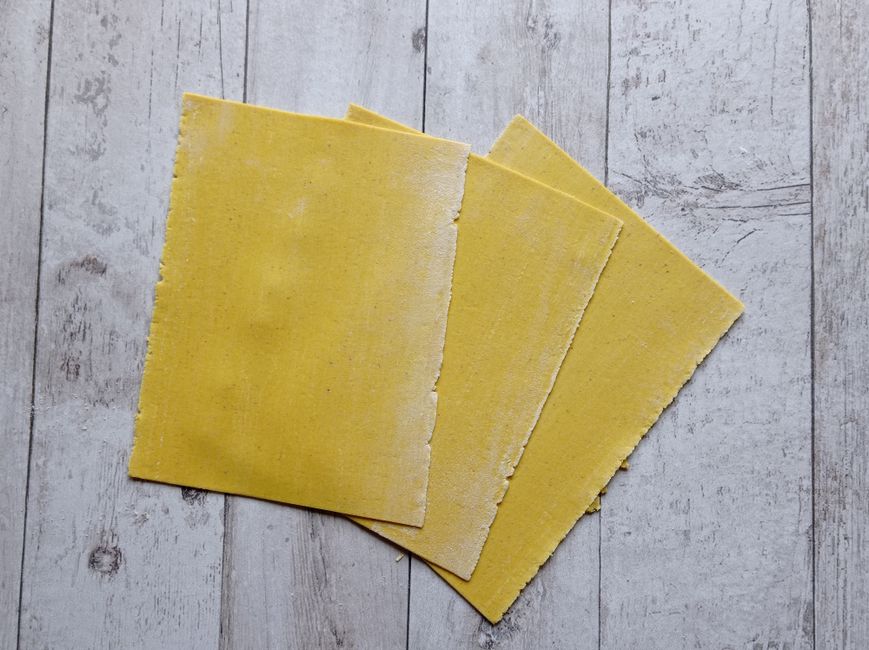
Lasagna noodles are wide, flat pasta sheets, typically about 2 to 3 inches across, made from durum wheat semolina and water (or egg for fresh versions). They're designed to be layered flat with sauce, cheese, and fillings and baked, rather than boiled and sauced like standard pasta shapes. Dry noodles come in two main forms: regular, which need boiling before assembly, and no-boil (also called oven-ready), which are pressed thinner so they soften using only the moisture from the sauce during baking.
Varieties
Regular dry noodles need pre-boiling and hold their shape firmly; no-boil noodles are pressed thinner and rely on sauce liquid to soften in the oven, producing a slightly softer, more uniform texture. Fresh egg pasta sheets are the most tender and cook fastest, giving a silkier bite than either dry form. Whole wheat and gluten-free versions swap the wheat base but are used the same way as regular noodles.
Buying tips
Check the box for cracked or broken noodles before buying, since brittle dry pasta breaks apart further during boiling. For no-boil noodles, thinner varieties absorb sauce moisture more reliably than thicker ones, so thin, slightly translucent sheets tend to bake up more evenly. If using fresh pasta sheets, buy them as close to cooking day as possible since they don't keep long.
Substitutes
No-boil (oven-ready) lasagna noodles — 1:1 by sheet
Use in place of regular dry noodles without boiling first, but add about 1/2 cup extra sauce or a thin layer of water/broth so the noodles have enough liquid to soften fully in the oven.
Fresh pasta sheets — 1:1 by weight
Cook faster and bake up more tender than dried noodles; trim sheets to fit the pan and don't pre-boil, since fresh pasta softens quickly in the oven.
Wonton or egg roll wrappers — 3 wrappers per 1 standard noodle
Overlap two or three wrappers per layer to match the width of a lasagna noodle; they cook almost instantly, so keep bake time on the shorter side to avoid mush.
Gluten-free lasagna noodles (rice or corn-based) — 1:1 by sheet
Behave similarly to regular noodles but are more fragile when wet; handle boiled sheets gently and rinse in cool water immediately to stop sticking.
Zucchini or eggplant slices — 1:1 by layer
Salt sliced vegetables and let them sit 20 to 30 minutes to draw out moisture, then pat dry before layering, or the lasagna will turn watery. Not a true 1:1 by weight since vegetables shrink and release liquid.
Rice paper sheets — 2 sheets per 1 noodle
Soften briefly in warm water first; layer two overlapping sheets per row since a single sheet is too thin to hold structure once baked.
Storage
Store unopened dry lasagna noodles in a cool, dry pantry for up to two years; once opened, reseal the box or transfer to an airtight container to keep out moisture and pests. Fresh lasagna sheets keep refrigerated for 2 to 3 days or frozen, separated by parchment, for up to 2 months. Assembled, unbaked lasagna can be refrigerated a day ahead or frozen (wrapped tightly) for up to 3 months.
How to use
Boil regular noodles in well-salted water for 1 to 2 minutes less than the package directions, since they'll finish cooking in the oven, and lay them flat on a towel or oiled sheet pan to prevent sticking while assembling. No-boil noodles go straight from the box into the pan, submerged in sauce on all sides. Fresh sheets need no boiling at all. Beyond classic layered lasagna, broken noodle pieces work in soups, and whole sheets can be rolled around filling for lasagna roll-ups.
What it pairs with
Pairs with ricotta or bechamel, mozzarella, parmesan, ground beef or Italian sausage ragu, and roasted vegetables like mushrooms, spinach, or squash. A green salad with a sharp vinaigrette balances the richness of a baked, cheese-heavy lasagna.
Nutrition
A 2-ounce dry serving of regular lasagna noodles has around 200 calories and 7 grams of protein, similar to other durum wheat pasta. Whole wheat versions add roughly 4 to 6 grams of fiber per serving; egg-based fresh noodles carry slightly more protein and fat from the added egg.
FAQ
Do I really not need to boil no-boil lasagna noodles?
Correct, as long as they're fully submerged in sauce with no dry edges exposed and there's enough extra liquid in the dish; dry corners of no-boil noodles that poke above the sauce line will stay hard after baking.
Why does my lasagna turn out watery?
Usually from unboiled regular noodles used without extra liquid, watery ricotta that wasn't drained, or vegetables like zucchini added without first salting and draining them.
Can I use regular lasagna noodles as a no-boil substitute?
Yes, but boil them first since they're too thick to soften from sauce moisture alone in the oven; using them dry will leave the center layers hard and chewy.
How many noodles does a standard 9x13 lasagna need?
Typically 9 to 12 noodles, arranged in three layers of three to four noodles each, depending on noodle width and whether they're broken to fit pan corners.
Can lasagna noodles be frozen after boiling?
Yes, laid flat between sheets of parchment or wax paper in a freezer bag for up to 2 months; thaw in the refrigerator before assembling to avoid excess moisture in the finished dish.
Have lasagna noodles on hand? Find recipes with our Recipe Generator →