
Mango Puree
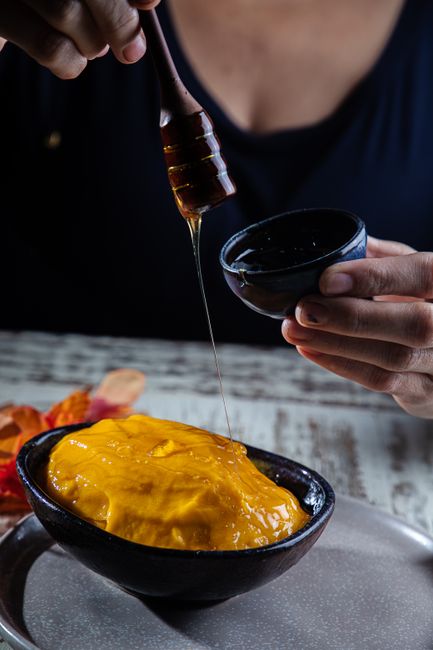
Mango puree is ripe mango flesh blended until completely smooth, with no fibrous bits remaining. It's used as a base for smoothies, lassis, sorbets, mousses, curds, and glazes, and as a flavoring swirled into yogurt or folded into whipped cream. Fresh puree comes from blending peeled, pitted ripe mango; store-bought versions (often labeled Alphonso or Kesar pulp) are usually sweetened and canned, so they run sweeter and thicker than homemade.
Varieties
Puree made from Ataulfo mangoes is smoother, less fibrous, and sweeter than puree from Tommy Atkins, the common grocery-store variety, which needs a finer blend or a strain to remove stray fibers. Alphonso mangoes, mostly sold as canned pulp outside South Asia, produce a deeper orange, richer-tasting puree prized for lassi and kulfi.
Buying tips
For homemade puree, choose mangoes that give slightly to gentle pressure and smell fragrant near the stem; Ataulfo (yellow, honey mangoes) puree smoother and sweeter than fibrous Tommy Atkins mangoes. For canned pulp, Alphonso and Kesar varieties from Indian brands are the standard for lassi and desserts and are already sweetened.
Substitutes
Frozen mango, thawed and blended — 1:1
The closest match by far since it's the same fruit; frozen mango is often riper and sweeter than fresh off-season mango.
Peach puree — 1:1
Lighter in color and less intensely sweet, with a similar smooth texture; works well in smoothies and sorbets.
Apricot puree — 1:1
More tart and slightly less sweet than mango; good in glazes and baked goods where a sharper fruit note is welcome.
Papaya puree — 1:1
Milder and less acidic than mango, with a softer flavor; blend with a squeeze of lime to brighten it closer to mango's tang.
Unsweetened applesauce — 1:1 by volume
Not a flavor match at all, but a reasonable moisture-and-sweetness stand-in in baking recipes where mango is mainly there for texture.
Canned pumpkin puree — not a flavor substitute
Only usable for texture in baking, not flavor. Skip it for smoothies, lassis, or anything served raw.
Storage
Fresh mango puree keeps in an airtight container in the refrigerator for 3 to 4 days; a thin layer will darken slightly on top from oxidation, which can be stirred back in. For longer storage, freeze in an ice cube tray or flat in a zip-top bag for up to 6 months and thaw in the fridge before use.
How to use
Blend into smoothies and mango lassi, fold into whipped cream or yogurt for a quick mousse, swirl into cheesecake batter before baking, simmer with sugar and lime for a glaze on grilled chicken or fish, or spin into sorbet after chilling.
What it pairs with
Pairs naturally with lime, coconut, chili, cardamom, vanilla, and yogurt. Also works well against savory heat, such as in a mango glaze for grilled pork or a mango salsa base for fish tacos.
Nutrition
Mango puree carries the same nutrition as fresh mango: naturally sweet, a good source of vitamin C and vitamin A (from beta-carotene), with no added fat. Store-bought canned pulp is often sweetened, so check the label if you're tracking sugar.
FAQ
Do I need to strain mango puree?
If using a fibrous variety like Tommy Atkins, yes: blend, then push through a fine mesh strainer to remove stringy bits. Ataulfo and Alphonso mangoes rarely need straining.
Is canned mango pulp the same as fresh puree?
No, canned pulp is usually sweetened and cooked briefly during canning, which slightly changes the flavor and thickens the texture. Use less added sugar in recipes when substituting canned pulp for fresh puree.
Can I use unripe mango to make puree?
Not for sweet applications. Unripe mango is starchy and sour, better suited to savory uses like green mango salad, not puree for desserts or drinks.
Why did my mango puree turn brown on top?
Surface oxidation from air exposure, harmless and easily fixed by stirring; a squeeze of lime mixed in before storing slows the browning.
Have mango puree on hand? Find recipes with our Recipe Generator →