
Mangold Chard
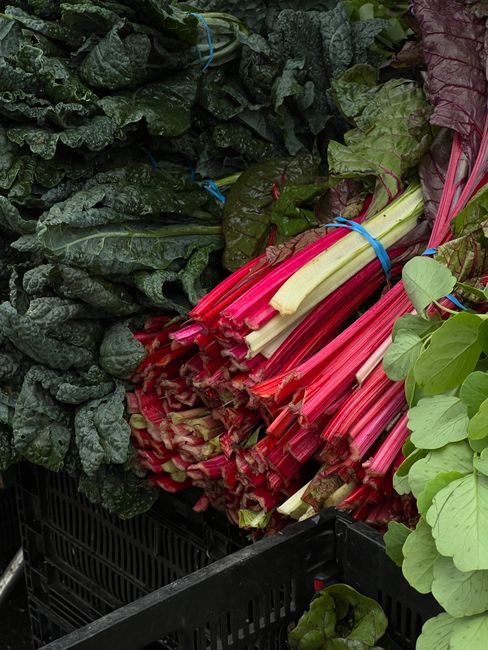
Mangold is the German name for Swiss chard (Beta vulgaris subsp. vulgaris), a leafy green related to beets and spinach. It has large, crinkled dark green leaves attached to thick, crisp stems that range from white to vivid red, yellow, or pink depending on the variety. The leaves taste earthy and slightly bitter, similar to spinach but heartier, while the stems are sweeter and more fibrous, closer in texture to celery.
Varieties
Rainbow chard and ruby chard are the same plant as mangold chard, just bred for stem color; flavor differences between colors are minor. Regular white-stemmed Swiss chard is the most common variety and slightly less bitter than the red-stemmed types.
Buying tips
Look for firm, unwilted leaves in a deep, even green with no yellow spots or slimy patches. Stems should snap crisply when bent; limp or rubbery stems mean the bunch is past its best.
Substitutes
Spinach — 1:1 by weight
Much faster cooking and no thick stems to deal with; add spinach at the very end of a recipe since it wilts in under a minute.
Beet greens — 1:1 by weight
Very close botanical relative with a similar earthy, slightly mineral flavor; stems are thinner and cook faster than chard stems.
Kale (stems removed) — 1:1 by weight
Sturdier and more bitter; needs a few extra minutes of cooking to soften compared to chard leaves.
Bok choy — 1:1 by weight
Milder and slightly sweet with crunchy stalks; works well in stir-fries where chard would otherwise be used.
Storage
Store unwashed in a loosely closed plastic bag in the refrigerator crisper drawer, where it keeps for about four to five days. Wash and dry it only right before cooking, since moisture speeds up decay. Cooked chard keeps in a sealed container in the fridge for up to three days.
How to use
Separate the stems from the leaves before cooking since they need different times. Chop stems and saute in olive oil or butter for four to five minutes until tender, then add the roughly torn leaves and cook another two to three minutes until wilted. Good in gratins, stirred into soups and stews, sauteed as a simple side with garlic, or added raw and thinly sliced to salads when young and tender.
What it pairs with
Pairs well with garlic, olive oil, lemon, parmesan, chickpeas, white beans, and smoked meats like bacon or pancetta, which balance its slight bitterness.
Nutrition
Mangold is high in vitamin K, vitamin A, and magnesium, and contains meaningful iron for a leafy green. It also carries oxalic acid like spinach and beet greens, which can reduce calcium and iron absorption if eaten in very large amounts.
FAQ
Is mangold the same thing as Swiss chard?
Yes. Mangold is simply the German word for Swiss chard; it is the same vegetable sold under both names.
Do you have to cook the stems and leaves separately?
Not strictly, but the stems take three to four minutes longer to soften than the leaves, so adding them to the pan first gives a more even texture.
Can you eat mangold chard raw?
Yes, young small leaves can be eaten raw in salads, but mature leaves and thick stems are tough and taste better cooked.
Why does mangold chard sometimes taste bitter or metallic?
That flavor comes from oxalic acid, which is naturally higher in older, larger leaves; younger leaves and a quick blanch before sauteing both reduce the effect.
Have mangold chard on hand? Find recipes with our Recipe Generator →