
Mince Meat
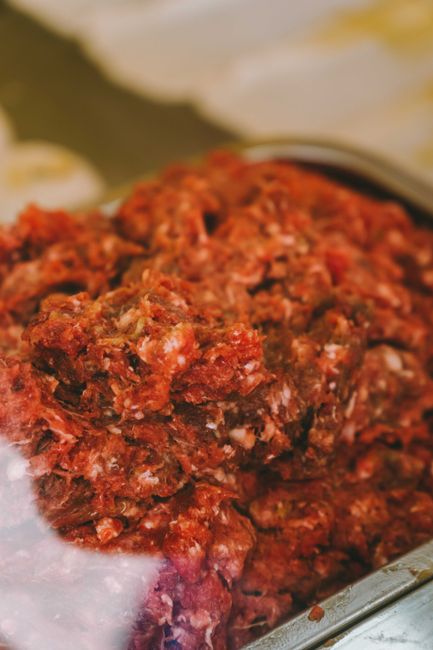
Mince meat, usually just called mince in British English or ground meat in American English, is meat that has been run through a grinder or food processor until it's broken into small, loose shreds rather than left as a solid cut. Beef is the most common, but lamb, pork, chicken, and turkey mince are all widely sold, each ground to a different fat ratio that affects how it cooks and tastes.
Varieties
Mince meat (ground meat) is not the same thing as mincemeat, the spiced mixture of dried fruit, spices, and sometimes suet used in mince pies at Christmas; despite the similar name it usually contains no meat at all today. Among ground meats, beef mince is graded by fat percentage (e.g., 80/20, 90/10), lamb mince tends to run fattier, and poultry mince is leanest.
Buying tips
Check the fat percentage on the label rather than guessing from color; beef mince should be bright cherry-red, not brown or gray, and pork or turkey mince should look pale pink without a grayish film. Buy from a butcher counter when possible since pre-packaged mince sits longer before sale.
Substitutes
Ground turkey (93/7) — 1:1 by weight
Much leaner, so it dries out faster; add a splash of oil or stock when browning and expect a milder flavor.
Ground pork — 1:1 by weight
Higher fat content gives a richer, slightly sweeter result; good in meatballs and dumplings but drains more fat when browning.
Cooked brown or green lentils — 1:1 by weight
Vegetarian swap for chili, tacos, or shepherd's pie; won't brown or crisp the way meat does, so add extra spice and a savory paste like miso or tomato for depth.
Plant-based ground meat (pea or soy protein) — 1:1 by weight
Closest textural match to beef mince and browns similarly; check the label since sodium and fat vary widely between brands.
Textured vegetable protein (TVP), rehydrated — 1 part dry TVP to 3 parts hot water or stock, then use in place of mince
Very cheap and shelf-stable, but the rehydration ratio changes the finished weight and water content too much for a straight per-unit swap; season it heavily since it has almost no flavor on its own.
Storage
Raw mince has far more surface area exposed to air and bacteria than a whole cut, so it spoils faster. Keep it in the coldest part of the fridge and use within 1 to 2 days, or freeze it flat in a sealed bag for up to 3 to 4 months. Thaw in the fridge, never on the counter.
How to use
Mince is the base for bolognese, chili, tacos, shepherd's and cottage pie, meatballs, burgers, stuffed peppers, and dumpling fillings. Brown it in a hot, dry pan first so it releases and then reabsorbs its own fat, which builds more flavor than adding oil right away.
What it pairs with
Builds well with onion, garlic, tomato paste, cumin, smoked paprika, Worcestershire sauce, and fresh herbs like thyme or oregano depending on the dish's cuisine.
Nutrition
Protein content stays fairly constant across mince types (roughly 17 to 20g per 100g), but fat swings widely depending on the lean-to-fat ratio on the label, from about 5% in extra-lean turkey mince to 25%+ in standard beef mince.
FAQ
Is mince meat the same as mincemeat?
No. Mince meat is ground meat used in savory cooking, while mincemeat is a sweet, spiced mixture of dried fruit and spices (historically with suet) used to fill mince pies.
What fat percentage should I buy for burgers versus a sauce?
For burgers, an 80/20 blend holds together and stays juicy on the grill. For a simmered sauce like bolognese, a leaner 90/10 works fine since fat renders out and can be skimmed if excessive.
Can you refreeze mince meat after thawing?
Only if it was thawed in the refrigerator and not left at room temperature; refreezing after a fridge thaw is safe but will noticeably soften the texture once cooked.
Why does my mince meat release so much water in the pan?
Mass-produced mince is often injected with water or has ice crystals from freezing; cook it over high heat in a single layer and let the liquid evaporate before adding sauce so it browns instead of stewing.
Have mince meat on hand? Find recipes with our Recipe Generator →