
Nduja Sausage
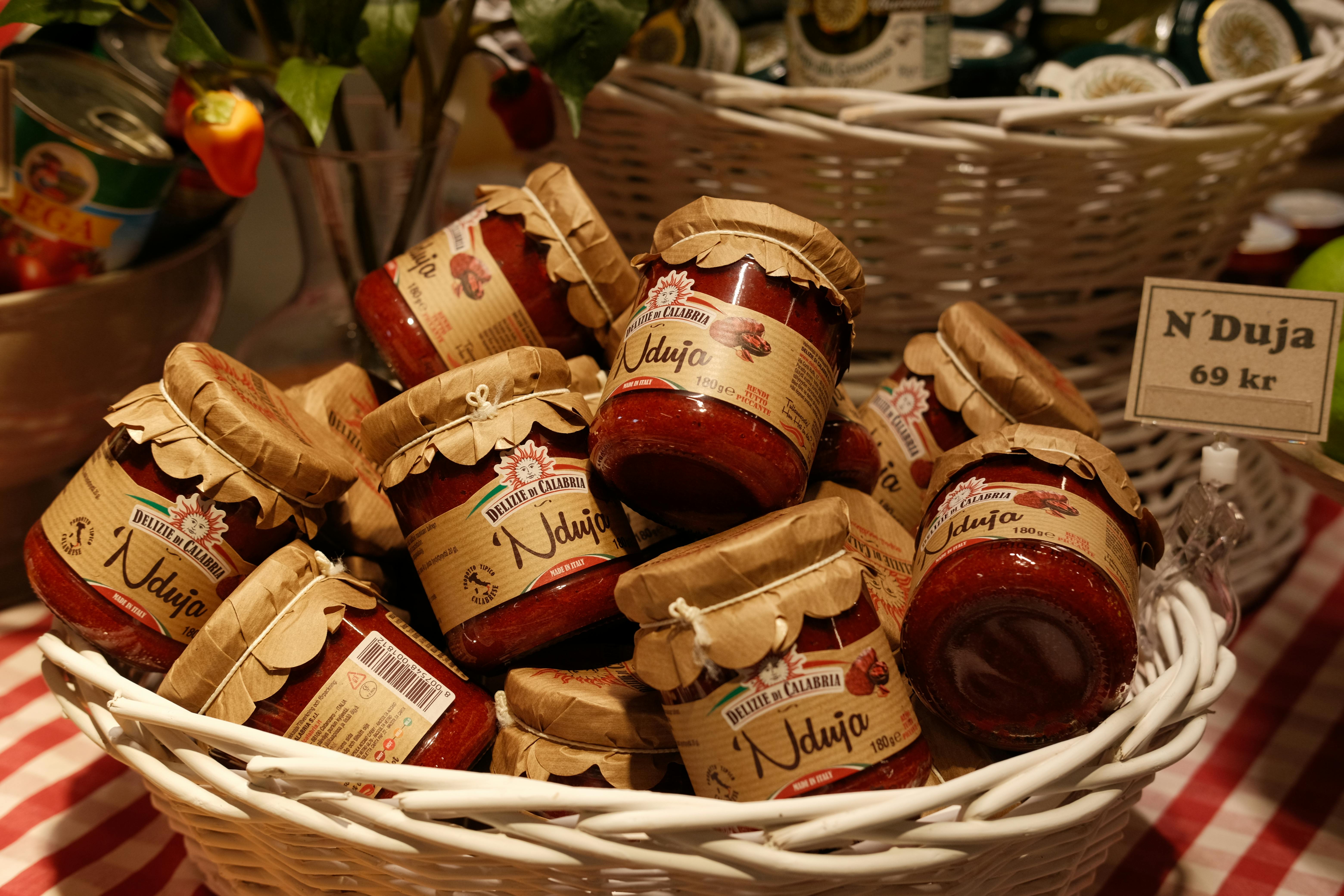
Nduja (pronounced en-DOO-ya) is a spreadable, cured pork sausage from Calabria, in southern Italy, made from pork shoulder and fatback ground with a heavy proportion of Calabrian chili peppers, then stuffed into casing and cold-smoked. Unlike most cured sausage, it stays soft enough to spread like a paste even when fully cured, because of the high fat content and the way the chilies break down the texture. It's fiery, smoky, and deeply savory, and a small amount melts down into fat and flavor rather than staying in distinct chunks.
Varieties
Nduja is closely related to Spanish sobrasada, both being spreadable cured pork sausages, but sobrasada is milder and colored with sweet paprika rather than the hotter Calabrian chilies used in nduja. Within Calabria, homemade versions vary in heat level and fat ratio by household, but store-bought jars are generally consistent brand to brand.
Buying tips
Look for it in Italian delis and specialty grocers, sold in jars, tubs, or small casings. Products labeled with a Calabrian PDO designation follow traditional production methods and tend to have a more balanced heat-to-fat ratio; some mass-market versions are saltier and less complex. Color should be a deep brick red from the chilies, not brown, which can indicate age or lower chili content.
Substitutes
Hot Italian sausage (casing removed) mixed with Calabrian chili paste — 1:1, plus 1 tsp chili paste per tablespoon of sausage
Cook the sausage first to render some fat, then mash in the chili paste off heat to approximate nduja's texture and heat.
Soppressata, finely chopped and mashed with olive oil — 1:1
Soppressata is firmer and less spicy, so mash it with a little olive oil and a pinch of crushed red pepper to loosen the texture and add heat.
Merguez sausage (casing removed) — 1:1
Similarly spiced with chili and fennel, though the flavor leans more toward cumin and coriander than the pure chili heat of nduja.
Calabrian chili paste stirred into softened butter — use half the amount of nduja called for
Good for adding heat and color to a sauce quickly, but this has no meat, so skip it in recipes where nduja provides the main protein, like meatballs.
Spanish sobrasada — 1:1
A close cousin from Mallorca made with paprika instead of Calabrian chilies; sweeter and smokier, milder heat.
Harissa paste blended with ground pork fat — variable, to taste
Heat level in harissa varies widely by brand, so there's no reliable fixed ratio; taste and adjust as you build the dish.
Storage
Keep unopened nduja in the refrigerator until the use-by date. Once opened, press plastic wrap directly onto the cut surface to limit air exposure and keep refrigerated, where it stays good for 3 to 4 weeks thanks to its high fat and salt content. It also freezes well in small portions, since recipes usually only need a spoonful at a time.
How to use
Spread thinly on toasted bread as an appetizer, often with honey or ricotta. Melt a spoonful in olive oil as the base for pasta sauces, shakshuka, or braised beans, since the fat carries its flavor through the whole dish. Stir into soups and stews toward the start of cooking, mix into meatball or burger blends for a spicy backbone, or dot small pieces over pizza before baking so it renders into little pools of spiced fat.
What it pairs with
Pairs well with fresh, mild ingredients that can absorb its heat: burrata, ricotta, soft-boiled eggs, shrimp, white fish, and roasted potatoes. A drizzle of honey over nduja on bread balances the spice, and it works especially well folded into cream-based pasta sauces where the fat spreads the heat evenly.
Nutrition
Nduja is high in fat and sodium, similar to other cured sausages, running roughly 400 calories per 100 grams. Because it's used in small amounts, a tablespoon added to a sauce or spread on toast contributes meaningful heat and flavor without adding a large amount of calories to the overall dish.
FAQ
Is nduja cooked or raw?
It's cured, not raw in the sense of fresh meat, but it's traditionally eaten spread on bread without further cooking. It can also be melted into hot dishes, where the fat renders and the flavor spreads through the sauce.
How spicy is nduja?
It's noticeably spicy, generally comparable to a medium-hot chili paste, though heat varies by brand. A tablespoon added to a sauce for four servings gives a solid, noticeable kick without being overwhelming.
Can nduja go directly into a pan?
Yes. Add it to a warm pan with a little olive oil and it will break down into a spiced fat within a minute or two, which is the standard first step for pasta sauces and braises built around it.
Is there a vegetarian substitute for nduja?
There's no true vegetarian equivalent since the texture depends on pork fat, but a paste of Calabrian chilies, smoked paprika, and softened butter or a plant-based fat gets close to the flavor for spreading on bread, even though it won't render into a sauce the same way.
Have nduja sausage on hand? Find recipes with our Recipe Generator →