
Neapolitan Pizza
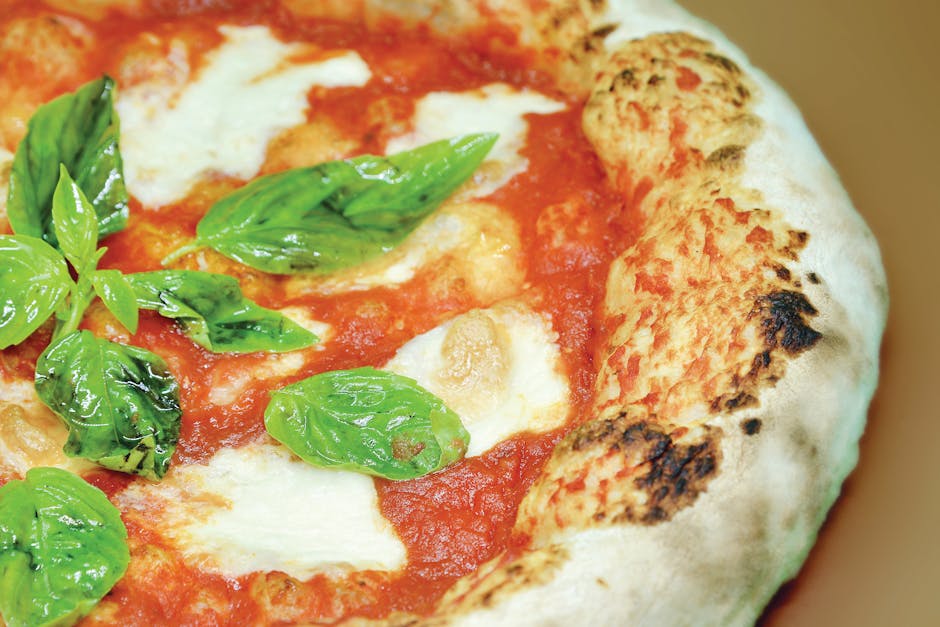
Neapolitan pizza (pizza napoletana) is the original thin-crust pizza style from Naples, Italy, defined by strict, centuries-old rules rather than just a list of toppings. Dough is made with only flour, water, salt, and yeast, hand-stretched (never rolled) to keep air in the rim, then baked for 60 to 90 seconds in a wood-fired oven around 800 to 900°F. The result is a soft, floppy, slightly charred crust with a puffy, leopard-spotted cornicione (edge) that can't be replicated in a standard home oven without help. The two traditional versions recognized by the Associazione Verace Pizza Napoletana are Marinara (tomato, garlic, oregano, olive oil, no cheese) and Margherita (tomato, mozzarella, basil, olive oil).
Varieties
Marinara is the older of the two traditional styles and contains no cheese, just tomato, garlic, oregano, and olive oil. Margherita, added later and named for Queen Margherita of Savoy, adds mozzarella and basil for the colors of the Italian flag. Neither should be confused with 'Neapolitan-style' pizzas sold outside Italy that use the name loosely for any thin-crust pie with char spots.
Buying tips
Look for VPN (Verace Pizza Napoletana) certification if seeking an authentic pizzeria, though many excellent non-certified spots follow the same standards. A true Neapolitan crust should look soft and slightly wet in the center, not crisp; if the whole pizza is crunchy, it's not made in the traditional style.
Substitutes
New York style pizza — not applicable
Thinner, larger, and foldable, made with bread flour and a longer, hotter but less extreme bake. Closest widely available substitute if a real Neapolitan pizzeria isn't nearby.
Home oven Neapolitan-style pizza using a pizza steel or stone — not applicable
Preheat a steel at the oven's max temperature (usually 500 to 550°F) for at least 45 minutes, then finish the top under the broiler for the last minute to mimic the char.
Roman-style pizza (pizza romana or pizza al taglio) — not applicable
Thinner and crisper throughout rather than soft-centered, a reasonable substitute if you prefer a sturdier crust that holds up to more toppings.
Storage
Neapolitan pizza is meant to be eaten immediately; the crust turns soggy and limp within an hour because of the high hydration dough and short bake. If storing leftovers, refrigerate in an airtight container for up to 2 days. Reheat in a skillet over medium heat with a lid for 3 to 4 minutes to recrisp the bottom without drying out the toppings, rather than using a microwave.
How to use
Eaten whole with a knife and fork in Naples, since the thin, wet center doesn't hold up to folding the way New York slices do. Best served straight from the oven, cut into quarters or eighths at the table.
What it pairs with
Pairs well with a simple arugula salad dressed in lemon and olive oil, and with light, high-acid wines like Falanghina or a chilled Lambrusco. In Naples it's commonly served with a cold beer or Italian soda.
Nutrition
A traditional Margherita made with San Marzano tomatoes, fresh mozzarella, and olive oil runs roughly 600 to 800 calories for a 10 to 12 inch pizza, lower than most American-style pizzas because toppings are sparse and cheese is used in modest amounts.
FAQ
Why is the center of Neapolitan pizza so wet and floppy?
The very short bake time (60 to 90 seconds) doesn't fully evaporate moisture from the tomato sauce and mozzarella, and the high-hydration dough (around 60 to 65 percent water) stays soft rather than crisping through.
Can Neapolitan pizza be made without a wood-fired oven?
Yes, with a pizza steel preheated for at least 45 minutes at the oven's maximum temperature plus a quick finish under the broiler, though the crust will brown more evenly and char less than one baked at 800°F or higher.
What flour is used for authentic Neapolitan dough?
Italian 00 flour, a very finely milled soft wheat flour with lower protein than bread flour, which produces the tender, extensible dough needed for hand-stretching without tearing.
Why do some pizzerias only serve Margherita and Marinara?
Pizzerias certified by the AVPN (Associazione Verace Pizza Napoletana) restrict themselves to these two historical recipes plus a few closely related variations to preserve the traditional style, even though many non-certified Neapolitan-style spots offer more toppings.
Have neapolitan pizza on hand? Find recipes with our Recipe Generator →